
How many days in Sydney? Plans for 3–7 days
In short
Three days in Sydney cover the harbour with the Opera House and The Rocks, the coastal walk from Bondi to Coogee, and the ferry to Manly. Four to five days are ideal, adding the Blue Mountains (about 2 hours by train) and a day for Taronga Zoo or Watsons Bay. The most pleasant months are October to April (23 to 27 °C by day), with beach season from December to February.
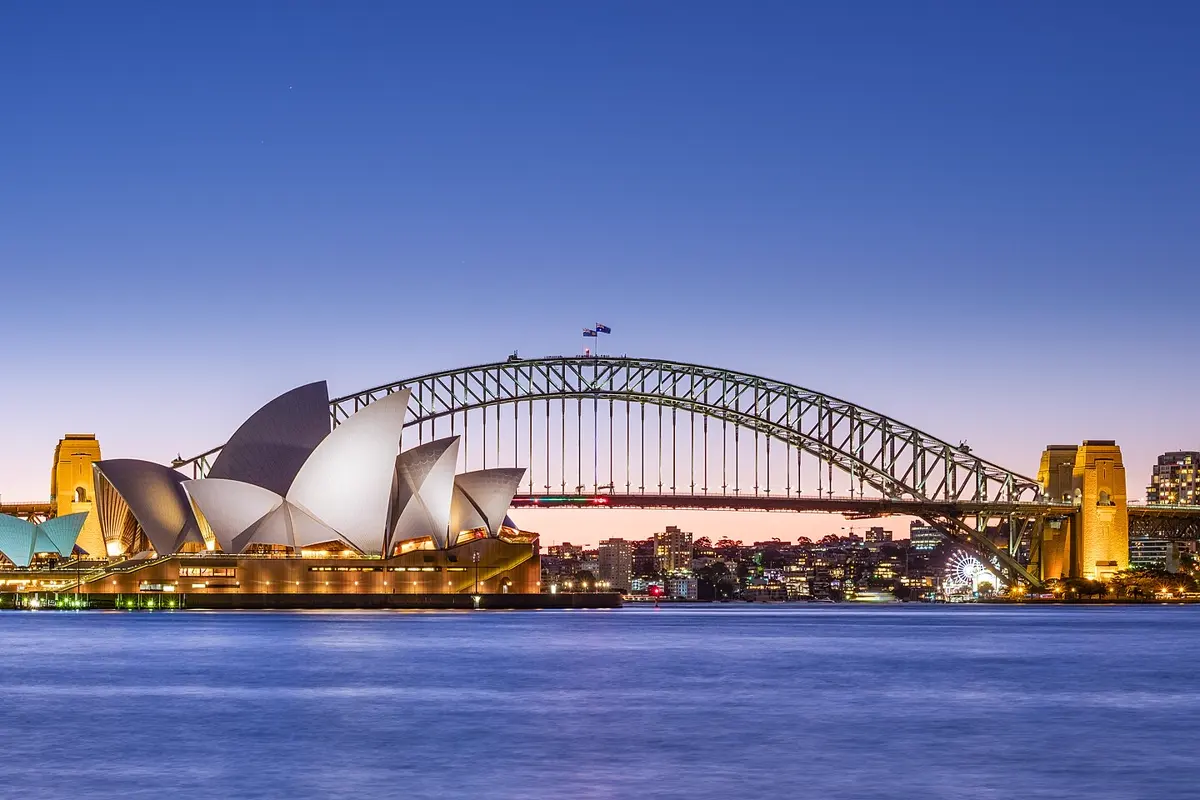
Sydney lives on its harbour. Ferries cross between the Opera House and the Harbour Bridge, beaches such as Bondi and Manly are a bus or boat ride from the centre, and two hours inland the Blue Mountains begin. For travellers from Europe there is one more factor: the journey takes about a full day, and the time difference is 9 to 11 hours. Whoever plans only two days spends one of them half asleep. The short answer: 3 days for the harbour, Bondi and Manly, 4 to 5 days are ideal with the Blue Mountains, and from 6 days there is time for the Royal National Park, the Hunter Valley or the northern beaches.
How many days in Sydney? The overview
| Days | What you see | Best for |
|---|---|---|
| 2 days | the Opera House, the Botanic Garden, The Rocks, the Harbour Bridge, Bondi | the start or end of an Australia trip |
| 3 days | plus the Bondi to Coogee walk, the Manly ferry, the city centre | the city and its classics |
| 4–5 days | plus the Blue Mountains, Taronga Zoo or Watsons Bay | the ideal length |
| 6–7 days | plus the Royal National Park, the Hunter Valley, Palm Beach | Sydney at leisure, with day trips |
Worth knowing for planning: from Europe there is no direct flight; with one stop, for example in Singapore or the Gulf, the journey takes about a full day. Count the day you arrive as a rest day and plan a walk in the fresh air rather than a museum. Trains, buses, light rail and ferries all run on the Opal system, and you can tap on and off with a contactless bank card. Tours of the Opera House and the BridgeClimb over the arch of the Harbour Bridge are best booked in advance.
Two days in Sydney: the harbour and Bondi
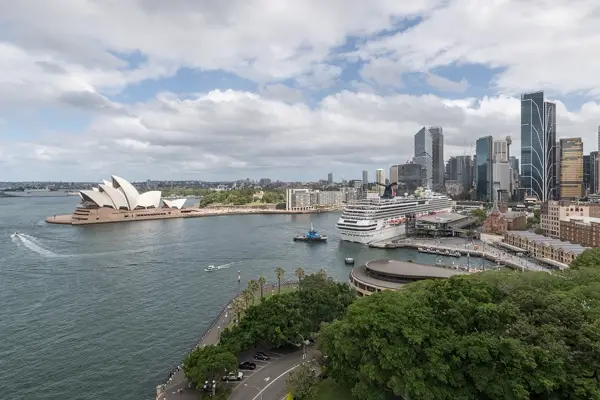
Two days are tight, but enough for the city's best-known views. The first day belongs to the harbour. In the morning, walk around the Sydney Opera House, a UNESCO World Heritage Site since 2007; inside you only get on a tour or with a ticket for a performance. The Royal Botanic Garden runs along the water next door to Mrs Macquarie's Chair, where the Opera House and the bridge fit into one frame. In the afternoon, explore The Rocks, the oldest quarter, and walk across the Harbour Bridge on the footpath on its eastern side.
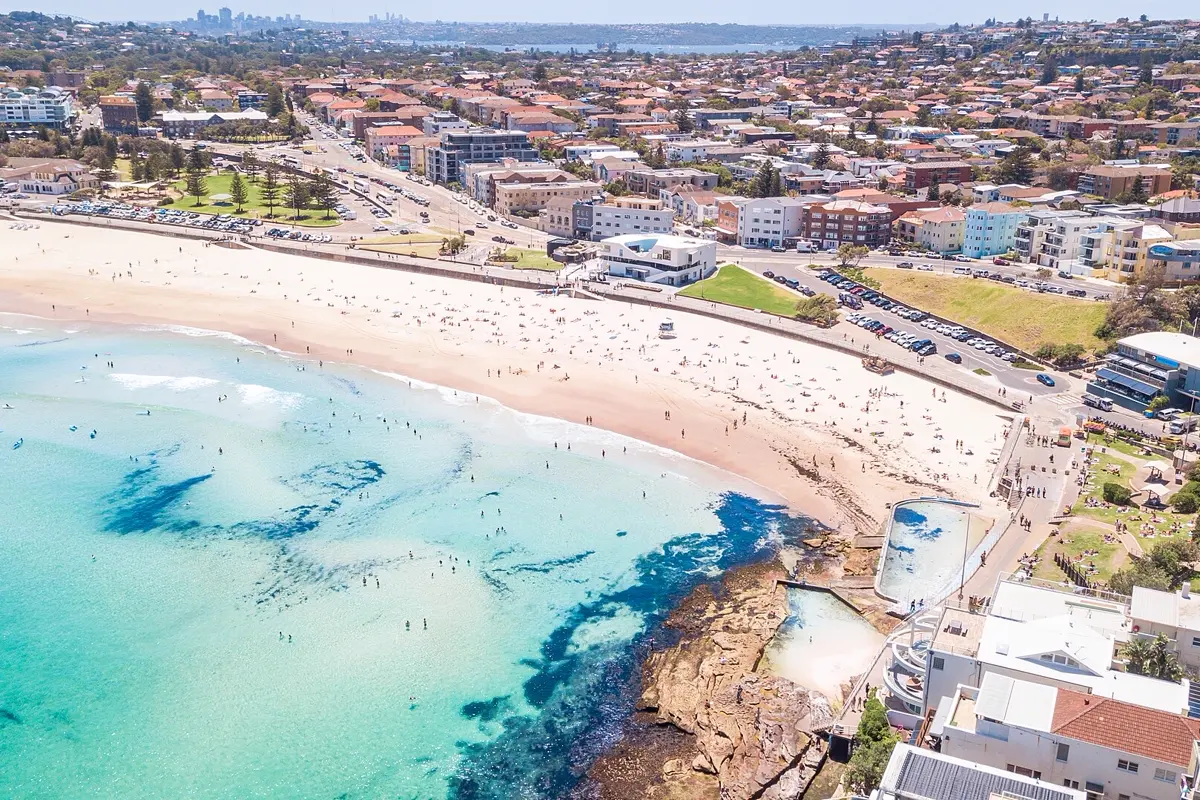
The second day goes to the coast. Bondi Beach is a wide curve of sand with surfers out from early morning, and at its southern end the ocean pool of Bondi Icebergs marks the start of the coastal walk. With only two days, walk part of it and spend the afternoon on the beach.
Three days in Sydney: the city and its beaches
Three days give you the harbour, the coast and the centre. Our ready-made plan:
- Day 1 – the Opera House, the Botanic Garden and The Rocks: the Sydney Opera House, the Royal Botanic Garden, Mrs Macquarie's Chair, lunch in The Rocks, across the Harbour Bridge, Observatory Hill in the evening.
- Day 2 – Bondi and the coastal walk: Bondi Beach, Bondi Icebergs, the coastal walk via Tamarama and Bronte to Coogee, about 6 km along the cliffs, then the Victorian terraces of Paddington and Centennial Park.
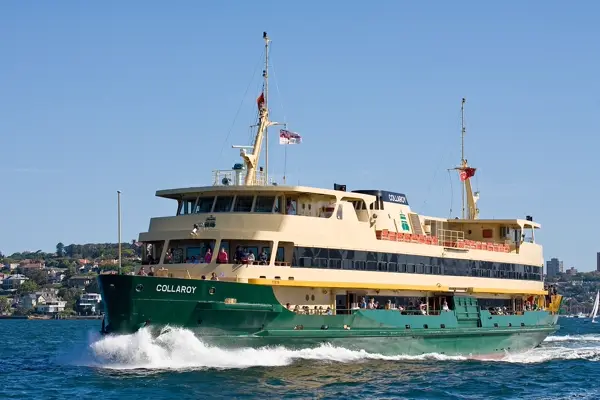
- Day 3 – the Manly ferry and the city centre: the ferry from Circular Quay across the whole harbour to Manly, back for lunch in Chinatown, the Queen Victoria Building, St Mary's Cathedral and the Art Gallery of New South Wales with its large collection of Aboriginal and Torres Strait Islander art.
The ferry to Manly is one of the best ways to see the harbour, and it runs on the normal Opal fare. On the beaches, always swim between the red and yellow flags – the currents on the open coast are strong. If you want to see a lot of attractions, a pass such as the Go City Sydney Pass* can pay off.
Four to five days: the Blue Mountains and the harbour
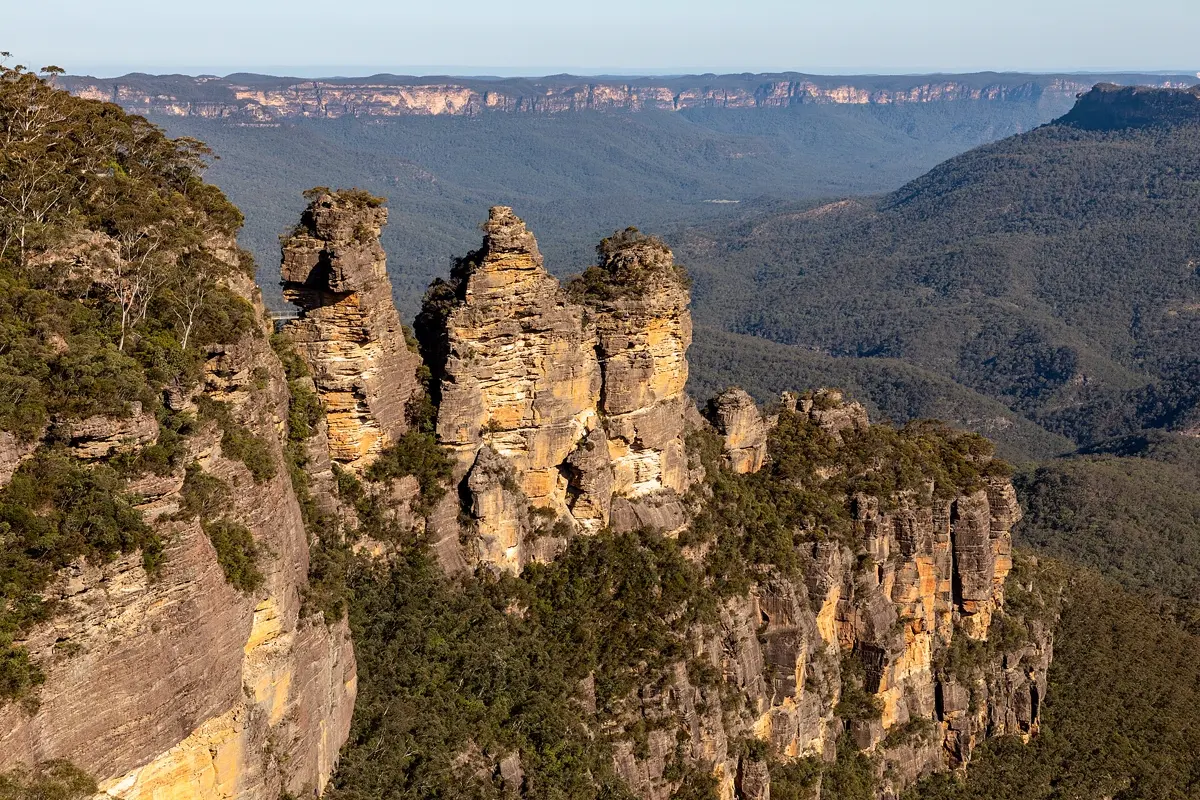
With four or five days the most important day trip fits in: the Blue Mountains, part of the Greater Blue Mountains UNESCO World Heritage Area. The train from Central takes about 2 hours to Katoomba; by car it is 102 km and about 1 hour 35 minutes of pure driving time – allow about a third more. From the Echo Point lookout you see the Three Sisters, three sandstone pillars above a valley of eucalyptus forest, whose oils give the mountains their blue haze. Walking trails lead along the cliffs and down into the valley; leave early, the days are long.
Spend the fifth day on the water. The ferry to Taronga Zoo takes you to the zoo on the north shore, with a view of the skyline from its terraces. Another ferry goes to Watsons Bay near the harbour entrance, where a short walk leads to the cliffs of The Gap and fish and chips wait by the beach. Tickets for the zoo, the Opera House tour and day trips* are on Tiqets.
Six days or more: the Royal National Park and the Hunter Valley
If you stay a week, there is more nature close to the city. The Royal National Park south of Sydney, founded in 1879, is one of the oldest national parks in the world. Coastal trails lead past cliffs and secluded beaches; by car the edge of the park at Bundeena is 55 km and about an hour away, or you take the train to Cronulla and the small ferry across. The northern beaches stretch to Palm Beach at the tip of the peninsula, 45 km and about an hour by car, with a lighthouse walk above the sea.
For wine, head to the Hunter Valley, 168 km and about 2 hours 20 minutes of pure driving time north. It is a long day trip, so many people stay a night or take a guided tour. A hire car in Sydney* for the Royal National Park and the Hunter Valley can be compared at Economybookings.
Where to stay in Sydney
Sydney is spread out, but the ferries and trains make the centre an easy base:
- Circular Quay and The Rocks: right on the harbour, with the Opera House, the bridge and the ferries on the doorstep. The easiest base for a short trip.
- Surry Hills: a quieter neighbourhood full of cafés and restaurants, within walking distance of Central station and the train to the Blue Mountains.
- Bondi or Manly: for mornings on the beach. Getting into the centre takes a bus and train from Bondi or the ferry from Manly.
A train runs from the airport into the centre in about 15 minutes, and an airport transfer in Sydney* can be booked with Kiwitaxi. For mobile data without roaming charges, get an eSIM from Airalo; our eSIM price index compares the prices per gigabyte.
Best time to visit Sydney
| Month | Day (avg. high) | Night (avg. low) | Rain per month |
|---|---|---|---|
| Jan | 27.2 °C | 19.6 °C | 99 mm |
| Feb | 26.3 °C | 19.2 °C | 107 mm |
| Mar | 25.0 °C | 18.0 °C | 151 mm |
| Apr | 22.5 °C | 14.6 °C | 96 mm |
| May | 19.5 °C | 11.1 °C | 62 mm |
| Jun | 16.8 °C | 9.1 °C | 77 mm |
| Jul | 16.9 °C | 8.2 °C | 64 mm |
| Aug | 18.2 °C | 8.8 °C | 49 mm |
| Sep | 20.8 °C | 10.8 °C | 49 mm |
| Oct | 23.0 °C | 13.6 °C | 75 mm |
| Nov | 24.4 °C | 15.8 °C | 81 mm |
| Dec | 26.5 °C | 17.9 °C | 66 mm |
Averages 2015–2024 from the ERA5 reanalysis (via Open-Meteo), rounded. The values describe a grid cell of about 25 km; in the western suburbs and the Hunter Valley it is often much hotter in summer, in the Blue Mountains cooler.
The seasons in Sydney are the opposite of Europe's. The most pleasant months are October to April, at 23 to 27 °C by day. December to February is summer and beach season, with the fireworks over the harbour on New Year's Eve – also the busiest time, when Australians are on holiday themselves. March is the wettest month with 151 mm, often as heavy showers. Winter, from June to August, is mild at 17 to 18 °C by day and often sunny, good for walking but too cool for swimming; August and September are the driest months with 49 mm.
How YesTrip helps you plan
YesTrip has a ready-made three-day plan for Sydney: the Opera House, the Botanic Garden and The Rocks, then Bondi and the coastal walk, and finally the Manly ferry and the city centre. Each day has times, the stops are in walking order, and bus, train and ferry legs are noted. With one tap you copy the plan into the app and add days for the Blue Mountains or the Royal National Park; for those the AI creates a day plan for you. The app shows the weather for your travel days, the packing list thinks of sun protection and the right plug adapter, and with the offline package you have the map without a connection. YesTrip is free.
 Sydney trip planDay by day, with map and tips
From Sydney, our 3-week Australia East Coast itinerary takes you by car all the way to Cairns.
* Ad – Partner link: if you book there, we earn a commission. Your price stays the same.
Free
Plan your trip in 30 seconds.
Tell YesTrip where and when – the app plans day by day with real places on the map, shows the weather, splits costs with your travel companions and guides you to the next stop on the go.
Frequently asked questions
How many days do you need in Sydney?
Three days cover the harbour with the Opera House and The Rocks, the coastal walk from Bondi to Coogee and the ferry to Manly. Four to five days are ideal, adding the Blue Mountains and a day on the water. From 6 days there is time for the Royal National Park or the Hunter Valley.
Are 3 days enough for Sydney?
For the city, yes. After a journey of about a full day from Europe, though, the first day is often only half a day. A fourth day leaves room for the Blue Mountains or for recovering from jet lag.
Is a day trip to the Blue Mountains worth it?
Yes, it is the most important day trip from Sydney. The train from Central takes about 2 hours to Katoomba, from where the Echo Point lookout and the Three Sisters are within reach. Leave early to have time for a walk.
Is Bondi or Manly better?
Both are worth it, and they are different. Bondi is the famous beach with the coastal walk to Coogee; Manly is reached by a beautiful ferry ride across the harbour and is a little calmer. With three days you can easily do both.
When is the best time to visit Sydney?
October to April, with 23 to 27 °C by day. December to February is beach season and the busiest time. March is the wettest month with 151 mm, and winter from June to August is mild but too cool for swimming.
Sources
- Climate data: Open-Meteo Historical Weather API, daily values 2015–2024 – open-meteo.com
- Copernicus ERA5 reanalysis (Hersbach et al. 2020) – cds.climate.copernicus.eu
- Driving times: OSRM routing on OpenStreetMap data – project-osrm.org
- UNESCO World Heritage: Sydney Opera House – whc.unesco.org
- UNESCO World Heritage: Greater Blue Mountains Area – whc.unesco.org
- Destination NSW, official Sydney travel portal – www.sydney.com
- Entry requirements for Australia: UK Foreign Travel Advice – www.gov.uk
Researched with AI support and checked by our editors. Prices, opening hours and weather can change – please check before you go. YesTrip is not a travel agency. Published: .
More articles
 How many days?
How many days in Baku? 3 with Gobustan
Two days are enough for Baku's old town, the Boulevard and the Heydar Aliyev Center. The third belongs to Gobustan, 64 km away, with more … · 6 min read How many days?
How many days in Funchal? 3, or 5+ for Madeira
Two days are enough for Funchal: the old town, the market, the cable car and the gardens at Monte. Day three goes to the mountains, with … · 6 min read How many days?
How many days in Kotor? 2 with Perast
Two days are enough for Kotor: the old town and about 1,300 steps to the fortress on the first, Perast and the island of Our Lady of the … · 6 min read


