
How many days in Sarajevo? 3 with Mostar
In short
Two full days are enough for Sarajevo: Baščaršija, the Latin Bridge, Vijećnica, the Tunnel Museum, the War Childhood Museum and Mount Trebević. A third day belongs to Mostar, about 2 hours each way by train or 128 km by car. May to June and September to October are the most comfortable; nights in December and January average around or below freezing.
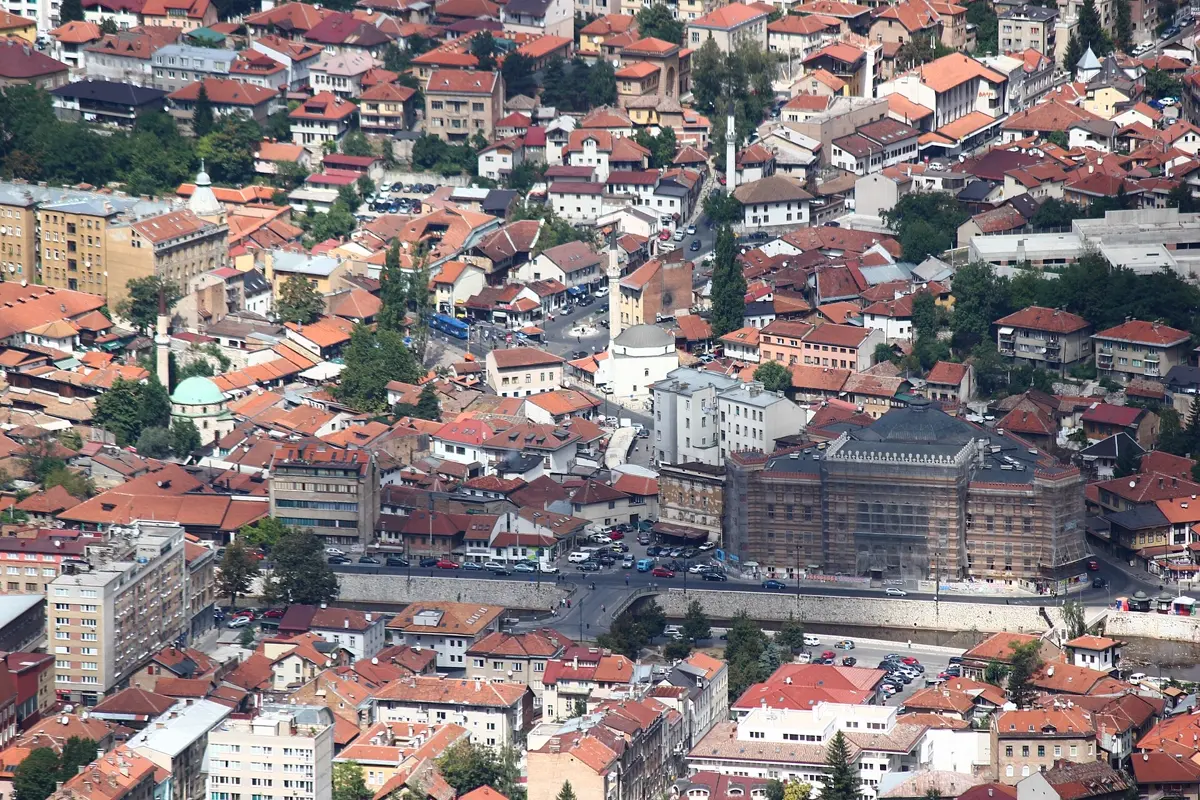
You can walk most of Sarajevo in a day, which is exactly why people underestimate it. The museums about the 1990s siege take time, and they are hard to follow with a brisk lunch and three more sights. So the short answer: 2 days for the city, 3 days with Mostar, and longer only if you want a night in Mostar or are carrying on through the country.
How many days in Sarajevo at a glance
| Days | What you see | What you miss |
|---|---|---|
| 1 day | Baščaršija, Gazi Husrev-beg Mosque, Latin Bridge, Vijećnica, Yellow Fortress | war history, Trebević |
| 2 days | plus Tunnel Museum, War Childhood Museum, cable car and bobsleigh track | Mostar |
| 3 days | plus Mostar as a long day trip | very little, this is the full version |
| 4 days | Mostar with an overnight stay, evenings without day visitors | nothing important |
One day only makes sense as a stop on a longer Balkan route. It shows you the Ottoman and the Austro-Hungarian city, but not what brings many people here: the story of the siege, told by people who lived it.
Day 1: an old town with two empires in it
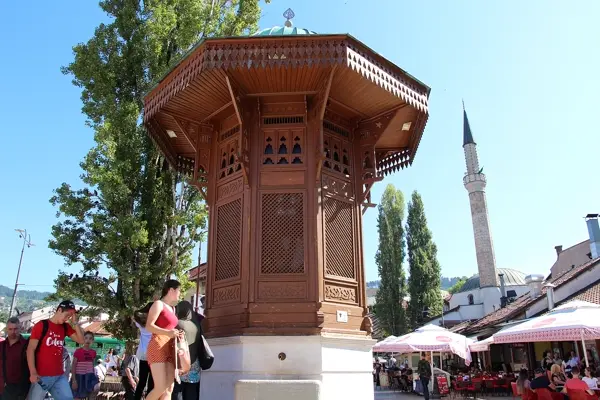
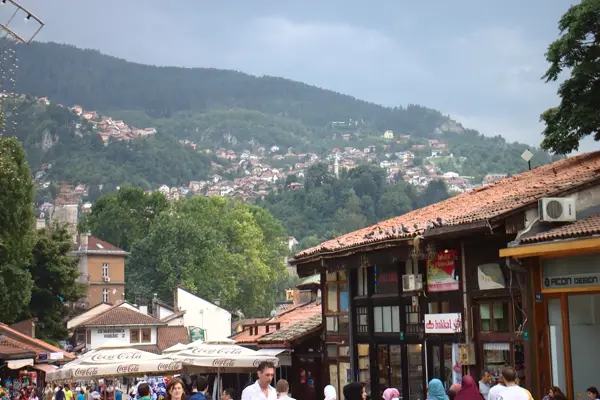
Start early at the Sebilj, the wooden fountain in the old bazaar, while the square is still calm. The 16th-century Gazi Husrev-beg Mosque is a few minutes away and open to visitors outside prayer times. Then walk along Ferhadija and watch the century change within a few metres: the neo-Gothic Sacred Heart Cathedral belongs to the Austro-Hungarian period.
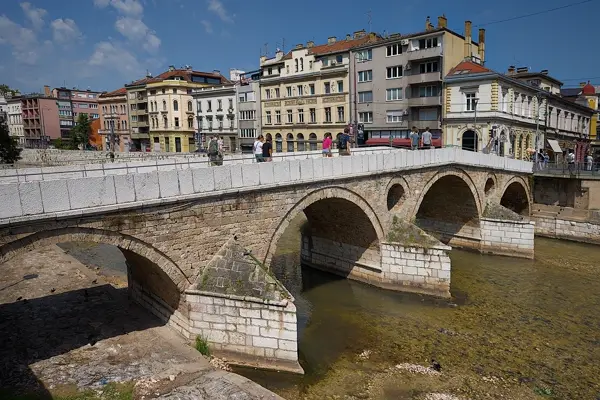
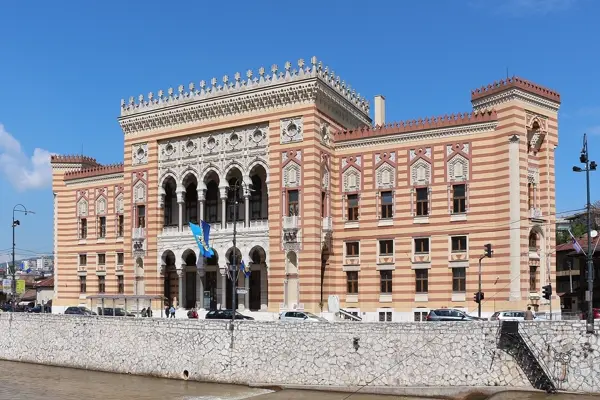
Have ćevapi on Baščaršija at lunchtime. After that comes the Latin Bridge, where Franz Ferdinand was shot on the corner in 1914, and Vijećnica, the former town hall in Moorish style. It burned in 1992 together with the National and University Library and reopened in 2014. End the day up at the Yellow Fortress, with the whole valley below you at sunset.
Day 2: the tunnel, a wartime childhood and Trebević
The Tunnel Museum is out by the airport, not in the centre, and that is where a little planning saves time. If you land in the morning or fly out in the evening, visit it on the way between the airport and town rather than making a separate trip. During the siege the tunnel under the airport was the city's only link to the outside; a short stretch can still be walked.
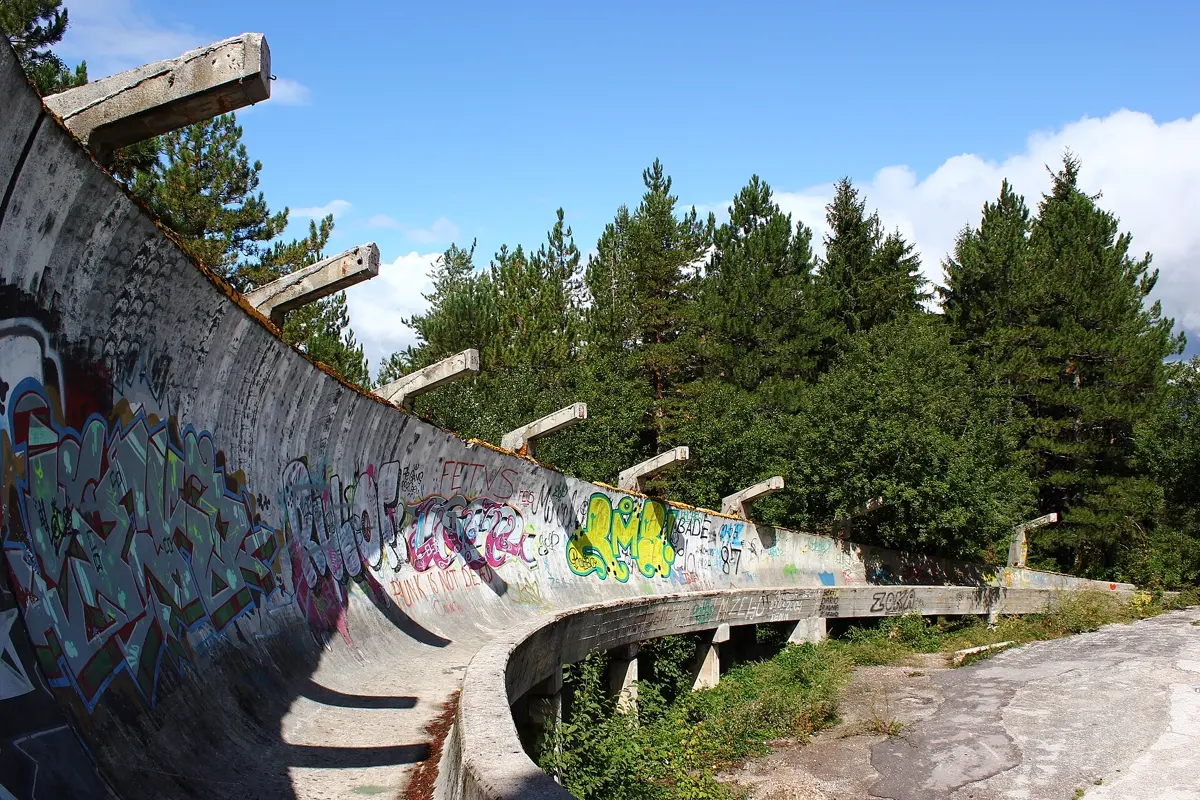
The War Childhood Museum, by contrast, is right in the centre. It shows objects and memories from people who were children during the war. Don't schedule another museum straight afterwards. The cable car from Bistrik up Mount Trebević is a better next step, and from the top station you can walk to the graffiti-covered bobsleigh track of the 1984 Winter Olympics.
One rule on the mountain and in the countryside: landmines and unexploded weapons from the 1992 to 1995 war remain a risk in less populated areas. The UK Foreign Office says not to step off roads and paved areas without an experienced guide, and lists former front lines, road edges, woods, orchards and abandoned buildings as places to take care. The German Foreign Office says the same applies close to Sarajevo. Neither advises against visiting, but stay on the marked paths.
Guided walks on the city's history are listed as tours in Sarajevo* on Tiqets. For the siege in particular, a person who can tell the story adds a lot.
Day 3: Mostar, as a day trip or overnight
Mostar is the reason for a third day. Interrail lists the train from Sarajevo at about 2 hours, run by Željeznice FBiH, and the line follows the Neretva valley, so stay awake for it. The current timetable shows only a few trains a day, so check that an outward and a return train fit your day. By car it is 128 km and 2:13 hours of pure driving; add about a third. If the trains don't work, a rental car in Bosnia* from Localrent or a bus will.
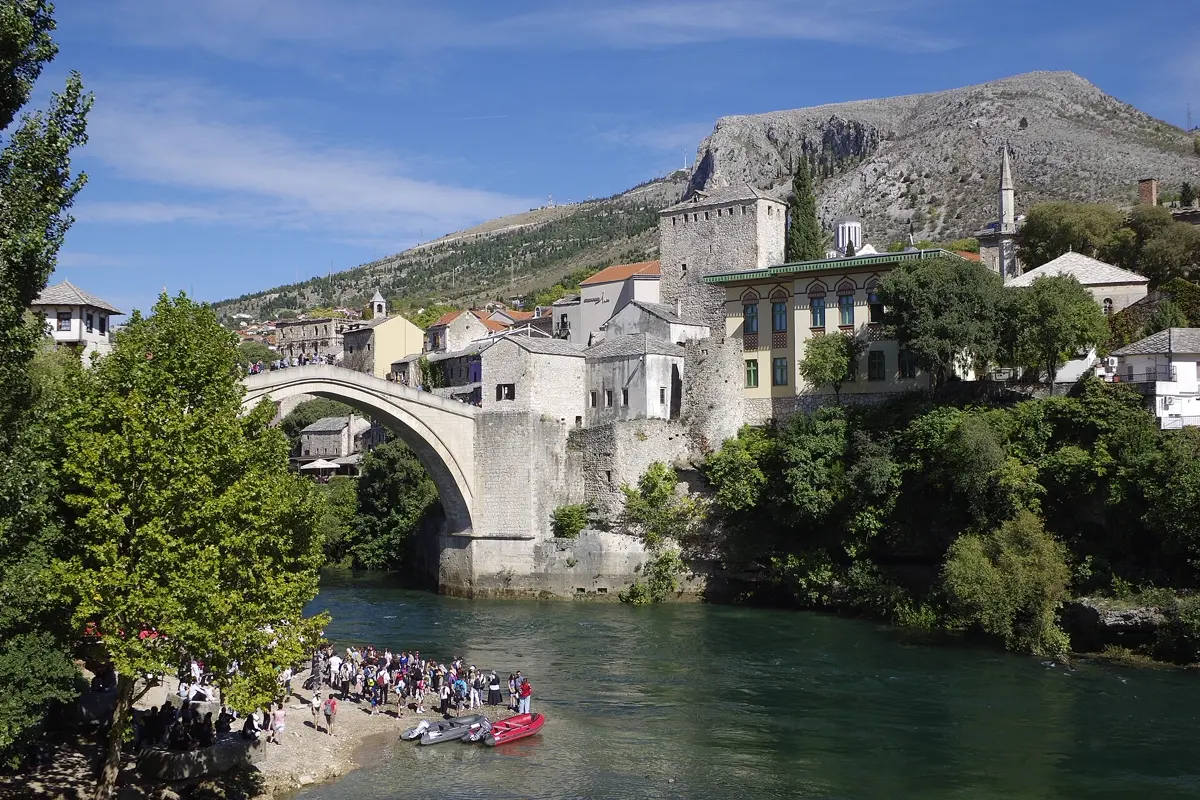
UNESCO lists the Old Bridge area as a World Heritage Site. The 16th-century bridge was destroyed in the conflict of the 1990s and later rebuilt. The small Kriva Ćuprija, the Kujundžiluk bazaar street and the view from the courtyard of the Koski Mehmed Pasha Mosque are the parts to save time for.
The trade-off: as a day trip, with four hours or so on the train, you get about five or six hours on the ground. That is enough for the old town. A night in Mostar gives you the place in the early morning, and you can carry on south from there instead of going back to Sarajevo. If Dubrovnik or the coast comes next, that is the better version.
Where to stay
- Baščaršija: in the old town, close to the mosques, bazaar and river. Lively in the evening, and some lanes climb steeply, which matters with a suitcase.
- Around Ferhadija: flat, central and near the tram that runs west along the valley.
When to go: the weather in the valley
| Month | Day (avg. high) | Night (avg. low) | Rain per month |
|---|---|---|---|
| Jan | 5.1 °C | -4.2 °C | 99 mm |
| Mar | 11.0 °C | 0.7 °C | 90 mm |
| May | 19.9 °C | 9.2 °C | 105 mm |
| Jun | 24.4 °C | 13.6 °C | 117 mm |
| Aug | 27.4 °C | 15.7 °C | 65 mm |
| Sep | 22.3 °C | 11.6 °C | 68 mm |
| Oct | 17.9 °C | 7.3 °C | 74 mm |
| Nov | 12.1 °C | 2.9 °C | 123 mm |
Averages 2015–2024 from the ERA5 reanalysis (via Open-Meteo), rounded; precipitation includes snow.
May to June and September to October are best for walking. August and September are the driest months. In winter there is often snow, and because the city sits in a basin, smog frequently hangs in the valley. If you have breathing problems, that is the season to pick another city.
Arriving and getting around
You walk the centre. The tram runs west from Baščaršija, and there are buses and taxis too. From the airport it is about 20 to 30 minutes to the centre by bus or taxi; for a late arrival, a transfer from Sarajevo airport* can be arranged through Kiwitaxi. For mobile data, our eSIM comparison for Bosnia and Herzegovina lists the plans. Entry rules are on the UK government's page.
What comes next: Sarajevo on a Balkan route
Sarajevo fits well into a longer trip. Our guide to city breaks in the Balkans gives the overview, how many days in Dubrovnik covers the coast, and how many days in Kotor covers the bay further south. More cities are in how many days for which city.
How YesTrip helps
YesTrip has a ready three-day plan for Sarajevo with times and a map for each day, Mostar included. Copy it into the app, move the Tunnel Museum to your arrival day and add a night in Mostar if you like. The app shows the weather for your travel days, the packing list adjusts to it, and the offline package keeps the map on your phone without a signal. YesTrip is free and a planner: you always book with the provider.
 Sarajevo trip planDay by day, with map and tips
* Ad – Partner link: if you book there, we earn a commission. Your price stays the same.
Free
Plan your trip in 30 seconds.
Tell YesTrip where and when – the app plans day by day with real places on the map, shows the weather, splits costs with your travel companions and guides you to the next stop on the go.
Frequently asked questions
How many days do you need in Sarajevo?
Two full days are enough for the old town, the Tunnel Museum, the War Childhood Museum and Mount Trebević. With a trip to Mostar, three days is the full version.
Is a day trip from Sarajevo to Mostar worth it?
Yes. Interrail lists the train at about 2 hours each way, through the Neretva valley. Only a few trains run each day, so check the current timetable first. If you are travelling south afterwards, it is better to stay the night in Mostar.
Are landmines a concern in Sarajevo?
Not on normal routes in the city. The UK Foreign Office advises not stepping off roads and paved areas without an experienced guide, because mines and unexploded weapons remain a risk in less populated and rural areas, and the German Foreign Office repeats that advice for the area near Sarajevo.
When is the best time to visit Sarajevo?
May to June and September to October, with daytime highs of about 18 to 24 °C. Winter is cold with frequent snow, and smog often hangs in the valley.
Where is the Tunnel Museum?
By the airport, well outside the centre. It is easiest to visit on the way to or from the airport instead of making a separate trip.
Sources
- Climate data: Open-Meteo Historical Weather API, daily values 2015–2024 – open-meteo.com
- Interrail: trains in Bosnia-Herzegovina, Sarajevo to Mostar – www.interrail.com
- Željeznice FBiH: railway operator, timetable – www.zfbh.ba
- UNESCO: Old Bridge Area of the Old City of Mostar – whc.unesco.org
- UK Foreign Office: Bosnia and Herzegovina, safety and security – www.gov.uk
- German Foreign Office: Bosnia and Herzegovina travel advice – www.auswaertiges-amt.de
Researched with AI support and checked by our editors. Prices, opening hours and weather can change – please check before you go. YesTrip is not a travel agency. Published: .
More articles
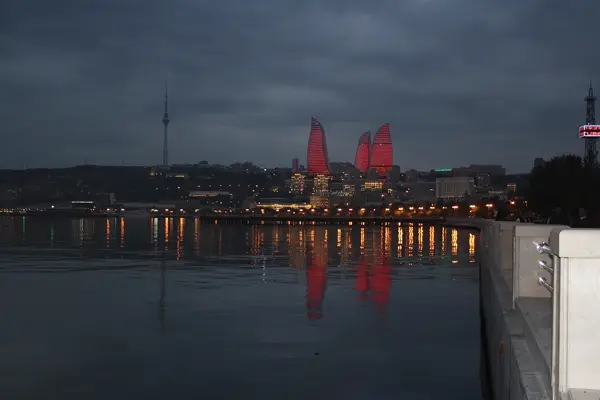 How many days?
How many days in Baku? 3 with Gobustan
Two days are enough for Baku's old town, the Boulevard and the Heydar Aliyev Center. The third belongs to Gobustan, 64 km away, with more … · 6 min read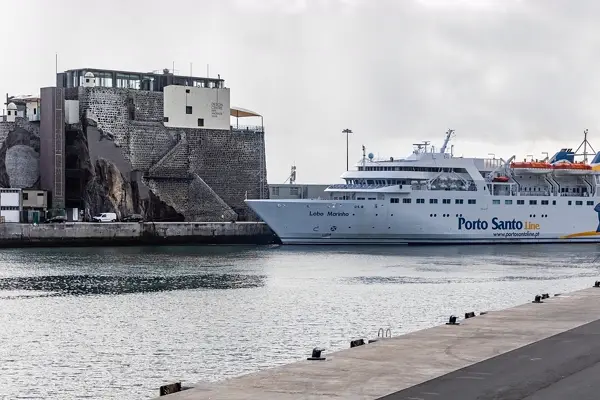 How many days?
How many days in Funchal? 3, or 5+ for Madeira
Two days are enough for Funchal: the old town, the market, the cable car and the gardens at Monte. Day three goes to the mountains, with … · 6 min read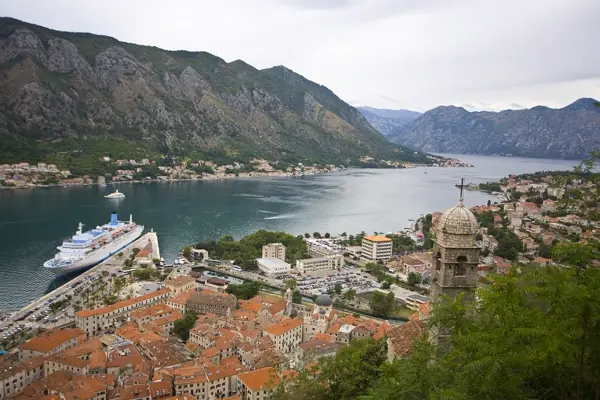 How many days?
How many days in Kotor? 2 with Perast
Two days are enough for Kotor: the old town and about 1,300 steps to the fortress on the first, Perast and the island of Our Lady of the … · 6 min read


