
How many days in Gdańsk? Plans for 1–4 days
In short
Two days in Gdańsk cover the Main Town with Long Market and the Motława waterfront, the European Solidarity Centre at the shipyard and the Museum of the Second World War. Three days are ideal, adding Oliwa Cathedral and the seaside town of Sopot with its long pier. With 4 days, add Malbork Castle or Westerplatte. The warmest months are June to August, with May and September quieter.
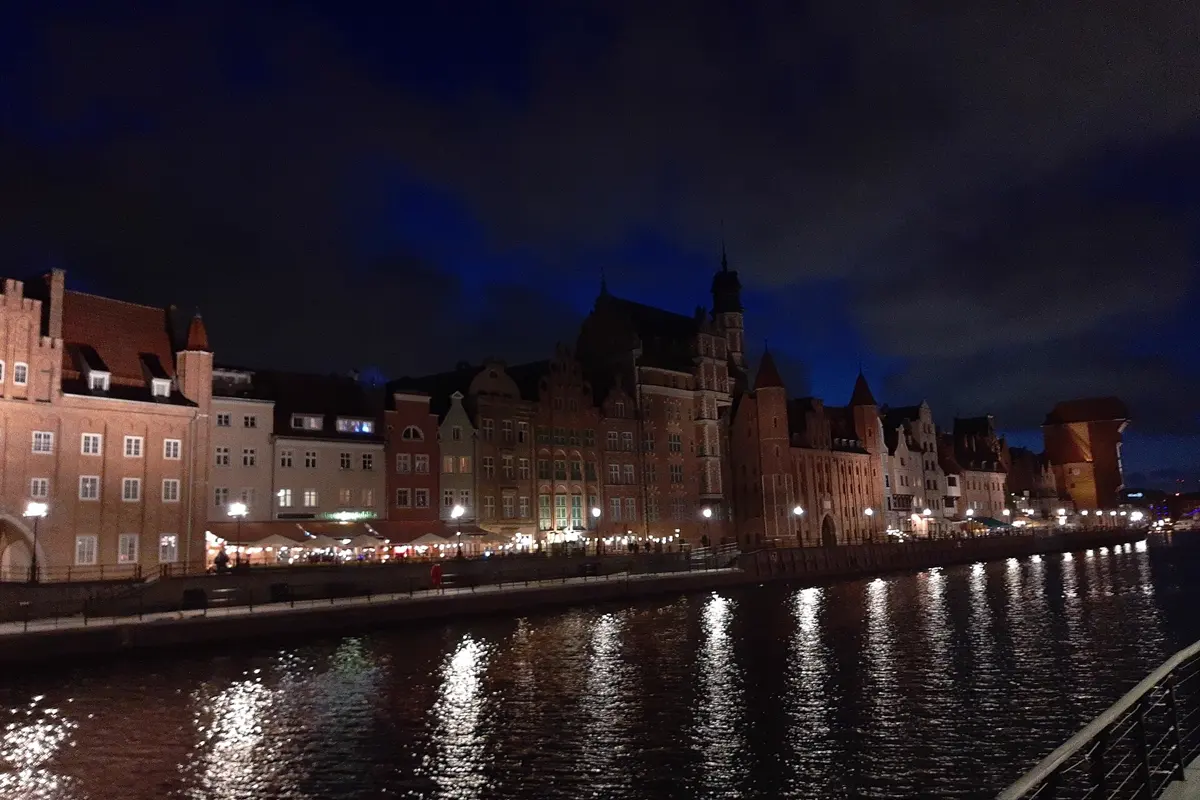
Gdańsk is a Hanseatic port on the Baltic whose rebuilt Main Town of tall, colourful gabled houses is one of the prettiest in Europe – and whose shipyard is where the Solidarity movement began. Its history is heavy as well as beautiful: the Second World War started a few kilometres away, at Westerplatte. With the seaside towns of Sopot and Gdynia, it forms the "Tricity". The short answer: 2 days for the essentials, 3 days are ideal with Oliwa and Sopot, and from 4 days Malbork Castle fits in.
How many days in Gdańsk? The overview
| Days | What you see | Best for |
|---|---|---|
| 1 day | the Golden Gate, Long Lane and Long Market, the Main Town Hall, Artus Court, St Mary's Church, Mariacka Street, the Crane | a stopover or a cruise stop |
| 2 days | plus the shipyard with the European Solidarity Centre, the market hall, the Polish Post Office, the Museum of the Second World War | a weekend, first visit |
| 3 days | plus Oliwa Cathedral and park, Sopot with its pier | the ideal length |
| 4 days | plus Malbork Castle or Westerplatte | return visitors, a long weekend |
| 5+ days | plus Gdynia, the Hel Peninsula or the beaches of the Baltic | anyone who wants the coast, not only the city |
The two big museums each need time: plan about two hours for the European Solidarity Centre and at least three for the Museum of the Second World War. Many museums in Gdańsk close one day a week, often on Mondays, so check before you go.
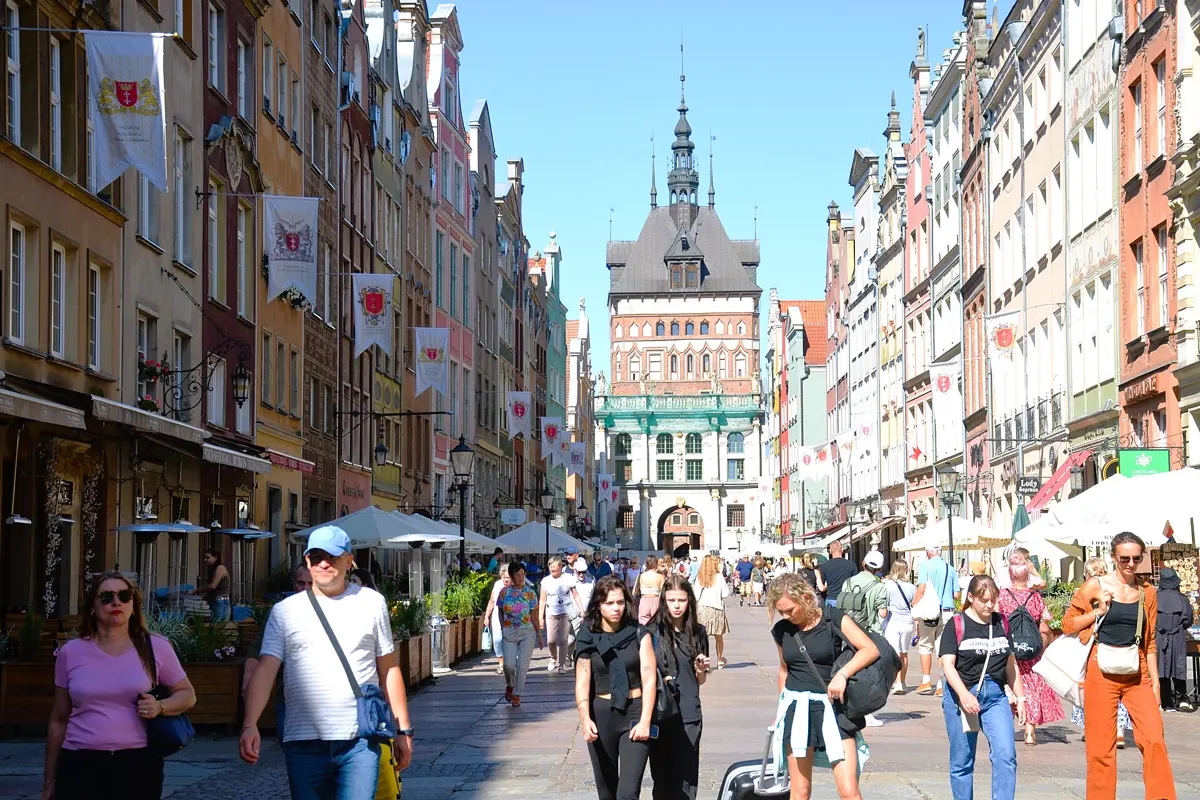
One day in Gdańsk: the Main Town and the Motława
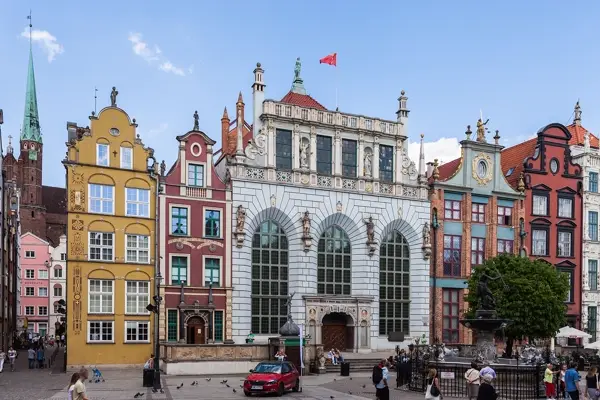
One day is enough for the Main Town, almost all of it along one street. Enter through the Golden Gate and follow the Royal Route along Long Lane to Long Market, lined with merchants' houses. The Gothic Main Town Hall has a tower with views over the old town (open seasonally); opposite stands Artus Court, the old merchants' meeting hall, with Neptune's Fountain in front.
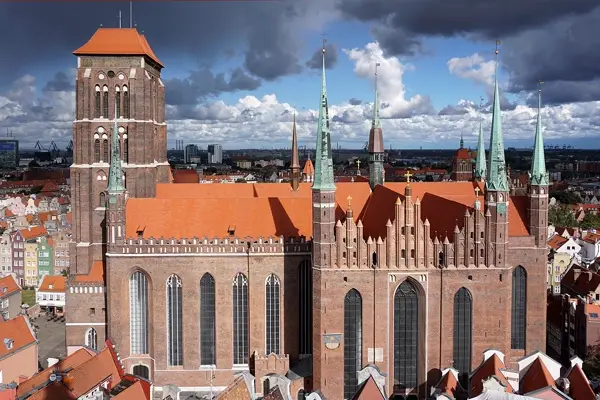
Continue to St Mary's Church, one of the largest brick churches in the world, whose tower is a long climb with a big reward. Mariacka Street, with stone terraces in front of the houses and amber shops, leads down to the river. Finish on the Long Embankment by the Crane, the medieval port crane on the Motława, now part of the National Maritime Museum.
Two days in Gdańsk: Solidarity and the Second World War
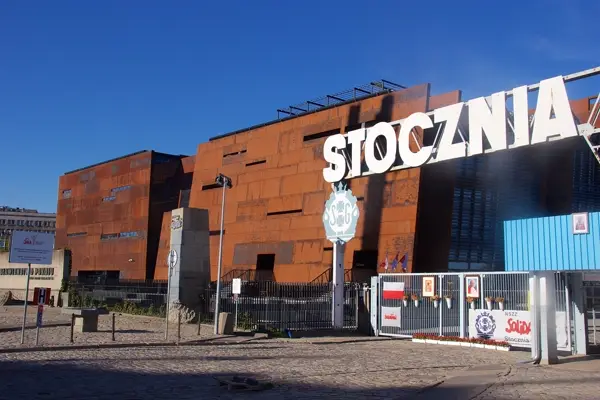
The second day is about the 20th century. At the gate of the shipyard stand the three steel crosses of the Monument to the Fallen Shipyard Workers, erected in 1980 for the workers killed in 1970. Next to it, the European Solidarity Centre tells the story of the Solidarity trade union and the end of communism in a building that looks like a ship's hull.
After lunch at the old Market Hall, visit the Polish Post Office, defended against the German attack on 1 September 1939, and the Museum of the Second World War, a large, sobering museum about the war and what it did to people. Tickets for museums and boat trips in Gdańsk* are also on Tiqets. With two days you have seen both the pretty and the serious side of the city.
Three days in Gdańsk: the ideal length
Three days add the rest of the Tricity. Our ready-made plan divides them like this:
- Day 1 – the Main Town and the Motława: the Golden Gate, the Main Town Hall, Artus Court and Neptune's Fountain, St Mary's Church, Mariacka Street, the Crane.
- Day 2 – shipyard, Solidarity and the Second World War: the Monument to the Fallen Shipyard Workers, the European Solidarity Centre, the Market Hall, the Polish Post Office, the Museum of the Second World War.
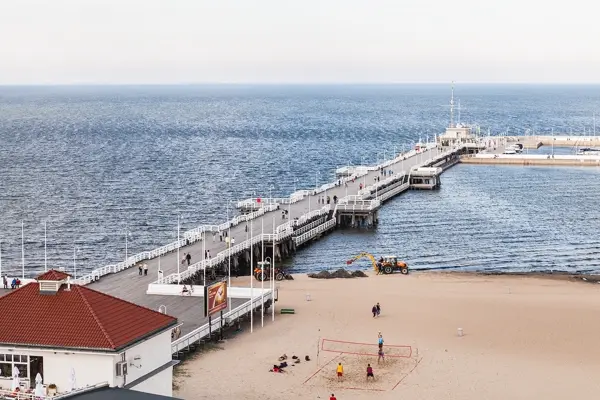
- Day 3 – Oliwa and Sopot: Oliwa Cathedral with its famous Baroque organ, Oliwa Park with its palm house, then by SKM train to Sopot: Monte Cassino Street, the Crooked House and the pier, one of the longest wooden piers in Europe.
The SKM local trains link Gdańsk, Oliwa, Sopot and Gdynia every few minutes, so the third day needs no planning. Check the times of organ recitals in Oliwa in advance if you want to hear the organ.
Four days or more: Malbork and Westerplatte
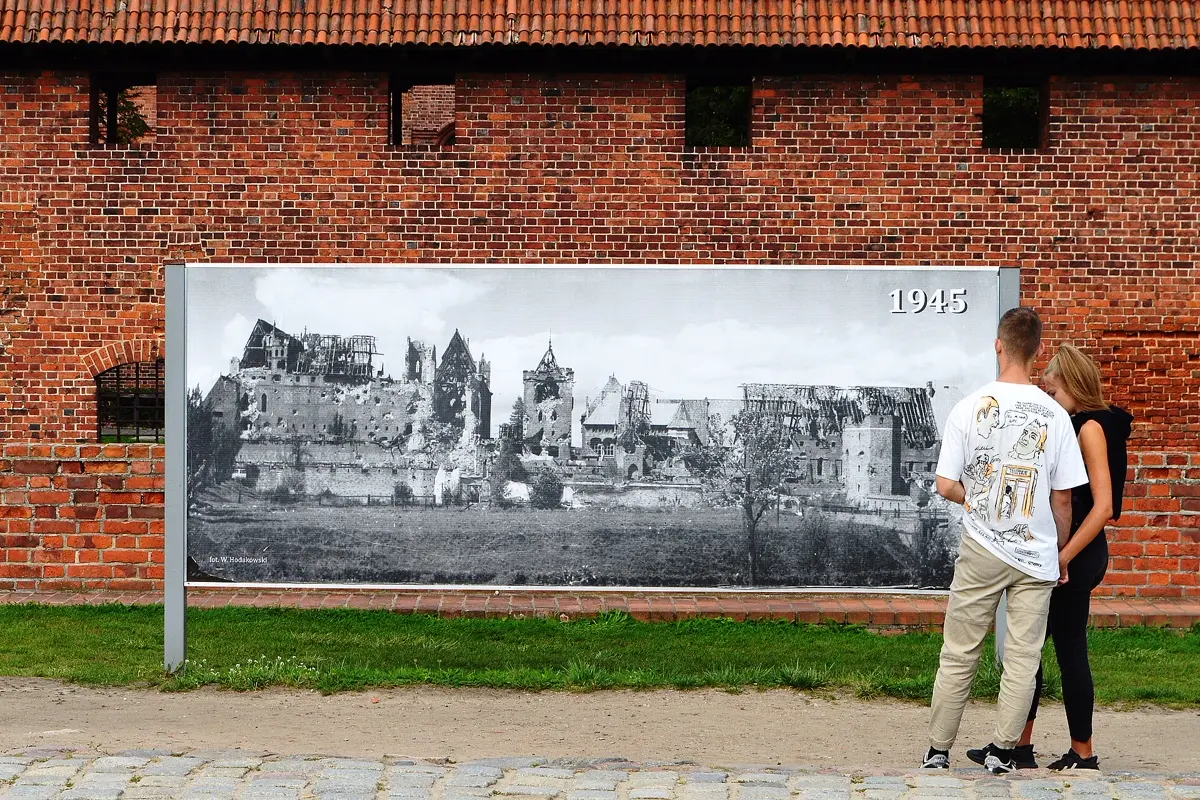
From the fourth day, the classic trip is Malbork Castle, the vast brick fortress of the Teutonic Order and a UNESCO World Heritage Site, about 60 kilometres south-east and easy to reach by train. Plan half a day to a full day for the castle itself. Closer to town, Westerplatte at the mouth of the harbour is where the German attack of 1 September 1939 began; the monument and the ruins of the guardhouses can be reached by bus or, in season, by boat from the Main Town. Train connections*, also to Warsaw, can be compared on Omio.
Where to stay in Gdańsk
For a short stay, two areas work best:
- The Main Town (Główne Miasto): right in the old town between Long Market and the Motława. Short walks, but crowded in summer.
- Granary Island (Wyspa Spichrzów): a rebuilt island opposite the Crane, with modern hotels on the water, a few minutes' walk from the old town.
Trams and buses serve the other districts, and buses and trains run from the airport into the city; for a late arrival with luggage, an airport transfer in Gdańsk* can be booked with Kiwitaxi. The currency is the złoty, and cards work almost everywhere. Visitors from outside the EU, for example from the UK, usually pay less with a travel eSIM for Poland* (Airalo) than with roaming; our eSIM price index compares the prices per gigabyte.
Best time to visit Gdańsk
| Month | Day (avg. high) | Night (avg. low) | Rain per month |
|---|---|---|---|
| Jan | 2.8 °C | -1.3 °C | 49 mm |
| Feb | 4.4 °C | -0.9 °C | 42 mm |
| Mar | 7.6 °C | 0.4 °C | 37 mm |
| Apr | 11.6 °C | 3.6 °C | 34 mm |
| May | 16.7 °C | 8.2 °C | 48 mm |
| Jun | 21.6 °C | 12.9 °C | 65 mm |
| Jul | 22.3 °C | 14.7 °C | 97 mm |
| Aug | 23.4 °C | 15.2 °C | 66 mm |
| Sep | 19.2 °C | 12.0 °C | 51 mm |
| Oct | 13.6 °C | 7.5 °C | 53 mm |
| Nov | 7.7 °C | 3.5 °C | 50 mm |
| Dec | 4.5 °C | 0.8 °C | 53 mm |
Averages 2015–2024 from the ERA5 reanalysis (via Open-Meteo), rounded.
Gdańsk is warmest from June to August, with 21 to 23 °C by day – warm enough for the beach in Sopot, and the busiest time of the year. May and September are quieter and often pleasant, at 17 to 19 °C. July brings the most rain, usually in short showers. Winters are cold and windy, with daytime highs around 3 to 5 °C, but in Advent the Christmas market fills the Main Town.
Gdańsk compared: how many days for other cities?
If you are choosing between cities, this is how many days we recommend in this series for a first visit.
Base map: Natural Earth
More in our articles how many days in Kraków and how many days in Riga, and all cities of the series in the overview how many days in each city.
How YesTrip helps you plan
YesTrip has a ready-made three-day plan for Gdańsk with times, short walks and a map for each day, including the train to Oliwa and Sopot. With one tap you copy it into the app, then move stops, drop what does not interest you and add your hotel, an organ recital in Oliwa or a day at Malbork. The app shows the weather for your travel days, the packing list suggests a warm jacket for the wind off the Baltic, and with the offline package you have the map without a connection. YesTrip is free.
 Gdańsk trip planDay by day, with map and tips
* Ad – Partner link: if you book there, we earn a commission. Your price stays the same.
Free
Plan your trip in 30 seconds.
Tell YesTrip where and when – the app plans day by day with real places on the map, shows the weather, splits costs with your travel companions and guides you to the next stop on the go.
Frequently asked questions
How many days do you need in Gdańsk?
Two days are enough for the Main Town, the European Solidarity Centre and the Museum of the Second World War. Three days are ideal and add Oliwa and Sopot. From four days, Malbork Castle or Westerplatte are worth it.
Is 2 days enough for Gdańsk?
Yes, for the city itself. In two days you can see the Main Town and the two big museums. Sopot, Oliwa and Malbork need a third day or more.
Is Malbork Castle worth a day trip from Gdańsk?
Yes. The castle of the Teutonic Order is about 60 kilometres south-east and easy to reach by train. Plan half a day to a full day; the castle's website has opening times and tickets.
Do I need złoty in Gdańsk?
Yes, the currency is the Polish złoty. Cards work almost everywhere, but a little cash is handy for small stalls.
What is the best time to visit Gdańsk?
June to August for warm days and the beach in Sopot, May and September for fewer people. Winter is cold and windy, with a Christmas market in Advent.
Sources
- Climate data: Open-Meteo Historical Weather API, daily values 2015–2024 – open-meteo.com
- Copernicus ERA5 reanalysis (Hersbach et al. 2020) – cds.climate.copernicus.eu
- Visit Gdańsk, official tourism website – visitgdansk.com
- European Solidarity Centre – ecs.gda.pl
- Museum of the Second World War – muzeum1939.pl
- Malbork Castle Museum – www.zamek.malbork.pl
Researched with AI support and checked by our editors. Prices, opening hours and weather can change – please check before you go. YesTrip is not a travel agency. Published: .
More articles
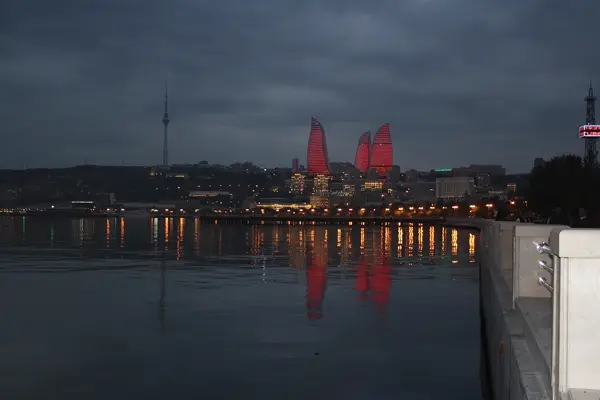 How many days?
How many days in Baku? 3 with Gobustan
Two days are enough for Baku's old town, the Boulevard and the Heydar Aliyev Center. The third belongs to Gobustan, 64 km away, with more … · 6 min read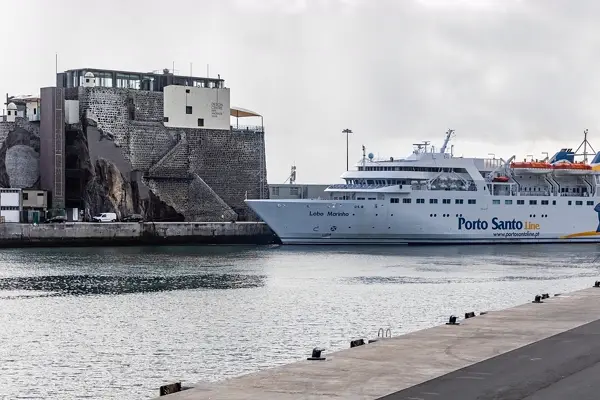 How many days?
How many days in Funchal? 3, or 5+ for Madeira
Two days are enough for Funchal: the old town, the market, the cable car and the gardens at Monte. Day three goes to the mountains, with … · 6 min read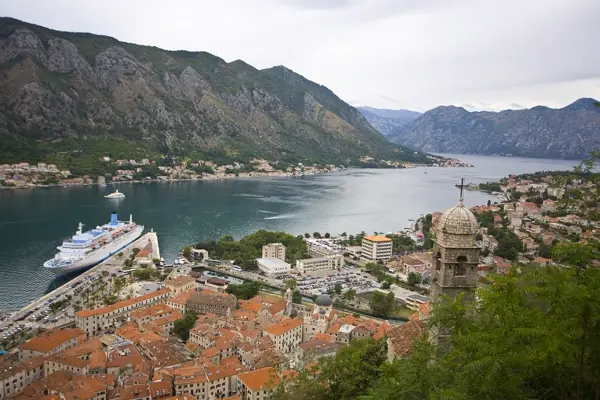 How many days?
How many days in Kotor? 2 with Perast
Two days are enough for Kotor: the old town and about 1,300 steps to the fortress on the first, Perast and the island of Our Lady of the … · 6 min read


