
How many days in Brussels? Plans for 1–4 days
In short
Two days in Brussels cover the Grand-Place, the Galeries Royales Saint-Hubert, the Magritte Museum, the Sablon, the EU quarter and the Cinquantenaire park. Three days are ideal, adding the Atomium, the Marolles flea market and an Art Nouveau house by Victor Horta. With 4 days, add a day trip to Bruges, Ghent or Antwerp. The most pleasant months are May to September (18 to 24 °C by day).
Brussels is often underestimated. Many travellers pass through on the train between Paris, London and Amsterdam, see the Grand-Place and move on. But the capital of Belgium and seat of the European Union has more: museums of world rank, Art Nouveau houses, lively squares, chocolate shops, beer cafés – and Belgium's other cities are so close by train that Brussels makes an ideal base. The short answer: 2 days for the essentials, 3 days are ideal, and from 4 days a day trip to Bruges, Ghent or Antwerp fits in.
How many days in Brussels? The overview
| Days | What you see | Best for |
|---|---|---|
| 1 day | Manneken Pis, the Grand-Place, the Galeries Royales Saint-Hubert, the cathedral, the Magritte Museum, the Sablon | a stopover between trains |
| 2 days | plus the Parlamentarium, the Natural Sciences Museum, the Cinquantenaire park, the Horta Museum | a weekend, first visit |
| 3 days | plus the Atomium, the Marolles flea market, the Palace of Justice, Sainte-Catherine | the ideal length |
| 4 days | plus a day trip to Bruges, Ghent or Antwerp | a long weekend in Belgium |
| 5+ days | plus Leuven, Mechelen or a second Flemish city | anyone who wants Belgium, not only Brussels |
The Grand-Place is a UNESCO World Heritage Site, and so are the town houses of the architect Victor Horta. In August of even-numbered years, the square is covered with a huge flower carpet for a few days.
One day in Brussels: Grand-Place and the old town
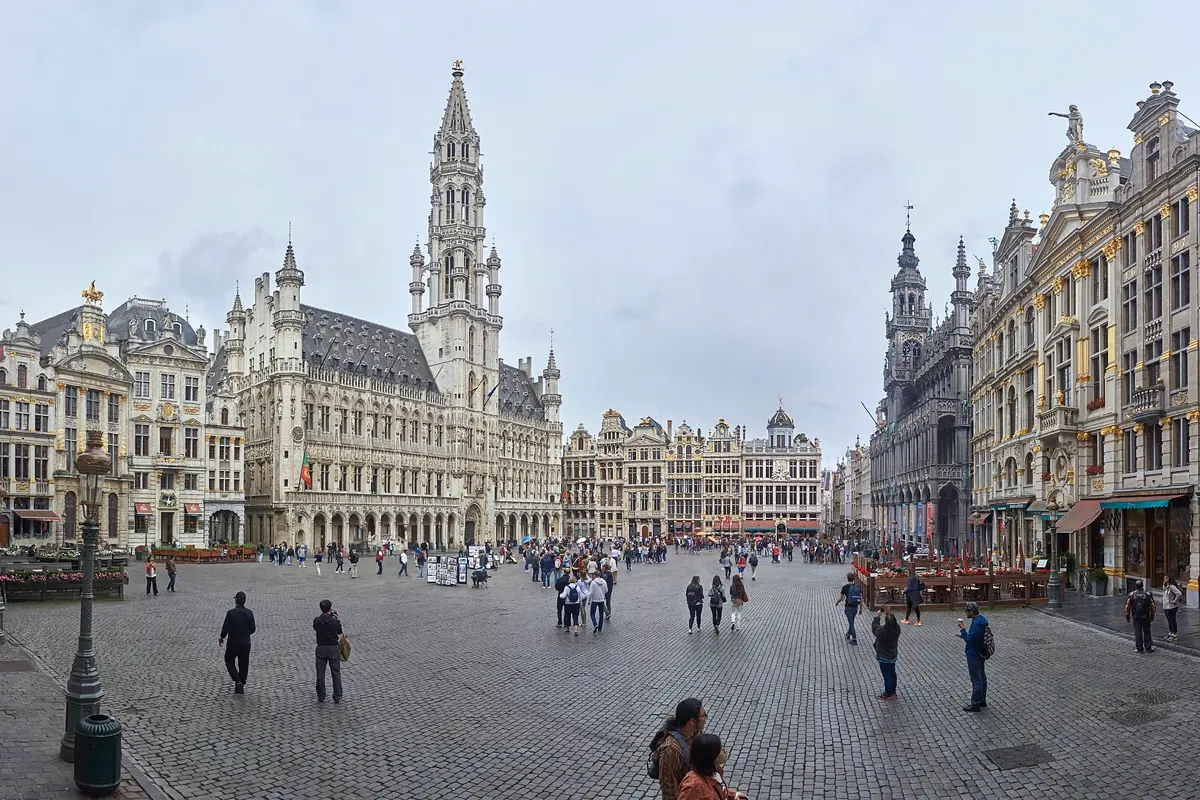
One day is enough for the centre if you walk. Start at Manneken Pis, the tiny bronze statue that has become the city's mascot – it is smaller than most people expect – and walk a few streets to the Grand-Place. The Gothic Town Hall with its 96-metre tower and the gilded guild houses around it make it one of the most beautiful squares in Europe; it is worth seeing once by day and once lit up at night.
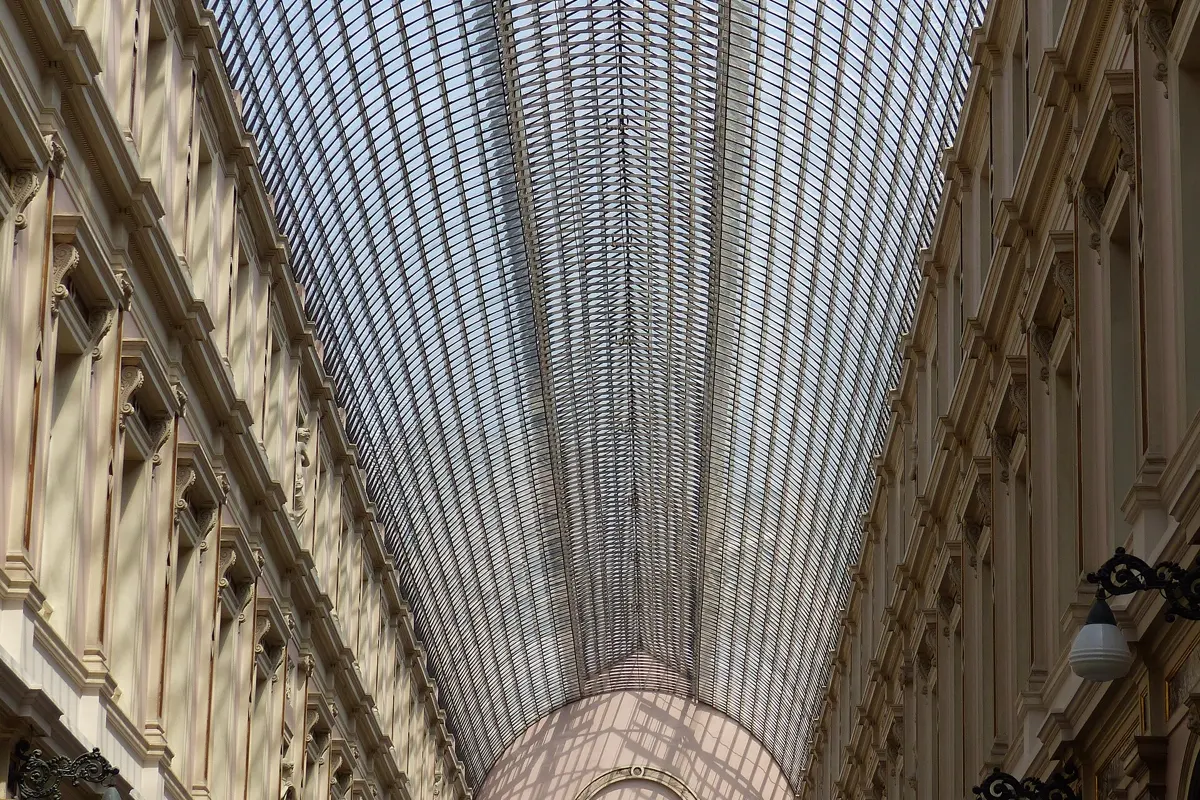
From there, the glass-roofed Galeries Royales Saint-Hubert lead north, a 19th-century shopping arcade with chocolatiers and cafés. Continue to the Cathedral of St. Michael and St. Gudula, then walk up past the Mont des Arts garden to the Magritte Museum, part of the Royal Museums of Fine Arts, with the world's largest collection of works by the Surrealist painter. End the day on the Place du Grand Sablon, the square of antique dealers and the city's best-known chocolate makers.
Two days in Brussels: the EU quarter, Cinquantenaire and Art Nouveau
The second day goes east into the European Quarter. The Parlamentarium, the visitor centre of the European Parliament, explains how the EU works in an interactive exhibition. Next door, the Museum of Natural Sciences is known for its dinosaur hall with a group of Iguanodon skeletons found in a Belgian coal mine.
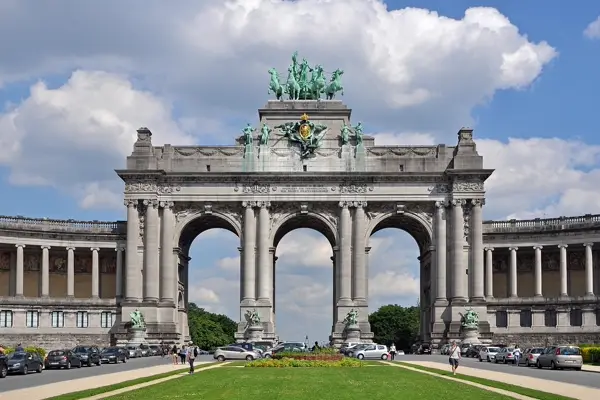
A short walk further, the Parc du Cinquantenaire with its triumphal arch and museums is a good place for a break. In the afternoon, take the tram or metro south to Saint-Gilles and the Horta Museum, the house and studio of Victor Horta, the pioneer of Art Nouveau architecture – curving iron, glass and light in every room. Tickets for the museums and the Atomium* are also on Tiqets.
Three days in Brussels: the ideal length
Three days give you Brussels beyond the Grand-Place. Our ready-made plan divides it like this:
- Day 1 – Grand-Place and the old town: Manneken Pis, the Grand-Place, the Galeries Royales Saint-Hubert, the cathedral, the Magritte Museum, the Place du Grand Sablon.
- Day 2 – EU quarter, Cinquantenaire and Art Nouveau: the Parlamentarium, the Museum of Natural Sciences, the Parc du Cinquantenaire, the Horta Museum.
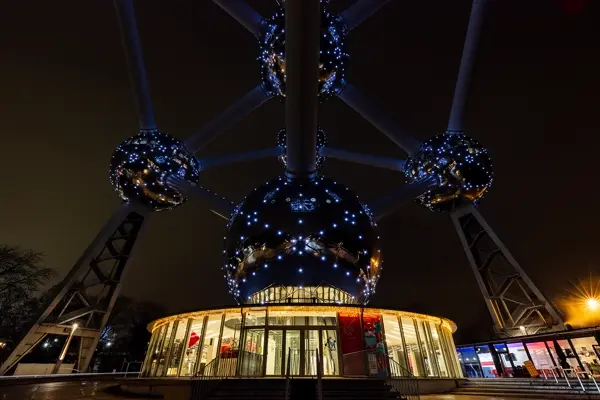
- Day 3 – Atomium and the Marolles: the Atomium, built for the 1958 World Exhibition, with a view from its top sphere; then back south to the flea market on the Place du Jeu de Balle in the Marolles, the huge Palace of Justice above it, and dinner around Place Sainte-Catherine, the old fish market quarter.
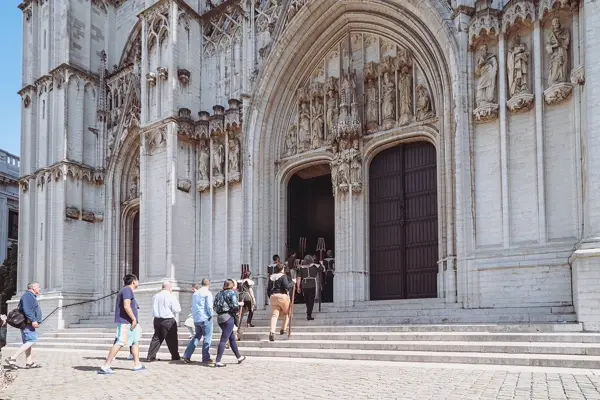
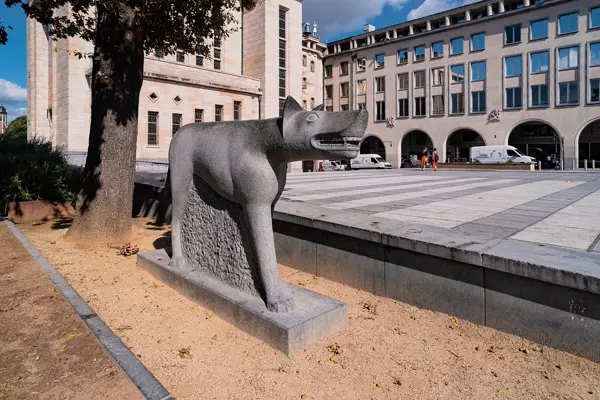
Four days or more: Bruges, Ghent and Antwerp
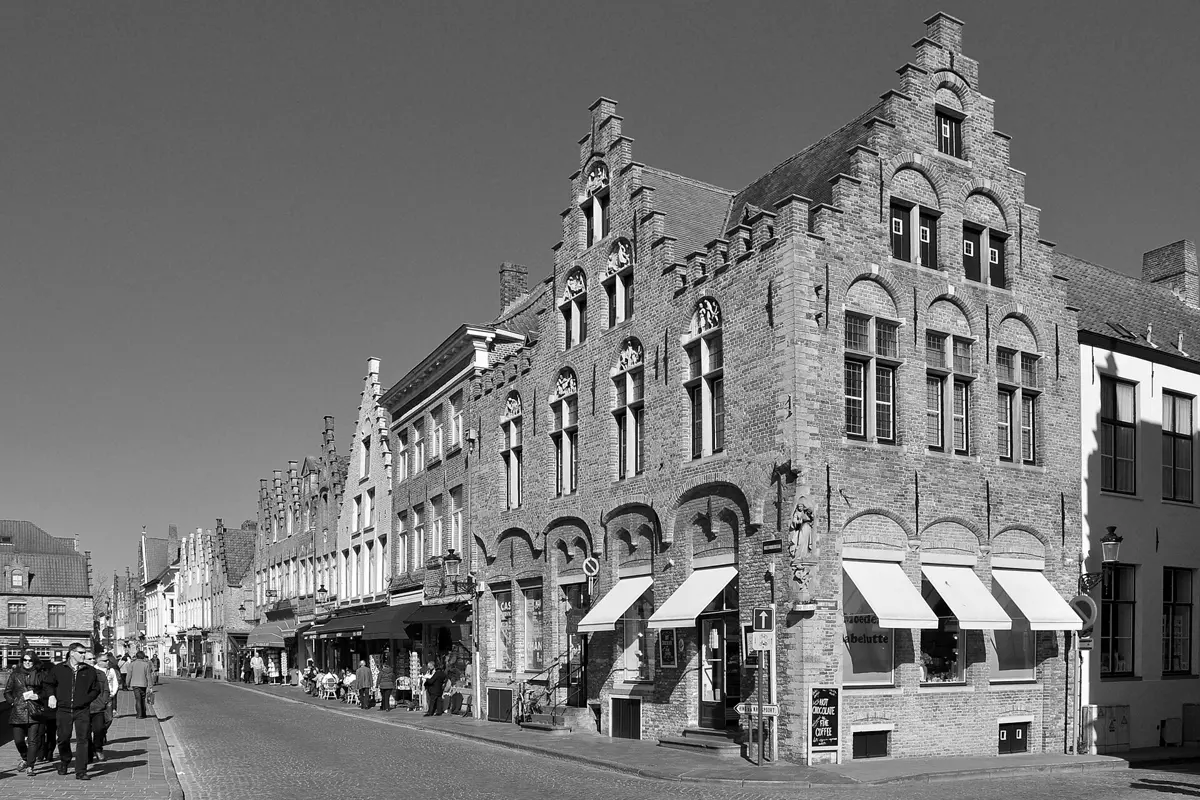
From the fourth day, Brussels becomes a base. Belgium is small and its trains are frequent: Ghent, with its medieval centre and the Ghent Altarpiece, is about half an hour away; Antwerp, with its grand railway station, the cathedral and the Rubens House, is a similar distance; Bruges is about an hour. All three work well as day trips. Our article on how many days in Bruges has a plan for the canal city.
Closer still are the university town of Leuven and Mechelen, both well under half an hour by train. Train connections* can be compared on Omio, and guided day trips from Brussels* are on Viator.
Where to stay in Brussels
For a short stay, two areas work best:
- Around the Grand-Place: in the lower town, everything on foot, with the most hotels and restaurants. Lively, sometimes loud at night.
- Ixelles: south-east of the centre, around Place Flagey and the Châtelain area, with cafés, Art Nouveau streets and a more local feel; tram and bus into the centre.
The metro, trams and buses cover the city well. Trains from Brussels Airport reach the central stations in around 20 minutes, and international trains from London, Paris and Amsterdam arrive at Bruxelles-Midi. For a transfer with luggage, Kiwitaxi offers transfers across Belgium*. Visitors from outside the EU, for example from the UK, usually pay less with a travel eSIM from Airalo than with roaming; our eSIM price index compares the prices per gigabyte.
Best time to visit Brussels
| Month | Day (avg. high) | Night (avg. low) | Rain per month |
|---|---|---|---|
| Jan | 6.3 °C | 1.4 °C | 75 mm |
| Feb | 8.4 °C | 2.0 °C | 67 mm |
| Mar | 10.9 °C | 3.1 °C | 71 mm |
| Apr | 14.2 °C | 4.7 °C | 47 mm |
| May | 18.3 °C | 8.6 °C | 63 mm |
| Jun | 22.0 °C | 12.6 °C | 71 mm |
| Jul | 23.1 °C | 14.0 °C | 68 mm |
| Aug | 23.5 °C | 14.5 °C | 59 mm |
| Sep | 20.1 °C | 11.7 °C | 65 mm |
| Oct | 15.6 °C | 9.1 °C | 71 mm |
| Nov | 10.3 °C | 5.0 °C | 69 mm |
| Dec | 7.9 °C | 3.3 °C | 75 mm |
Averages 2015–2024 from the ERA5 reanalysis (via Open-Meteo), rounded.
Brussels is at its most pleasant from May to September, with 18 to 24 °C by day; April and September are a good compromise with fewer visitors. Summers are rarely hot, and rain falls in every month, so an umbrella belongs in the bag all year – the museums and the Galeries make good rainy-day plans. In December, the Christmas market around the Grand-Place and Sainte-Catherine draws crowds, with daytime highs around 8 °C.
Brussels compared: how many days for other cities?
If you are choosing between cities, this is how many days we recommend in this series for a first visit.
Base map: Natural Earth
More in our articles how many days in Bruges and how many days in Amsterdam, and all cities of the series in the overview how many days in each city.
How YesTrip helps you plan
YesTrip has a ready-made three-day plan for Brussels with times, short walks and a map for each day. With one tap you copy it into the app, then move stops, drop what does not interest you and add your hotel or a day in Bruges or Ghent. The app shows the weather for your travel days, the packing list suggests an umbrella when rain is likely, and with the offline package you have the map without a connection. YesTrip is free.
 Brussels trip planDay by day, with map and tips
* Ad – Partner link: if you book there, we earn a commission. Your price stays the same.
Free
Plan your trip in 30 seconds.
Tell YesTrip where and when – the app plans day by day with real places on the map, shows the weather, splits costs with your travel companions and guides you to the next stop on the go.
Frequently asked questions
How many days do you need in Brussels?
Two days are enough for the Grand-Place, the old town, the Magritte Museum, the EU quarter and the Cinquantenaire park. Three days are ideal and add the Atomium, the Marolles and the Horta Museum at a relaxed pace. From four days, a day trip to Bruges, Ghent or Antwerp is worth it.
Is 2 days enough for Brussels?
Yes, for a first visit. In two days you can see the Grand-Place, Manneken Pis, the Galeries Royales Saint-Hubert, the Sablon, a major museum and the European Quarter. The Atomium and day trips need a third day or more.
Is Brussels worth visiting?
Yes, especially for art, architecture and food. The Grand-Place, the Magritte Museum, Victor Horta's Art Nouveau houses and the Atomium are unique, and Bruges, Ghent and Antwerp are easy day trips by train.
What is the best time to visit Brussels?
May to September, with daytime highs of 18 to 24 °C. April and September are quieter. It can rain in any month. In August of even-numbered years the flower carpet covers the Grand-Place, and in December there is a large Christmas market.
Where should I stay in Brussels for a short trip?
Around the Grand-Place if you want to walk everywhere, or in Ixelles for a quieter, more local area with good tram connections to the centre.
Sources
- Climate data: Open-Meteo Historical Weather API, daily values 2015–2024 – open-meteo.com
- Copernicus ERA5 reanalysis (Hersbach et al. 2020) – cds.climate.copernicus.eu
- visit.brussels, official tourism website – www.visit.brussels
- UNESCO World Heritage: La Grand-Place, Brussels – whc.unesco.org
- Atomium, official website – www.atomium.be
- Horta Museum, official website – www.hortamuseum.be
Researched with AI support and checked by our editors. Prices, opening hours and weather can change – please check before you go. YesTrip is not a travel agency. Published: .
More articles
 How many days?
How many days in Baku? 3 with Gobustan
Two days are enough for Baku's old town, the Boulevard and the Heydar Aliyev Center. The third belongs to Gobustan, 64 km away, with more … · 6 min read How many days?
How many days in Funchal? 3, or 5+ for Madeira
Two days are enough for Funchal: the old town, the market, the cable car and the gardens at Monte. Day three goes to the mountains, with … · 6 min read How many days?
How many days in Kotor? 2 with Perast
Two days are enough for Kotor: the old town and about 1,300 steps to the fortress on the first, Perast and the island of Our Lady of the … · 6 min read


