
How many days in Bruges? Plans for 1–3 days
In short
One day in Bruges covers the Markt with the Belfry, the Burg, the Rozenhoedkaai and a canal boat. Two days are ideal, adding the Beguinage, the Minnewater, the Groeningemuseum and a quiet evening after the day-trippers have left. With 3 days, add a day trip to Ghent. The most pleasant months are May to September (17 to 23 °C by day).
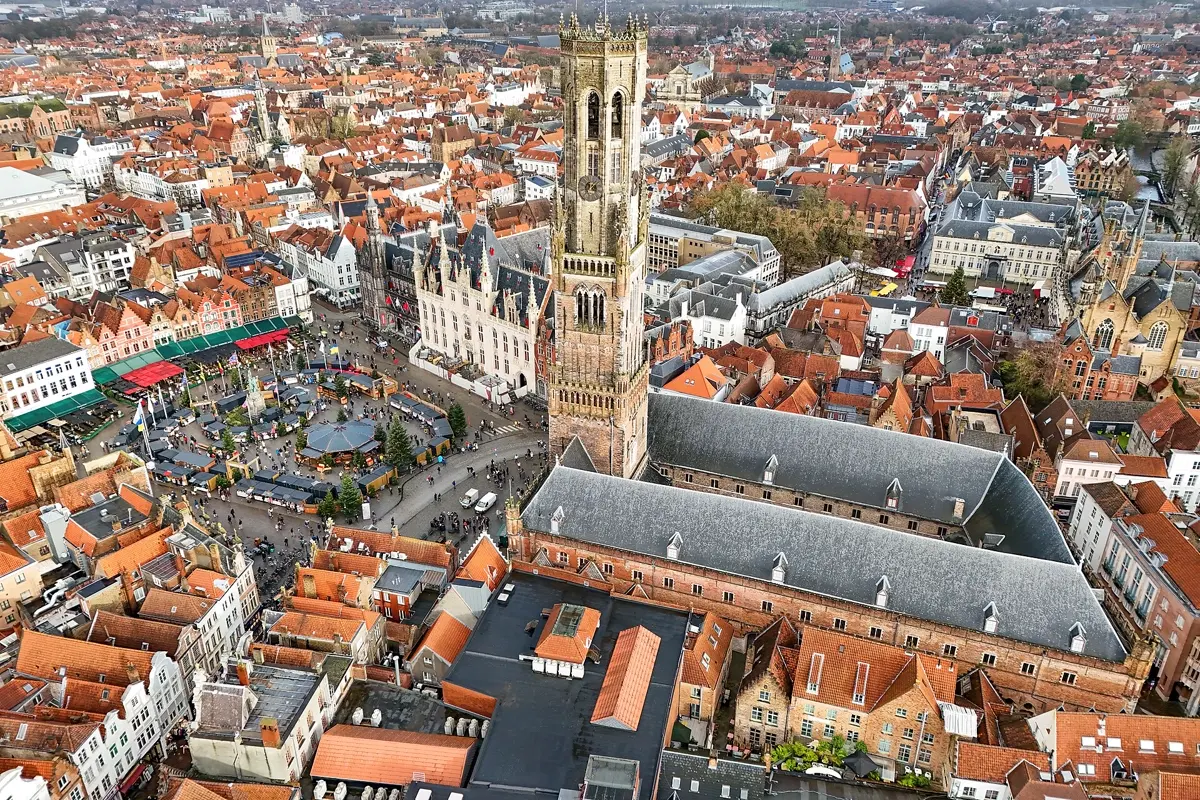
Bruges is small. The medieval centre inside the ring of canals measures about two kilometres across, and almost everything worth seeing lies within a fifteen-minute walk of the Markt. That is why many people visit on a day trip from Brussels – and why the city feels completely different once they have gone home in the evening. The short answer: 1 day for the highlights, 2 days are ideal, and with 3 days a day trip to Ghent fits in.
How many days in Bruges? The overview
| Days | What you see | Best for |
|---|---|---|
| 1 day | the Markt with the Belfry, the Burg, the Basilica of the Holy Blood, the Rozenhoedkaai, a canal boat | a day trip from Brussels |
| 2 days | plus the Groeningemuseum, the Church of Our Lady, the Beguinage, the Minnewater, the windmills | the ideal length |
| 3 days | plus a day trip to Ghent | a long weekend in Flanders |
| 4+ days | plus Damme by bike, the coast, Brussels or Antwerp | anyone who wants Belgium, not only Bruges |
The whole historic centre is a UNESCO World Heritage Site, and it is busiest between late morning and late afternoon, when tour groups and day-trippers fill the streets. If you stay overnight, the best hours belong to you: early morning on the empty canals and the evening, when the Belfry is lit and the lanes go quiet.
One day in Bruges: Markt, Burg and canals
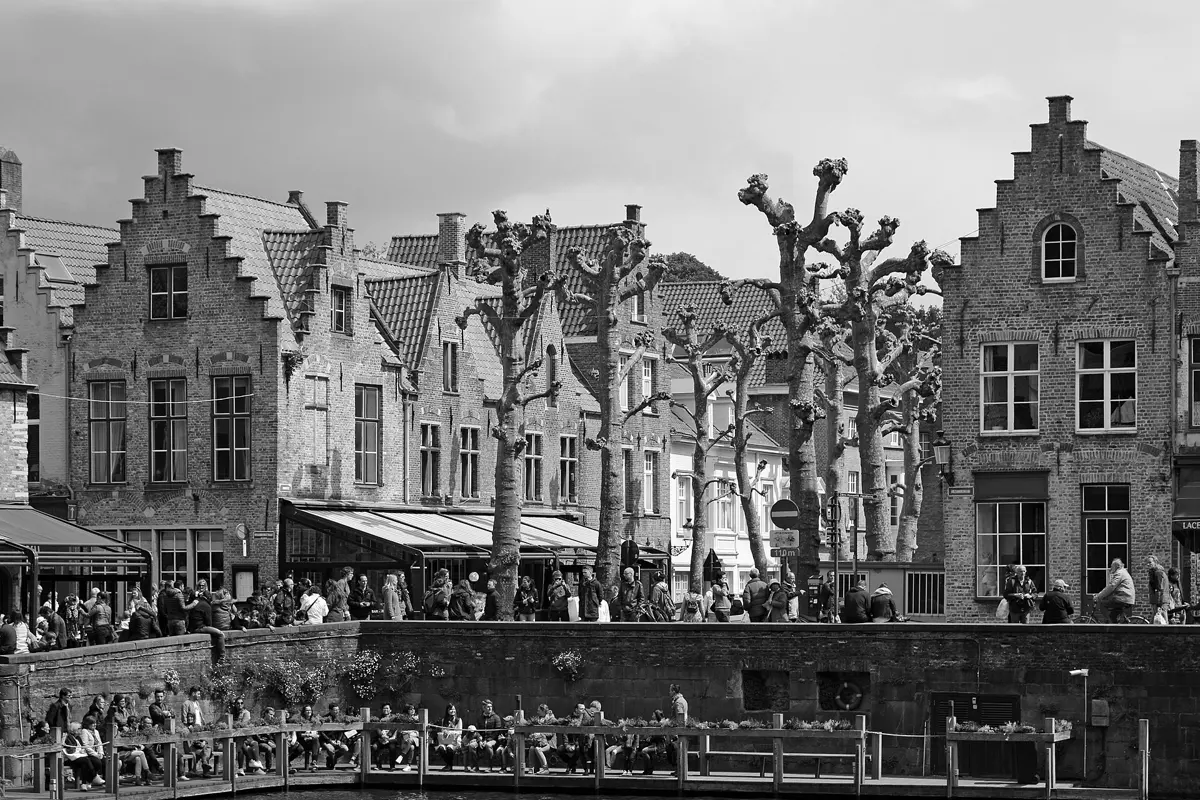
One day is enough for the essentials if you walk. Start at the Markt, framed by step-gabled guild houses and the 83-metre Belfry. The climb up its narrow staircase of 366 steps gives the best view over the red roofs; visitor numbers inside the tower are limited, so expect a queue at busy times.
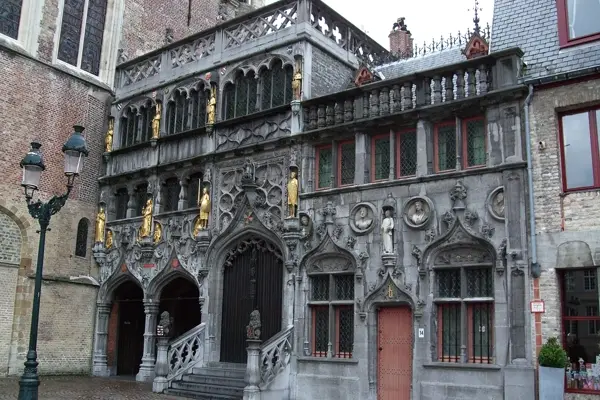
A few steps east lies the Burg, the square of the old counts' castle, with the Gothic town hall and the Basilica of the Holy Blood, a dark Romanesque lower chapel with a richly decorated upper chapel above it. From there, the Rozenhoedkaai is around the corner: the view of the canal with the Belfry behind the houses is the picture most people know of Bruges. Boat tours along the canals leave from several landing stages nearby and take about half an hour – the easiest way to understand how the city is built on water.
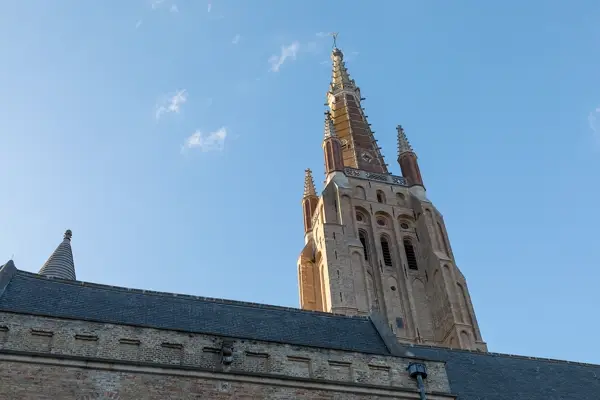
In the afternoon, walk south to the Church of Our Lady, whose brick tower is one of the tallest in the Low Countries. Inside is a marble Madonna and Child by Michelangelo, one of the few works by him that left Italy in his lifetime.
Two days in Bruges: the ideal length
Two days give Bruges the time it deserves. Our ready-made plan divides it like this:
- Day 1 – Markt, Burg and the canals: the Markt and the Belfry, the Basilica of the Holy Blood, the Rozenhoedkaai, the Groeningemuseum with paintings by Jan van Eyck and Hans Memling, the Church of Our Lady.
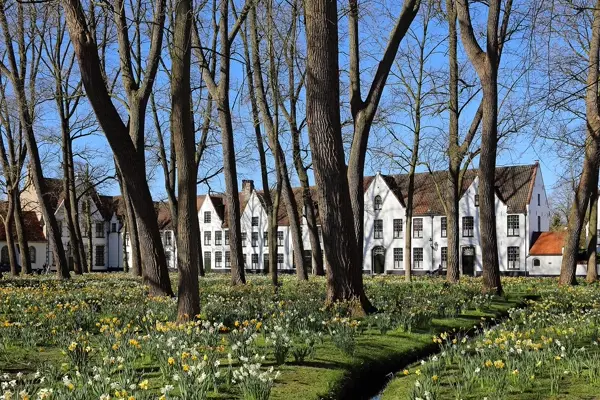
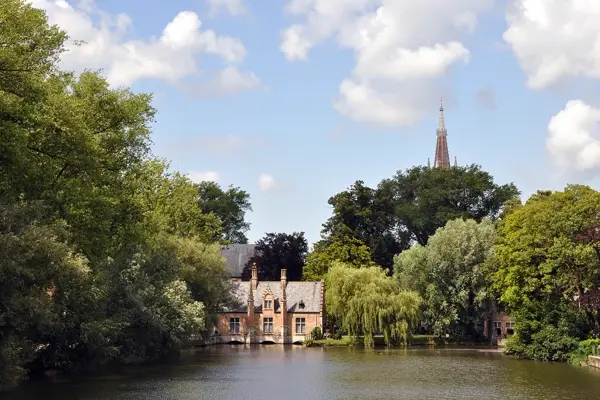
- Day 2 – Beguinage, Minnewater and windmills: the old St. John's Hospital with its Memling collection, the Beguinage, a walled courtyard of white houses around a garden of trees, the Minnewater lake, then across town to the Jerusalem Church and the windmills on the eastern ramparts, where Sint-Janshuismolen still grinds grain.
The second day is also the quiet one: the Beguinage, the Minnewater park and the area around the windmills and Sint-Anna are where Bruges is still a residential town. Museum tickets and canal tours in Bruges* can also be booked on Tiqets.
Three days or more: Ghent, Damme and the coast
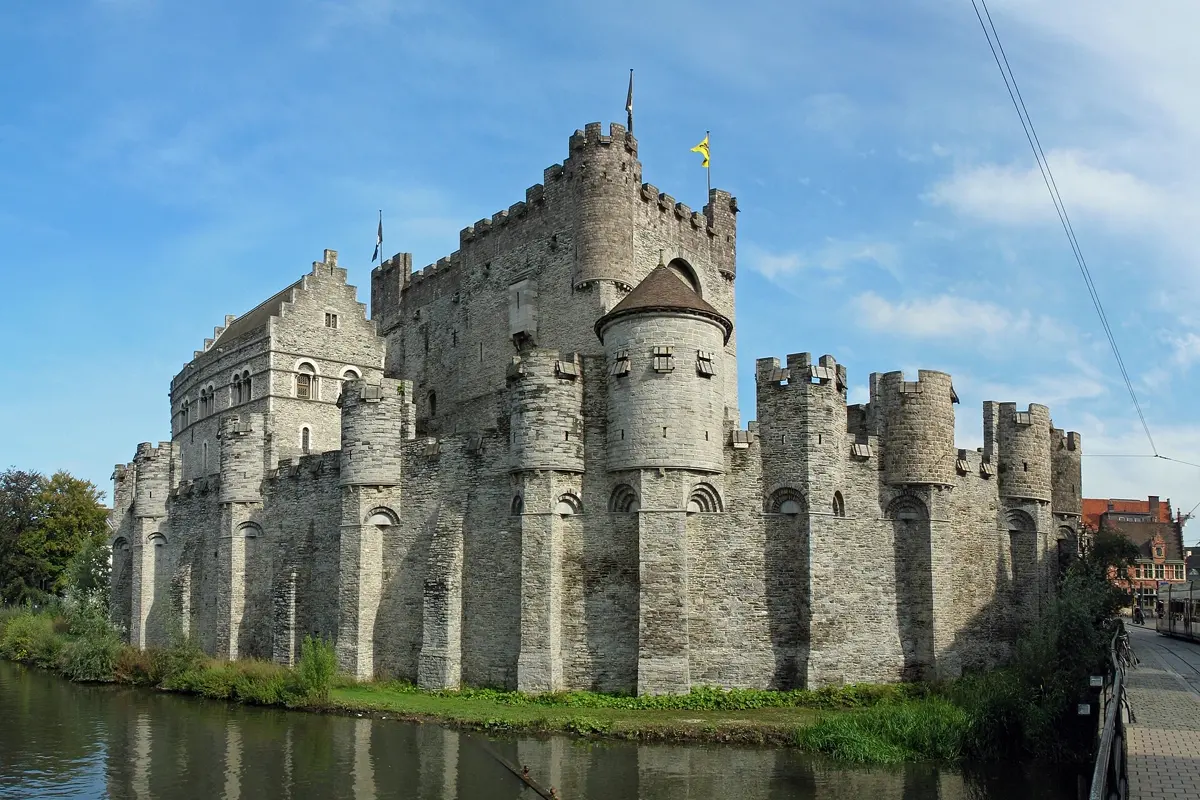
From the third day, Bruges becomes a base. The obvious trip is Ghent, a lively university city with its own medieval centre: St. Bavo's Cathedral with the Ghent Altarpiece by the van Eyck brothers, the Belfry, the guild houses along the Graslei and the moated castle Gravensteen. Trains between Bruges and Ghent run often and take less than half an hour; train connections* can be compared on Omio.
With a fourth day, rent a bike and ride along the poplar-lined canal to Damme, a small town a few kilometres north-east, or take the train to the North Sea coast. Brussels and Antwerp are also within easy reach by train.
Where to stay in Bruges
For a short stay, two areas work best:
- Around the Markt: right in the centre, everything on foot. The busiest area during the day, lively in the evening.
- Sint-Anna and the east of the old town: quieter streets near the windmills and the canals, still only ten to fifteen minutes from the Markt.
Bruges has no airport of its own: most visitors fly into Brussels and take the train, which arrives at Bruges station on the southern edge of the old town, about 20 minutes on foot from the Markt. For a transfer with luggage, Kiwitaxi offers transfers across Belgium*. Visitors from outside the EU, for example from the UK, usually pay less with a travel eSIM for Belgium* (Airalo) than with roaming; our eSIM price index compares the prices per gigabyte.
Best time to visit Bruges
| Month | Day (avg. high) | Night (avg. low) | Rain per month |
|---|---|---|---|
| Jan | 7.0 °C | 2.2 °C | 83 mm |
| Feb | 8.7 °C | 2.8 °C | 58 mm |
| Mar | 10.8 °C | 3.7 °C | 72 mm |
| Apr | 13.5 °C | 5.2 °C | 51 mm |
| May | 17.2 °C | 8.9 °C | 59 mm |
| Jun | 20.8 °C | 12.5 °C | 64 mm |
| Jul | 22.0 °C | 14.1 °C | 63 mm |
| Aug | 22.5 °C | 14.5 °C | 73 mm |
| Sep | 19.8 °C | 12.2 °C | 71 mm |
| Oct | 15.7 °C | 9.5 °C | 74 mm |
| Nov | 10.7 °C | 5.6 °C | 87 mm |
| Dec | 8.5 °C | 3.9 °C | 81 mm |
Averages 2015–2024 from the ERA5 reanalysis (via Open-Meteo), rounded.
Bruges is at its most pleasant from May to September, with 17 to 23 °C by day. It is a coastal climate: summers are rarely hot, winters rarely freezing, and rain falls in every month, so a light jacket always belongs in the bag. Spring and September are a good compromise between weather and crowds. In December a Christmas market fills the Markt, with daytime highs around 8 °C and early darkness.
Bruges compared: how many days for other cities?
If you are choosing between cities, this is how many days we recommend in this series for a first visit.
Base map: Natural Earth
More in our articles how many days in Brussels and how many days in Amsterdam, and all cities of the series in the overview how many days in each city.
How YesTrip helps you plan
YesTrip has a ready-made three-day plan for Bruges with times, short walks and a map for each day, including the day trip to Ghent. With one tap you copy it into the app, then move stops, drop what does not interest you and add your hotel, a canal boat or a bike ride to Damme. The app shows the weather for your travel days, the packing list suggests a rain jacket when showers are likely, and with the offline package you have the map without a connection. YesTrip is free.
 Bruges trip planDay by day, with map and tips
* Ad – Partner link: if you book there, we earn a commission. Your price stays the same.
Free
Plan your trip in 30 seconds.
Tell YesTrip where and when – the app plans day by day with real places on the map, shows the weather, splits costs with your travel companions and guides you to the next stop on the go.
Frequently asked questions
How many days do you need in Bruges?
One day is enough for the Markt, the Belfry, the Burg, the canals and the Church of Our Lady. Two days are ideal and add the Groeningemuseum, the Beguinage, the Minnewater and the windmills. With three days, a day trip to Ghent fits in.
Is 2 days enough for Bruges?
Yes, two days are enough to see Bruges properly, including the museums and the quieter eastern part of the old town. Staying overnight also lets you see the canals in the early morning and the evening, when the day-trippers have gone.
Can you do Bruges as a day trip from Brussels?
Yes. Trains from Brussels take about an hour, and the station is a 20-minute walk from the Markt. A day is enough for the main sights, but the city is calmest in the evening, which day-trippers miss.
What is the best time to visit Bruges?
May to September, with daytime highs of 17 to 23 °C. Spring and September are quieter than July and August. It can rain in any month, and in December a Christmas market fills the Markt.
Bruges or Ghent – which is better?
They complement each other and are less than half an hour apart by train. Bruges is smaller and more picture-book, Ghent larger and livelier, with a big student population. With three days you can see both.
Sources
- Climate data: Open-Meteo Historical Weather API, daily values 2015–2024 – open-meteo.com
- Copernicus ERA5 reanalysis (Hersbach et al. 2020) – cds.climate.copernicus.eu
- Visit Bruges, official tourism website – www.visitbruges.be
- UNESCO World Heritage: Historic Centre of Brugge – whc.unesco.org
- Visit Gent, official tourism website – www.visitgent.be
- SNCB: Belgian railways – www.belgiantrain.be
Researched with AI support and checked by our editors. Prices, opening hours and weather can change – please check before you go. YesTrip is not a travel agency. Published: .
More articles
 How many days?
How many days in Baku? 3 with Gobustan
Two days are enough for Baku's old town, the Boulevard and the Heydar Aliyev Center. The third belongs to Gobustan, 64 km away, with more … · 6 min read How many days?
How many days in Funchal? 3, or 5+ for Madeira
Two days are enough for Funchal: the old town, the market, the cable car and the gardens at Monte. Day three goes to the mountains, with … · 6 min read How many days?
How many days in Kotor? 2 with Perast
Two days are enough for Kotor: the old town and about 1,300 steps to the fortress on the first, Perast and the island of Our Lady of the … · 6 min read


