
Best time to visit the Dominican Republic
In short
The best time to visit the Dominican Republic is December to April: Punta Cana then sees 27 to 28 °C by day and 57 to 78 mm of rain a month. From May to November it is hotter and wetter, with up to 191 mm in Punta Cana in November, and the hurricane season runs from June to November. Humpback whales gather in Samaná Bay from January to March.
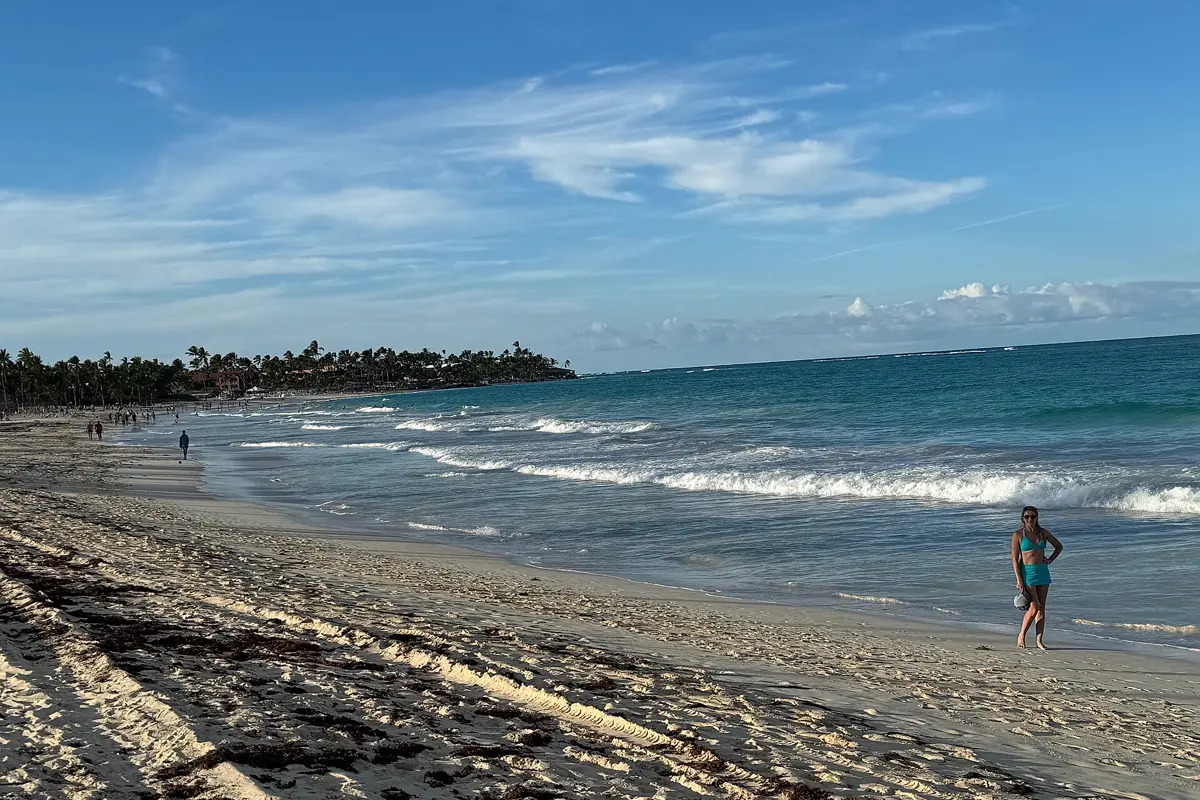
The Dominican Republic shares the island of Hispaniola with Haiti and is warm all year: by day it is 26 to 31 °C in every month, and the Caribbean is always warm enough to swim. The difference between the seasons lies in the rain and the hurricane risk. From about December to April it is drier and a little less hot; from May to November it is humid with heavy showers, and from June to November the island lies in the Atlantic hurricane belt. The north coast follows its own pattern, with more rain in winter. We analysed the weather from 2015 to 2024 at four places.
The short answer
- Best time: December to April. Punta Cana 27 to 28 °C by day, the least rain, pleasant trade winds.
- Whale season: January to March, when humpback whales gather in Samaná Bay.
- Rainy and hurricane season: May to November. Hot and humid, heavy showers, the most rain from August to November.
- North coast (Puerto Plata): wetter in winter, drier from May to August – the reverse of the south and east.
The Dominican Republic's climate: all 12 months
| Month | Punta Cana day | Punta Cana night | Punta Cana rain | Santo Domingo day | Santo Domingo rain | Puerto Plata rain | Samaná rain |
|---|---|---|---|---|---|---|---|
| January | 26.8 °C | 23.5 °C | 63 mm | 28.2 °C | 38 mm | 126 mm | 60 mm |
| February | 26.8 °C | 23.3 °C | 64 mm | 28.6 °C | 44 mm | 89 mm | 58 mm |
| March | 27.1 °C | 23.2 °C | 57 mm | 28.9 °C | 58 mm | 140 mm | 62 mm |
| April | 27.8 °C | 23.8 °C | 78 mm | 29.1 °C | 96 mm | 80 mm | 86 mm |
| May | 28.6 °C | 24.7 °C | 114 mm | 29.4 °C | 114 mm | 75 mm | 108 mm |
| June | 29.3 °C | 25.5 °C | 93 mm | 30.3 °C | 101 mm | 37 mm | 78 mm |
| July | 29.4 °C | 25.8 °C | 119 mm | 30.9 °C | 128 mm | 48 mm | 108 mm |
| August | 29.6 °C | 25.9 °C | 142 mm | 30.9 °C | 164 mm | 66 mm | 116 mm |
| September | 29.9 °C | 25.7 °C | 150 mm | 30.6 °C | 137 mm | 111 mm | 155 mm |
| October | 29.4 °C | 25.4 °C | 142 mm | 30.1 °C | 135 mm | 92 mm | 135 mm |
| November | 28.2 °C | 24.4 °C | 191 mm | 28.9 °C | 126 mm | 124 mm | 152 mm |
| December | 27.4 °C | 24.2 °C | 75 mm | 28.6 °C | 65 mm | 89 mm | 80 mm |
Temperature and rain: monthly averages 2015–2024 from the ERA5 reanalysis (via Open-Meteo), rounded. A grid cell is about 25 km wide and often includes sea on the coast, so day highs on the beach can be a little higher. Tropical showers are local and short; the totals are a rough guide, the seasonal pattern is reliable.
The temperature barely changes: Punta Cana ranges from 26.8 °C by day in January to 29.9 °C in September. Nights stay between 23 and 26 °C all year.
The rain chart shows the drier first half of the year and the wetter second half, with the peak in November.
The Dominican Republic month by month
December to April
The main season. Punta Cana and Bávaro in the east see 27 to 28 °C by day with a steady breeze, and from January to March the driest weeks. Santo Domingo on the south coast is a few degrees warmer. Christmas, New Year and Easter are the busiest and most expensive times.
January to March: whale season
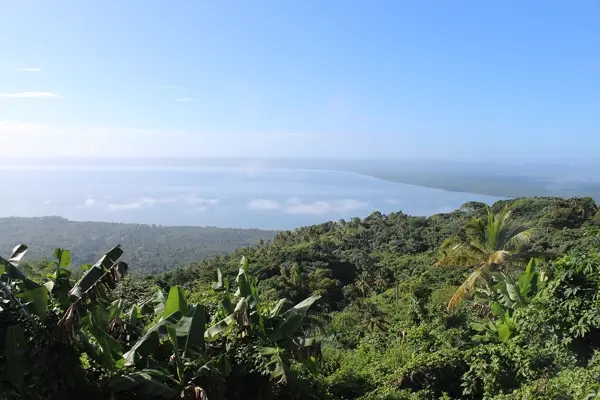
Every winter, humpback whales come to Samaná Bay in the north-east. The Dominican Republic's official tourism site gives January to March as the whale season. Boat trips leave from the town of Samaná; combined with the El Limón waterfall and the beaches of Las Terrenas, the peninsula makes a good two- to three-day trip.
May to November
The hot and humid half of the year with 29 to 31 °C by day. Rain often falls in short, heavy showers, followed by sun. In Punta Cana August to November are the wettest months, with November at 191 mm. The Atlantic hurricane season runs from June to November, and the UK travel advice notes that hurricanes have caused flooding and damage in the north and east of the country in recent years.
The north coast is different
Around Puerto Plata, the trade winds bring more rain in winter: 126 mm in January and 140 mm in March, while June averages only 37 mm. For a summer trip, the north coast is often the drier choice; for a winter beach holiday, the east and south are better.
Beyond the beach
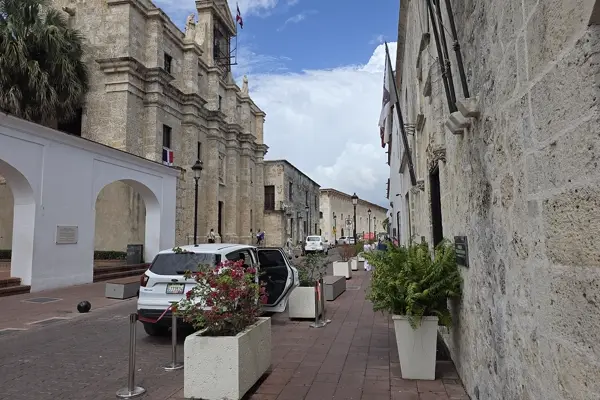
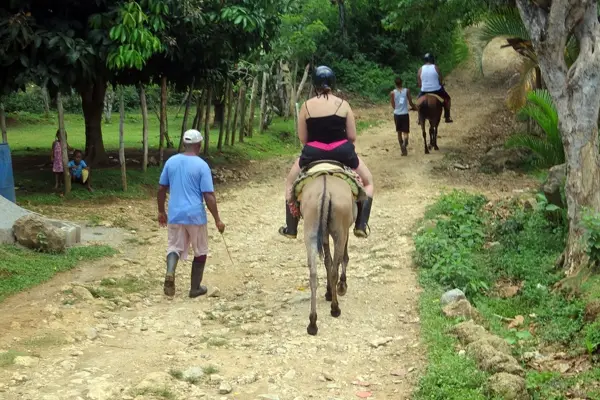
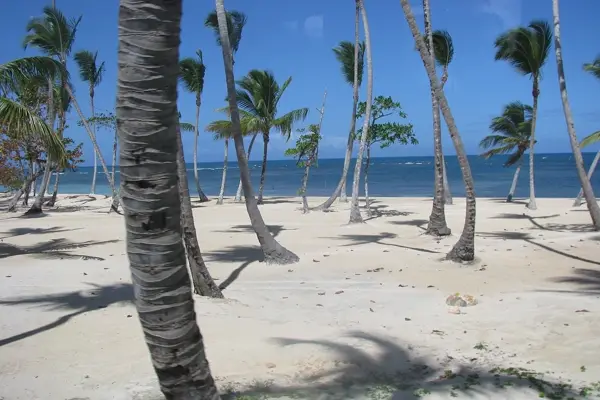
Most travellers stay in the resorts of Punta Cana and Bávaro, but the country has more to offer. The Colonial City of Santo Domingo, a UNESCO World Heritage Site, has streets and buildings from the early 16th century, including the cathedral and the Alcázar de Colón. The Samaná peninsula in the north-east combines whale watching, waterfalls and quieter beaches. In the interior, the mountains around Jarabacoa are cooler. To get around between regions, a hire car* gives you the most freedom; from the airport, an airport transfer* to the resort is the easy option. Comparing the Caribbean? See also the best time to visit Cuba and the best time to visit Mexico.
How YesTrip helps with this trip
In YesTrip you plan your beach days, a trip to Santo Domingo and a whale-watching tour on the Samaná peninsula on one map, so you can see the driving distances. The forecast for your travel days shows when showers are likely and warns of storms in the hurricane season. The packing list suggests sun protection, a light rain jacket and a plug adapter. Travelling as a group, you share the trip and log shared expenses like the hire car and excursions.
Before you go
- Entry: Check the current entry rules for British citizens on gov.uk before you travel.
- Time: The Dominican Republic is 4 hours behind the UK in winter and 5 hours in summer.
- Power: 120 volts; US-style sockets (type A/B), so bring an adapter.
- Mobile data: a travel eSIM* is usually much cheaper than roaming; our eSIM price index compares the prices per gigabyte.
More destinations by month: Best time to visit: where to go when.
* Ad – Partner link: if you book there, we earn a commission. Your price stays the same.
Free
Plan your trip in 30 seconds.
Tell YesTrip where and when – the app plans day by day with real places on the map, shows the weather, splits costs with your travel companions and guides you to the next stop on the go.
Frequently asked questions
When is the best time to visit the Dominican Republic?
December to April. Punta Cana then sees 27 to 28 °C by day and 57 to 78 mm of rain a month, the lowest of the year. From January to March you can also see humpback whales in Samaná Bay.
When is hurricane season in the Dominican Republic?
From 1 June to 30 November, the official Atlantic hurricane season, with its peak around 10 September according to the US National Hurricane Center. Most weeks in this period pass without a storm, but hurricanes can cause flooding and travel disruption.
When can you see whales in Samaná?
From January to March, according to the official tourism site of the Dominican Republic. Humpback whales come to Samaná Bay to mate and give birth; boat trips leave from the town of Samaná.
What is the rainiest month in Punta Cana?
November, with an average of 191 mm in the model data, followed by September (150 mm) and August and October (142 mm each). Showers are usually short and heavy, with sunny spells in between.
Is the Dominican Republic good in summer?
It is hot and humid at 29 to 31 °C by day, with regular showers and the hurricane season beginning in June. Prices are lower than in winter. The north coast around Puerto Plata is drier from May to August, with only 37 mm of rain in June.
Sources
- Climate data: Open-Meteo Historical Weather API (ERA5), average 2015–2024 – open-meteo.com
- Copernicus ERA5 reanalysis (Hersbach et al. 2020) – cds.climate.copernicus.eu
- Atlantic hurricane season (1 June to 30 November, peak 10 September): US National Hurricane Center – www.nhc.noaa.gov
- Hurricanes and sea conditions: UK Foreign Travel Advice for the Dominican Republic – www.gov.uk
- Whale season in Samaná (January to March): Go Dominican Republic, Ministry of Tourism – www.godominicanrepublic.com
- Colonial City of Santo Domingo: UNESCO World Heritage Centre – whc.unesco.org
- Entry requirements for the Dominican Republic: UK Foreign Travel Advice – www.gov.uk
Researched with AI support and checked by our editors. Prices, opening hours and weather can change – please check before you go. YesTrip is not a travel agency. Published: .
More best-time guides
 When to go
Best time to visit Dubai: weather by month
The best time to visit Dubai is November to March: daytime highs are 24 to 31 °C, nights 15 to 21 °C, and it hardly rains. From May to … · 6 min read When to go
Best time to visit Florida: Miami, Orlando, Keys
The best time to visit Florida is March to May and November: Miami sees 26 to 29 °C by day and 64 to 148 mm of rain a month. In winter the … · 7 min read When to go
Best time to visit Greece: Athens and islands
The best time to visit Greece is May to June and September to October: Athens sees 23 to 30 °C by day, Santorini 21 to 26 °C, and it hardly … · 7 min read
All destinations: best time to visit and warm places by month


