
Kiwi.com explained: self-transfer and Guarantee
In short
Kiwi.com combines flights from airlines that do not normally cooperate, including low-cost carriers, into one trip – on separate tickets. At the connection you collect your bags, check in again and go back through security; the airline of the first flight is not responsible for your onward flight. It works best on routes without a good connection and with plenty of buffer.
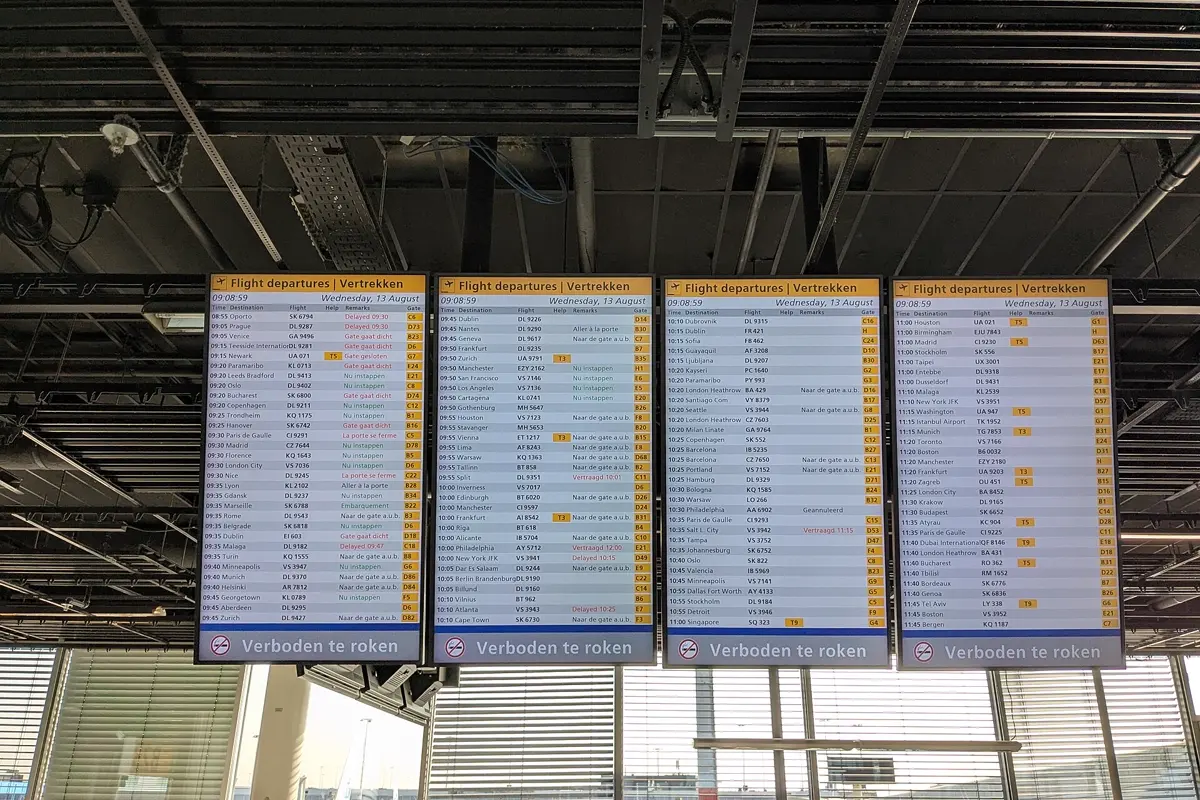
On many routes there are two ways to get there: one ticket from an airline or alliance that takes you to your destination with a connection – or two single flights that you connect yourself. Kiwi.com has turned the second way into a business model. That can open up new routes and lower fares, but it shifts responsibility to you. This article explains how it works, what the connection involves, what the Kiwi.com Guarantee does according to Kiwi.com, and when you are better off with a normal ticket.
What is Kiwi.com?
Kiwi.com is a flight booking platform based in Brno in the Czech Republic. You search and book on the website or in the app, and Kiwi.com then books the individual flights with the airlines. According to Kiwi.com, the total price is made up of the airline's ticket price and a Kiwi.com service fee.
What makes it different is the search: Kiwi.com combines flights from airlines that do not normally work together. Kiwi.com itself calls this its most popular feature. In the industry, the principle is known as virtual interlining.
Virtual interlining: what is behind it
When airlines cooperate – in an alliance, through codeshares or an interline agreement – they sell connecting flights on one ticket. Your bags are checked through to your destination, and if a delay makes you miss the connection, the airline has to rebook you on a later flight.
Low-cost carriers usually do not do this. They sell routes from A to B without onward flights on other airlines. Kiwi.com puts these single flights together itself, for example a low-cost flight to Milan and a second one from Milan to Lisbon. In the search results this looks like a connecting flight. Technically, though, these are separate bookings – Kiwi.com calls it a self-transfer.
- Hamburg
- Milan
- Lisbon
Base map: Natural Earth
The example is a diagram, not a specific connection: flight 1 from Hamburg to Milan and flight 2 from Milan to Lisbon are two bookings of their own, often with two different airlines.
What it means for you
A self-transfer is not an official connection. Kiwi.com itself says that the airlines take no responsibility for these connections. That has a few consequences you should know before you book.
| One ticket (through-connection) | Separate tickets (self-transfer) | |
|---|---|---|
| Checked bags | checked through to your destination | collect at the connecting airport and check in again |
| Security | usually only at departure | again at the connection |
| Missed connection due to a delay | the airline rebooks you | the first airline is not responsible for the second flight |
| Visa for the connecting country | often only transit rules | as if the connecting country were your destination |
| Connection time | checked by the airline | you need enough buffer yourself |
Collecting and re-checking your bags. According to Kiwi.com, you collect your checked bags at the connecting airport from the belt of your first flight, leave the transit area and take them to the check-in desk or bag drop of your next flight. Then, just as at departure, you go through security and, where applicable, customs to the gate. If the connection is too short for this, Kiwi.com says it does not offer checked baggage at all – you see that before you book.
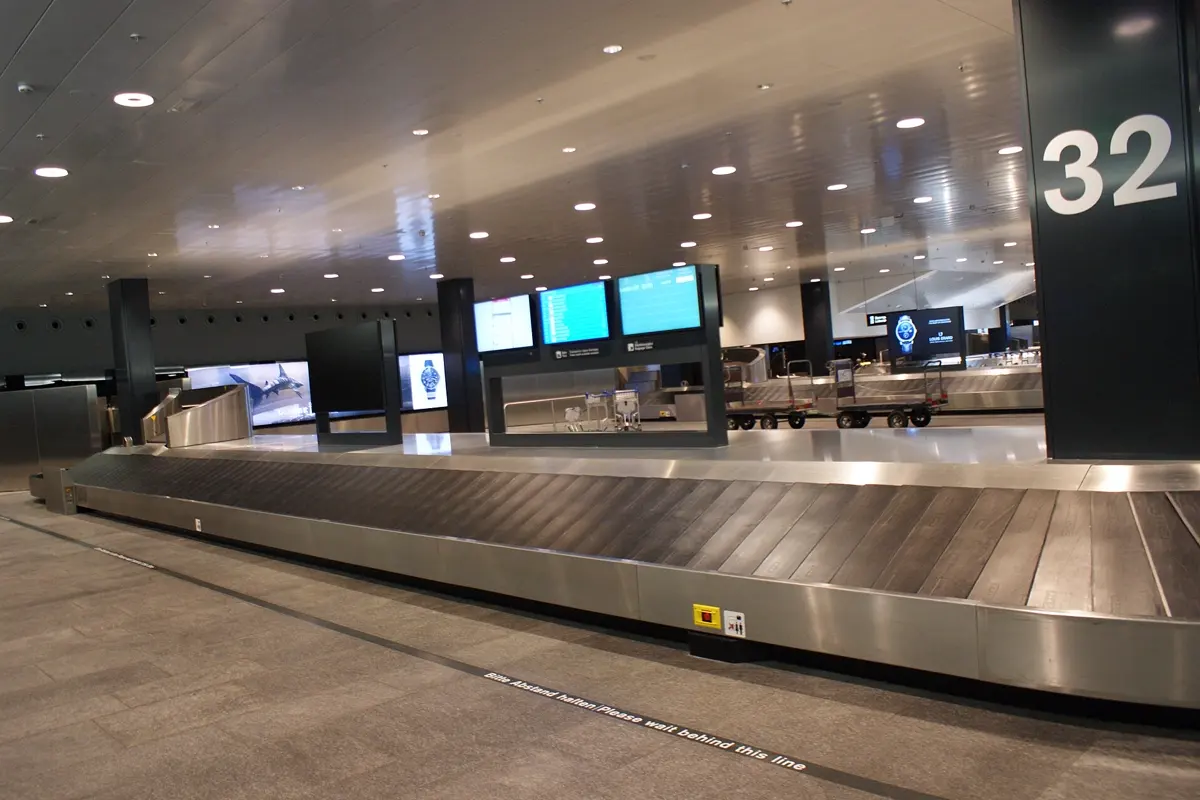
Even without a suitcase you may have to go landside. If you do not yet have a boarding pass for the second flight, Kiwi.com says you have to leave the transit area to check in. At some airports you go through passport control straight after arrival.
Visas and documents. Kiwi.com writes that if you need a visa to enter the connecting country, you also need it for the self-transfer – you need the same documents as if the connecting country were your final destination. If you connect outside the Schengen area or, for example, in the UK, check this before you book.
Delays. If a delay makes you miss your second flight, according to Kiwi.com only the airline that caused the delay helps you – and only with the flights on its own booking. It will not find a replacement for the missed connection or refund it. Compensation you are legally owed also applies only to the disrupted booking.
Large airports. Some large airports have terminals that are not directly connected. Plan extra time for changing terminals.

The Kiwi.com Guarantee
For this gap, Kiwi.com offers the Kiwi.com Guarantee, which you add when you book. Kiwi.com describes it as a package of protection against disruptions, automatic check-in, real-time updates and round-the-clock chat support. What Kiwi.com says about it:
- When it applies: when your trip is disrupted because airlines delayed, rescheduled, overbooked or cancelled part of it. For self-transfers, Kiwi.com also names Connection Protection for missed connections.
- What you get: instant compensation as Kiwi.com Credit, which you can use to book a replacement flight right away, or help with applying for a refund from the airline.
- What you have to do: for automatic check-in, your passport or ID details should be added at least 24 hours before departure.
- Without the add-on: Kiwi.com says it still helps you find alternatives, but does not cover the costs or guarantee a refund; that then depends on the airlines.
The exact conditions, exclusions and deadlines are set out in Kiwi.com's rules. Read them before you book, especially if the connection is tight. One thing always depends on you: if you yourself arrive too late for check-in or bag drop, that is not a disruption caused by the airline.
When a self-transfer makes sense
- Routes without a good connection: for example between two regional airports that no single airline serves together.
- Hand luggage only and plenty of buffer: if you travel with hand luggage only and have several hours to connect, you avoid the biggest risks.
- With a stopover: you can turn the connection into a deliberate stop – a night or a day in the connecting city takes the time pressure out completely.
- Flexible trips: backpacking without fixed dates at the destination copes better with a missed connection.
Whether a combination is worth it on price only shows when you compare. In the Kiwi.com flight search* the results show whether a connection includes a self-transfer.
When a normal ticket is better
- Fixed appointments at the destination: a wedding, the start of a cruise, a business meeting, an onward train – reliability matters more than price here.
- Short connection time: the shorter the buffer, the bigger the risk. On one ticket the airline carries that risk; on a self-transfer, you do.
- Checked bags, children, reduced mobility: collecting bags, checking in again and going through security with children or little time is hard work.
- A connection that needs a visa: if you need a visa for the connecting country, the advantage often disappears.
- Long haul with only one onward flight a day: if you miss it, the next option may only be the following day.

Practical tips for a self-transfer
- Choose a generous connection time. Count getting off the plane, the baggage belt, the walk to check-in, security and possibly passport control – and then a buffer for delays.
- Look at the airport beforehand. Same terminal? How far is it to departures? Is there passport control at the connection?
- Check in online where you can. With a boarding pass for the second flight and no checked bags, you may not have to leave the transit area.
- Check the baggage rules of both airlines. Low-cost carriers often have different hand luggage rules. What is accepted on the first flight may not be on the second.
- Sort out documents for the connecting country. Visa, entry rules, passport validity – as if it were your destination.
How YesTrip helps
In YesTrip you search for flights, hotels and tours in one place, with filters for departure time, stops and price. You book directly with the provider on their terms – YesTrip never books anything itself. You add your booked flight to your trip plan; the AI day plan then shows your arrival, the way into town and the first stops. If you plan a stopover in the connecting city, simply add a day for it. The packing list suggests what to bring based on the weather at your destination – handy if you want to travel with hand luggage only because of the self-transfer.

* Ad – Partner link: if you book there, we earn a commission. Your price stays the same.
Free
Plan your trip in 30 seconds.
Tell YesTrip where and when – the app plans day by day with real places on the map, shows the weather, splits costs with your travel companions and guides you to the next stop on the go.
Frequently asked questions
Is Kiwi.com legit?
Kiwi.com is an established booking platform from the Czech Republic that books flights with the airlines for you. What matters is understanding what you are buying: many connections are separate tickets with a self-transfer, and the airlines are not responsible for the connection.
What does self-transfer mean on Kiwi.com?
Self-transfer means your connection is made up of separate bookings. At the connecting airport you collect your bags, check in again for the next flight and go through security again. If there is a delay, the first airline is not responsible for your onward flight.
What does the Kiwi.com Guarantee cover?
According to Kiwi.com, it applies when airlines delay, change, overbook or cancel part of your trip. You then get instant Kiwi.com Credit for a replacement flight or help with a refund from the airline. Automatic check-in and round-the-clock support are part of it; the exact conditions are in Kiwi.com's rules.
How much connection time do I need for a self-transfer?
Kiwi.com does not give a fixed number. You need time for the baggage belt, a new check-in, security and possibly passport control, plus a buffer for delays. If the time is too short for checked bags, Kiwi.com says it does not offer them.
Do I need a visa for the connecting country on a self-transfer?
Yes, if you need a visa to enter that country. Kiwi.com writes that for a self-transfer you need the same documents as if the connecting country were your destination.
Sources
- Kiwi.com: self-transfer – bags, security, visas, delays – www.kiwi.com
- Kiwi.com: Kiwi.com Guarantee – www.kiwi.com
- Kiwi.com: disruption services (Disruption Protection) – www.kiwi.com
- Kiwi.com: fees and the self-transfer principle – www.kiwi.com
Researched with AI support and checked by our editors. Prices, opening hours and weather can change – please check before you go. YesTrip is not a travel agency. Published: .
More articles
 Booking & on the road
Airport transfer: when booking one pays off
Driving from the airport to the city centre takes between 11 minutes (Lisbon) and just over an hour (Istanbul), without traffic. Trains and … · 7 min read Booking & on the road
Booking tickets and tours for a city break
For the Colosseum, the Vatican Museums, the Sagrada Família, the Alhambra or the Anne Frank House, book a timed ticket in advance – good … · 8 min read Booking & on the road
Hotel luggage storage, lockers and left luggage
On departure day you have three options for your suitcase: your hotel's luggage room or guest luggage lockers, lockers or a staffed … · 8 min read


