
How many days in Prague? Plans for 1–4 days
In short
Two days in Prague cover the classics – Old Town Square, Charles Bridge, Prague Castle and Malá Strana. Three days are ideal, adding Vyšehrad, the New Town and the view from Petřín. With 4 or 5 days, take day trips to Kutná Hora (about 1 hour by train) and Karlštejn Castle. The best months are May to September (19 to 26 °C by day).
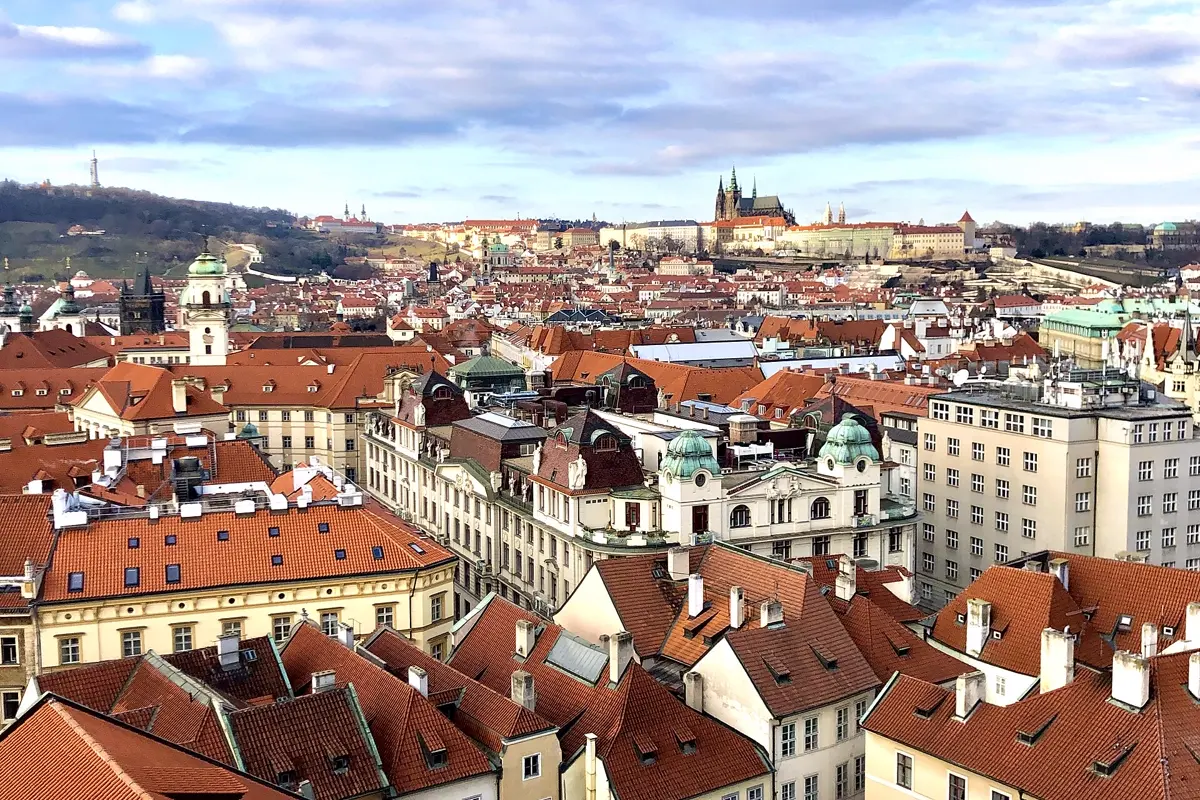
Prague is compact: the Old Town, Malá Strana and the castle are so close together that you can reach almost everything on foot. That is why more fits into a few days here than in many other capitals. The short answer: 2 days for the classics, 3 days are ideal, and from 4 days day trips to Kutná Hora or Karlštejn Castle are worth it.
How many days in Prague? The overview
| Days | What you see | Best for |
|---|---|---|
| 1 day | the castle and St. Vitus Cathedral, Malá Strana, Charles Bridge, Old Town Square with the Astronomical Clock | a stopover or day trip |
| 2 days | the Old Town and Jewish Quarter at leisure, the castle, Malá Strana, Petřín | a long weekend |
| 3 days | plus Vyšehrad, the Dancing House, Wenceslas Square, an evening in Letná Park | the ideal length |
| 4 days | plus a day trip to Kutná Hora or Karlštejn | return visitors, history fans |
| 5+ days | both day trips, plus Strahov, Holešovice and the big parks | anyone who wants Prague in depth |
One thing matters for planning: the Jewish Museum with its synagogues and the Old Jewish Cemetery is closed on Saturdays and Jewish holidays. Put it on another day.
One day in Prague: downhill from the castle
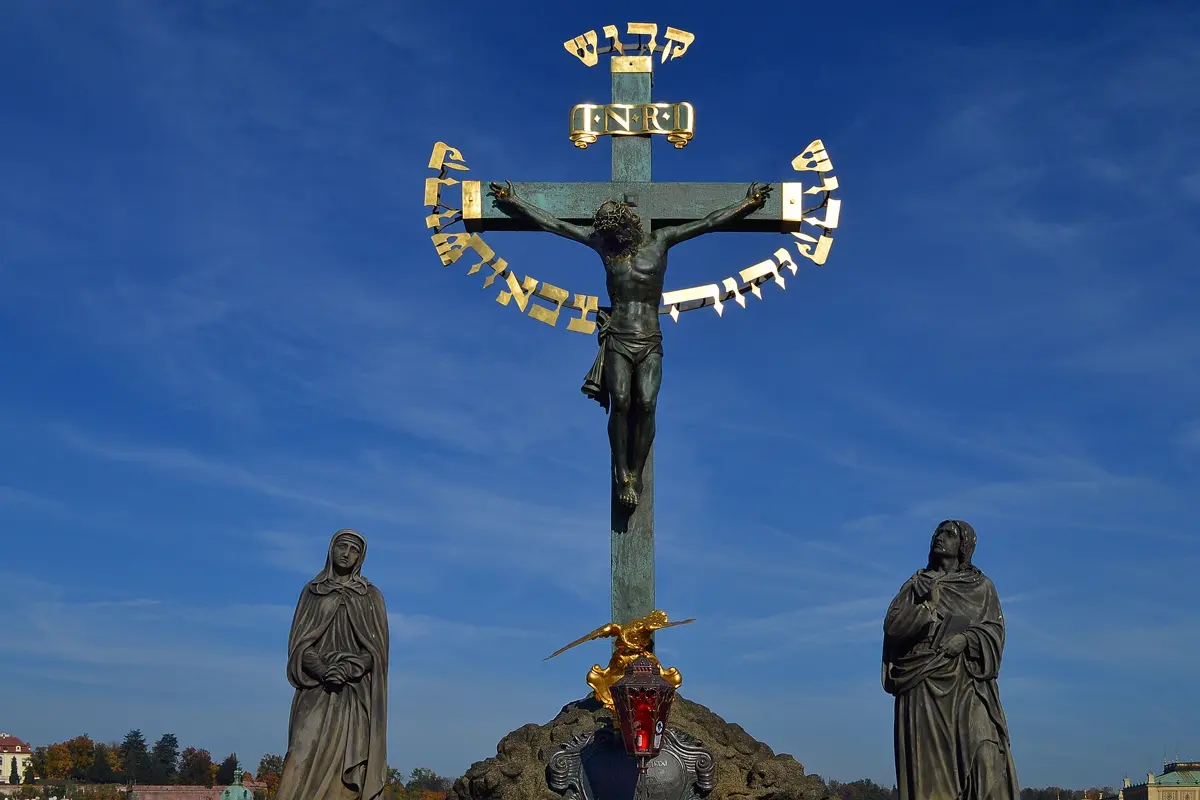
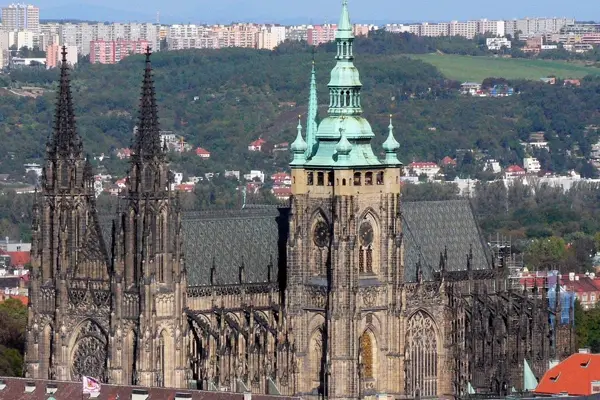
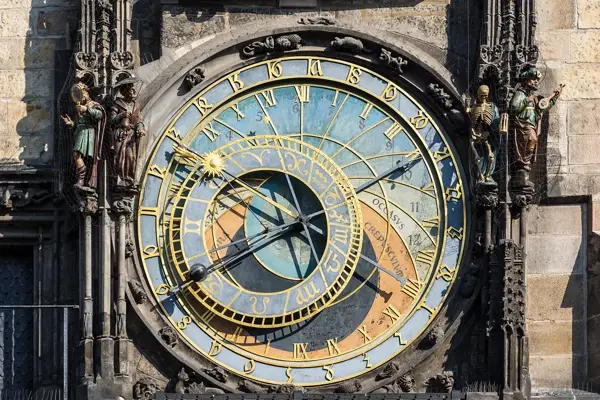
One day in Prague works best from the top down. In the morning, take tram 22 to the Pražský hrad stop and be at St. Vitus Cathedral when it opens, before the groups arrive. Then Golden Lane with its tiny houses built into the castle wall. Walk down Nerudova into Malá Strana, past the Lennon Wall to Charles Bridge. On the other side of the Vltava, the route leads through the Jewish Quarter to Old Town Square, where the Astronomical Clock from 1410 sends its apostles past on the hour. Dinner in one of the old beer halls of the New Town.
It is a full day, but a very doable one – because almost all of it is downhill.
Two days in Prague: the Old Town and the castle
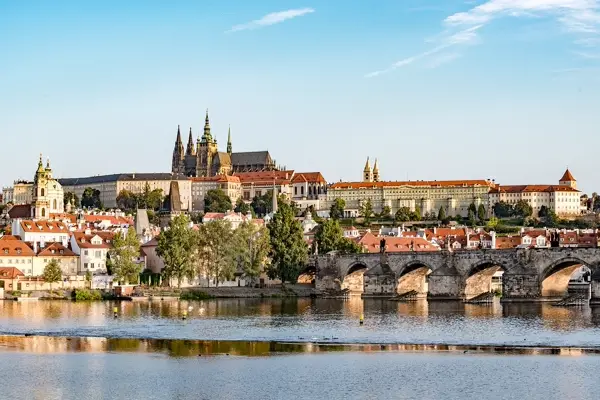
With two days, you split the city in two. Day one belongs to the Old Town: Old Town Square with the Týn Church, the Astronomical Clock, the Jewish Quarter of Josefov with the Old Jewish Cemetery, the Powder Tower and the Art Nouveau café in the Municipal House. In the evening, walk onto Charles Bridge when the castle is lit up.
Day two belongs to Prague Castle and Malá Strana: St. Vitus Cathedral, Golden Lane, the baroque St. Nicholas Church and, in the afternoon, up to the Petřín Lookout Tower, Prague's little Eiffel Tower. The castle circuit ticket and guided tours* are on Tiqets.
For a Friday-to-Sunday weekend we have a separate plan that respects the closing days: the Jewish Quarter goes on Sunday, the castle on Saturday.
Three days in Prague: the ideal length
Three days are right for a first visit. You see both halves of the city plus its quieter side. Our ready-made plan:
- Day 1 – Old Town and Josefov: Old Town Square, the Astronomical Clock, the Old Jewish Cemetery, the Powder Tower, the Municipal House, Charles Bridge in the evening.
- Day 2 – Prague Castle and Malá Strana: the castle and St. Vitus Cathedral with windows by Alfons Mucha, Golden Lane, St. Nicholas Church, the Lennon Wall, the Petřín Lookout Tower.
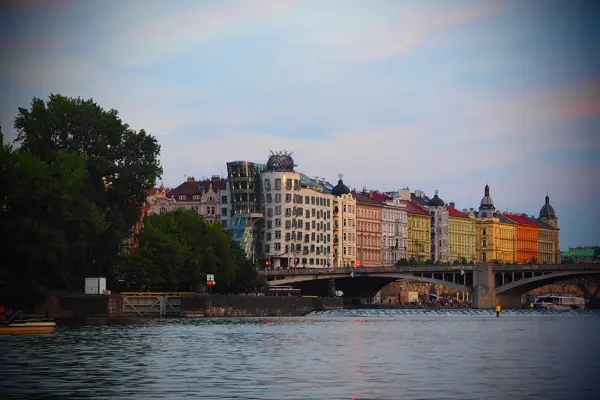
- Day 3 – Vyšehrad and the New Town: the old fortress of Vyšehrad above the Vltava, where Dvořák and Smetana are buried, Frank Gehry's Dancing House, the National Theatre, Wenceslas Square and an evening in the beer garden of Letná Park with a view of the bridges.
If you plan a lot of paid entries, a city pass such as the Go City Prague Pass* may pay off – compare it with single tickets first, they are often enough.
Four days or more: Kutná Hora and Karlštejn
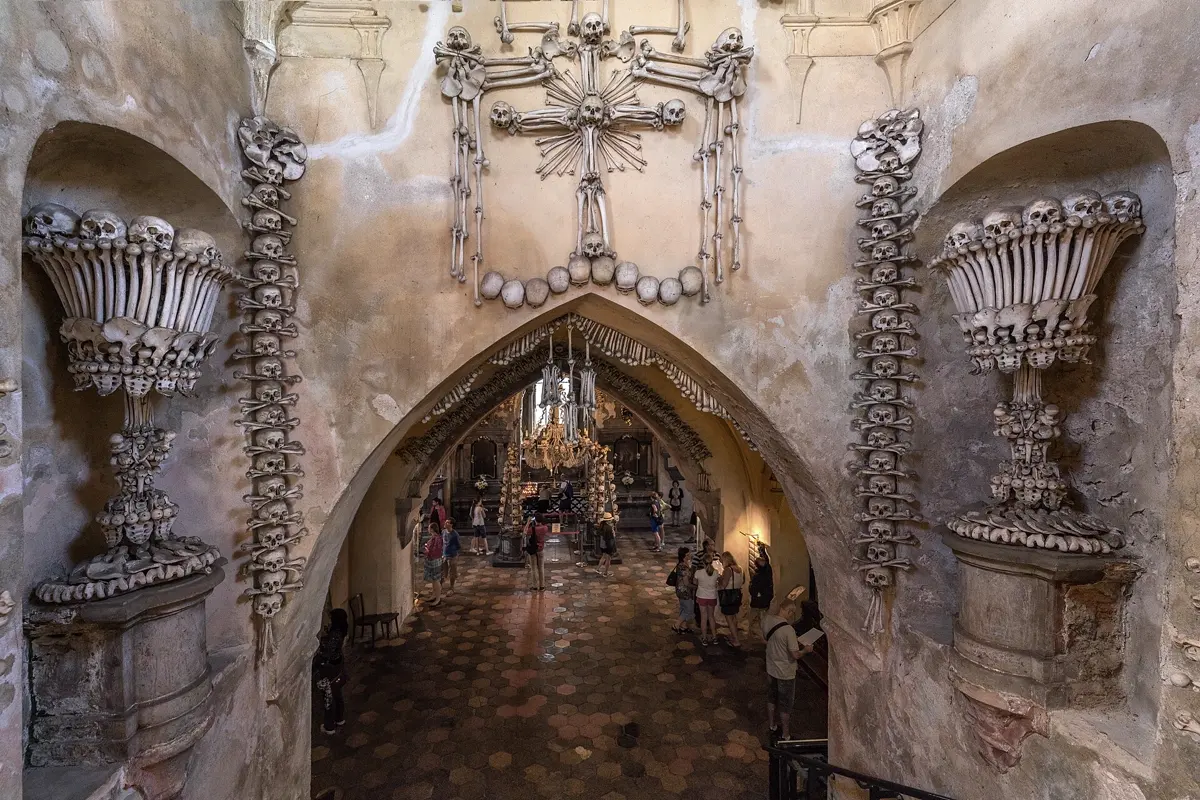
From the fourth day on, a day trip by train is worth it. Kutná Hora is about 1 hour away and has two highlights: the Sedlec Ossuary, a chapel decorated with the bones of tens of thousands of people, and the Gothic St. Barbara's Church with its tent-shaped roofs. The historic town is a UNESCO World Heritage Site.
Karlštejn Castle, where Charles IV kept the crown jewels, is about 40 minutes by train, then a walk of around 30 minutes uphill from the station. Inside, visits are by guided tour only. You can compare train connections for both trips* on Omio.
Our 5-day plan puts both trips on days three and four, without changing hotels. It also adds Strahov Monastery, the Wallenstein Garden and the Holešovice district with the DOX art centre.
Where to stay in Prague
Two areas suit a short stay:
- Old Town: in the middle of everything, all within walking distance. Noisy at night, especially around Old Town Square.
- Vinohrady: a residential district with Art Nouveau houses, parks and cafés, quieter and usually cheaper. Quick to the centre by metro and tram.
The currency is the Czech koruna, and cards are accepted almost everywhere. Tram and metro tickets are sold at machines or in an app. Buses run from the airport into the city; a transfer from Prague airport to your door* can be booked with Welcome Pickups. Coming from outside the EU, a travel eSIM from Airalo is usually cheaper than roaming.
Best time to visit Prague
| Month | Day (avg. high) | Night (avg. low) | Rain per month |
|---|---|---|---|
| Jan | 3.8 °C | -1.8 °C | 40 mm |
| Feb | 6.5 °C | -0.9 °C | 41 mm |
| Mar | 10.2 °C | 0.9 °C | 37 mm |
| Apr | 14.8 °C | 4.2 °C | 40 mm |
| May | 19.4 °C | 9.1 °C | 66 mm |
| Jun | 24.6 °C | 14.1 °C | 75 mm |
| Jul | 26.1 °C | 15.6 °C | 61 mm |
| Aug | 25.9 °C | 15.6 °C | 81 mm |
| Sep | 21.0 °C | 11.3 °C | 56 mm |
| Oct | 15.2 °C | 7.1 °C | 53 mm |
| Nov | 8.4 °C | 2.3 °C | 44 mm |
| Dec | 5.3 °C | 0.0 °C | 45 mm |
Averages 2015–2024 from the ERA5 reanalysis (via Open-Meteo), rounded.
Prague is most pleasant in May, June and September: 19 to 25 °C by day and long evenings. July and August are the warmest at around 26 °C, and Charles Bridge is packed. August is on average the wettest month. April and October are cooler at 15 °C but quieter. In December, the Christmas markets draw visitors; daytime highs are then around 5 °C, with nights around freezing.
How YesTrip helps you plan
YesTrip has ready-made plans for Prague: three days as the main plan, plus one day downhill from the castle, a weekend, five days with Kutná Hora and Karlštejn, two days with children and two budget days. Each plan has times, short walks and a map. With one tap you copy it into the app and adjust it: move stops, drop some, add your hotel. The app shows the weather for your travel days, the packing list suggests matching clothes, and with the offline package you have the map without a connection. YesTrip is free.
 Prague trip planDay by day, with map and tips
Prague is also a good start for a longer trip: our comparison of Eastern Europe city breaks covers eight more cities from Kraków to Tallinn.
* Ad – Partner link: if you book there, we earn a commission. Your price stays the same.
Free
Plan your trip in 30 seconds.
Tell YesTrip where and when – the app plans day by day with real places on the map, shows the weather, splits costs with your travel companions and guides you to the next stop on the go.
Frequently asked questions
How many days do you need in Prague?
Two days are enough for the Old Town, Charles Bridge, the castle and Malá Strana. Three days are ideal, adding Vyšehrad, the New Town and Petřín. From four days, day trips to Kutná Hora or Karlštejn Castle are worth it.
Is a weekend enough for Prague?
Yes. Prague is compact, and a weekend covers the Old Town, the Jewish Quarter, the castle and Malá Strana. Keep in mind that the Jewish Museum is closed on Saturdays, so visit it on Sunday.
Can you see Prague in one day?
The main sights, yes, if you start at the castle and walk downhill: St. Vitus Cathedral, Golden Lane, Malá Strana, Charles Bridge and Old Town Square. There is no time left for museums.
When is the best time to visit Prague?
May, June and September, with 19 to 25 °C by day. July and August are the warmest and busiest. In December the Christmas markets are a reason to go, but it is cold.
Which day trip from Prague is worth it?
Kutná Hora with the Sedlec Ossuary and St. Barbara's Church, about 1 hour by train. Karlštejn Castle is closer, about 40 minutes by train plus a 30-minute walk uphill.
Sources
- Climate data: Open-Meteo Historical Weather API, daily values 2015–2024 – open-meteo.com
- Copernicus ERA5 reanalysis (Hersbach et al. 2020) – cds.climate.copernicus.eu
- UNESCO World Heritage: Kutná Hora – whc.unesco.org
- Jewish Museum in Prague, official website – www.jewishmuseum.cz
Researched with AI support and checked by our editors. Prices, opening hours and weather can change – please check before you go. YesTrip is not a travel agency. Published: .
More articles
 How many days?
How many days in Baku? 3 with Gobustan
Two days are enough for Baku's old town, the Boulevard and the Heydar Aliyev Center. The third belongs to Gobustan, 64 km away, with more … · 6 min read How many days?
How many days in Funchal? 3, or 5+ for Madeira
Two days are enough for Funchal: the old town, the market, the cable car and the gardens at Monte. Day three goes to the mountains, with … · 6 min read How many days?
How many days in Kotor? 2 with Perast
Two days are enough for Kotor: the old town and about 1,300 steps to the fortress on the first, Perast and the island of Our Lady of the … · 6 min read


