
How many days in New Orleans? Plans for 1–5 days
In short
Two days in New Orleans cover the French Quarter with Jackson Square, live music on Frenchmen Street, and a streetcar ride to the Garden District. Three days are ideal, adding the National WWII Museum, Tremé, City Park and Bayou St. John. With 4 or 5 days, add a swamp tour or the plantations on the Mississippi. The most pleasant months are February to April and November (17 to 25 °C by day).

New Orleans is unlike any other American city: French and Spanish colonial history, Creole cooking, brass bands in the streets and wrought-iron balconies above the lanes of the French Quarter. The city is compact; the old town and the music clubs of the Marigny are walkable, and the historic St. Charles streetcar rolls out to the mansions of the Garden District. The short answer: 2 days for the essentials, 3 days are ideal, and from 4 days a swamp tour or the plantations on the Mississippi fit in.
How many days in New Orleans? The overview
| Days | What you see | Best for |
|---|---|---|
| 1 day | Jackson Square, St. Louis Cathedral, the Cabildo, the French Market, Royal Street, Frenchmen Street at night | a stopover |
| 2 days | plus the St. Charles streetcar, Magazine Street, the Garden District, Audubon Park | a long weekend |
| 3 days | plus the National WWII Museum, Tremé, City Park, the New Orleans Museum of Art, Bayou St. John | the ideal length |
| 4 days | plus a swamp tour or a plantation on the River Road | first trip to Louisiana |
| 5+ days | plus Cajun country around Lafayette or the Gulf Coast | anyone combining city and road trip |
Plan around the calendar: during Mardi Gras in February or March and the big music festivals in spring, the city is full and hotels are expensive. From June to November it is hurricane season, and summer is hot and very humid.
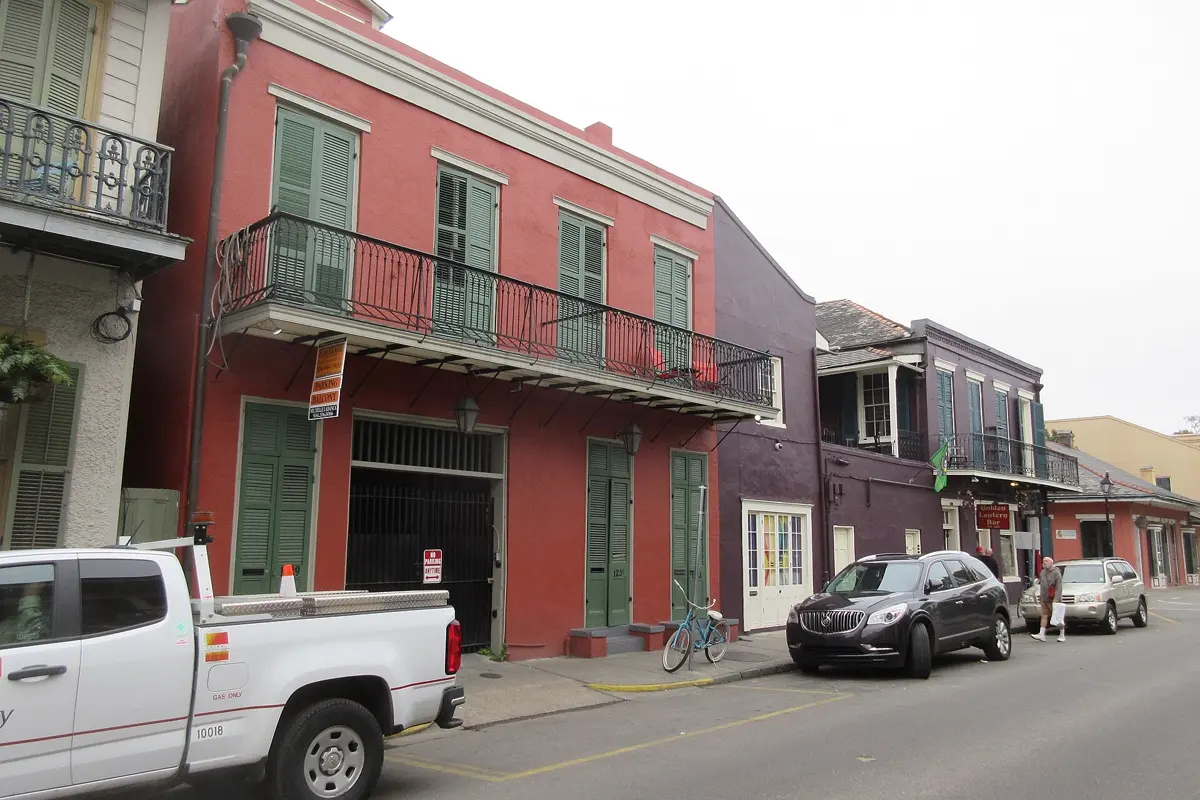
One day in New Orleans: the French Quarter and Frenchmen Street
The day begins on Jackson Square, the old parade ground, framed by St. Louis Cathedral, the Cabildo, where the Louisiana Purchase was formally completed in 1803, and the Presbytère. From there, walk along the river to the French Market, then through the lanes of the French Quarter: Royal Street with its galleries, antique shops and street musicians is quieter and more beautiful than the famous Bourbon Street one block away. In the evening, cross into the Marigny to Frenchmen Street, where the music clubs are packed side by side.
This is the first day of our three-day plan, and it works on its own.
Two days in New Orleans: by streetcar to the Garden District
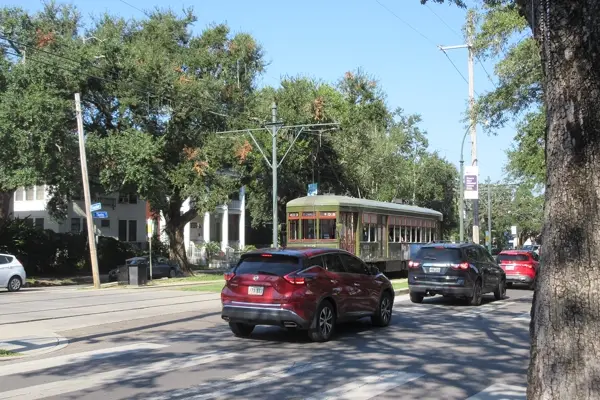
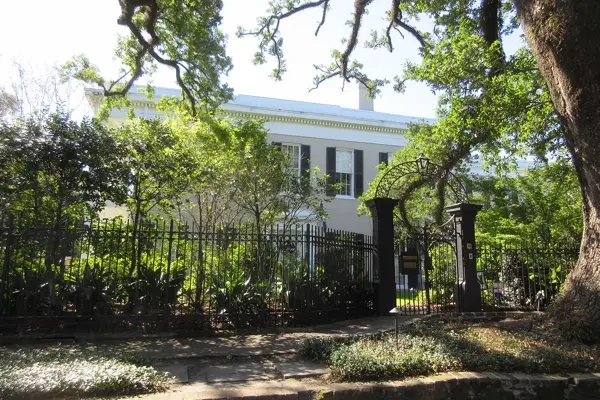
On the second day, take the St. Charles streetcar, in service since the 19th century, up St. Charles Avenue under the oak trees. Get off in the Garden District, with its antebellum mansions and the Lafayette Cemetery, then walk along Magazine Street, lined with shops and cafés. The line continues to Audubon Park and the universities. Before or after, the National WWII Museum in the Warehouse District is one of the city's most visited sights and easily fills half a day.
Tickets for museums and walking tours in New Orleans* are on Tiqets; if you plan several paid sights, compare a city pass for New Orleans* (Go City) first.
Three days in New Orleans: the ideal length
Three days are right for a first visit. Our ready-made plan divides the city like this:
- Day 1 – the French Quarter and Frenchmen Street: Jackson Square, St. Louis Cathedral, the Cabildo, the French Market, Royal Street, Frenchmen Street.
- Day 2 – by streetcar to the Garden District: National WWII Museum, St. Charles streetcar, Magazine Street, Garden District, Audubon Park.
- Day 3 – Tremé, City Park and Esplanade Avenue: Louis Armstrong Park and Congo Square in Tremé, where enslaved Africans gathered for music and dance on Sundays; City Park with the New Orleans Museum of Art and its sculpture garden; a walk along Bayou St. John and back down Esplanade Avenue with its Creole mansions.


Four days or more: swamps, plantations and Cajun country
From the fourth day, leave the city. A swamp tour by boat through the bayous south and west of New Orleans shows cypress forests, herons and alligators. Along the River Road on the Mississippi lie the former plantations; some, like the Whitney Plantation, focus on the lives of the enslaved people who worked there. With five days or more, continue west to Cajun country around Lafayette, known for its music and food. For the swamps and plantations, a day tour from New Orleans* (Klook) usually includes the transfer.
Where to stay in New Orleans
Three areas suit a short stay:
- French Quarter: right in the historic centre, with everything on foot. Around Bourbon Street it is loud at night, while the streets at the lower end are quieter.
- Faubourg Marigny: colourful wooden houses next to the French Quarter, close to the music on Frenchmen Street. A little more relaxed than the old town.
- Garden District: quiet streets of old mansions and guesthouses, right on the St. Charles streetcar and a few minutes from the centre.
The RTA runs the streetcars and buses. At night, stick to busy, well-lit streets and take a taxi for longer distances. Visitors from Visa Waiver countries need an approved ESTA; a travel eSIM for the USA* (Airalo) is usually much cheaper than roaming, and our eSIM price index compares prices per gigabyte.
Best time to visit New Orleans
| Month | Day (avg. high) | Night (avg. low) | Rain per month |
|---|---|---|---|
| Jan | 16.7 °C | 9.0 °C | 116 mm |
| Feb | 19.5 °C | 11.6 °C | 106 mm |
| Mar | 22.4 °C | 14.9 °C | 132 mm |
| Apr | 24.8 °C | 17.4 °C | 121 mm |
| May | 28.4 °C | 21.4 °C | 137 mm |
| Jun | 30.5 °C | 24.4 °C | 199 mm |
| Jul | 31.1 °C | 25.4 °C | 204 mm |
| Aug | 31.2 °C | 25.6 °C | 225 mm |
| Sep | 29.4 °C | 23.8 °C | 168 mm |
| Oct | 26.2 °C | 19.4 °C | 102 mm |
| Nov | 21.3 °C | 14.5 °C | 95 mm |
| Dec | 18.6 °C | 11.8 °C | 141 mm |
Averages 2015–2024 from the ERA5 reanalysis (via Open-Meteo), rounded.
The most pleasant months are February to April and November, with 19 to 25 °C by day – spring is also festival season. October, at 26 °C, is warm but drier than the summer months. From June to September, days reach 29 to 31 °C, nights hardly cool below 24 °C, the humidity is high and afternoon thunderstorms are common; August is the wettest month. The Atlantic hurricane season runs from June to November, according to NOAA – keep an eye on the forecasts if you travel then. Winter is mild, at 17 to 19 °C by day.
New Orleans compared: how many days for other cities?
In this series we recommend three days for New Orleans and four to five each for Miami and Chicago – more in how many days in Miami and how many days in Chicago, and all cities of the series in the overview how many days in each city.
How YesTrip helps you plan
YesTrip has a ready-made three-day plan for New Orleans with times, short walks and a map for each day. With one tap you copy it into the app, then move stops, drop what does not interest you and add your hotel or a swamp tour. The app shows the weather for your travel days, the packing list suggests light clothes and a rain jacket for the humid months and the adapter for US plugs, and with the offline package you have the map without a connection. YesTrip is free.
 New Orleans trip planDay by day, with map and tips
* Ad – Partner link: if you book there, we earn a commission. Your price stays the same.
Free
Plan your trip in 30 seconds.
Tell YesTrip where and when – the app plans day by day with real places on the map, shows the weather, splits costs with your travel companions and guides you to the next stop on the go.
Frequently asked questions
How many days do you need in New Orleans?
Two days are enough for the French Quarter, Frenchmen Street and the Garden District. Three days are ideal and add the National WWII Museum, Tremé and City Park. From four days, a swamp tour or a plantation fits in.
Are 3 days enough for New Orleans?
Yes. Three days cover the old town, the streetcar ride to the Garden District, the most important museum and the evenings with live music. For the swamps or plantations, add a day.
Is the French Quarter walkable?
Yes. The French Quarter and the neighbouring Marigny are compact and best explored on foot. For the Garden District and City Park, take the streetcar.
When is hurricane season in New Orleans?
The Atlantic hurricane season runs from June to November, according to NOAA. Summer is also hot and very humid, with frequent thunderstorms.
What is the best time to visit New Orleans?
February to April and November, with 19 to 25 °C by day. During Mardi Gras and the spring festivals, book hotels early.
Sources
- Climate data: Open-Meteo Historical Weather API, daily values 2015–2024 – open-meteo.com
- Copernicus ERA5 reanalysis (Hersbach et al. 2020) – cds.climate.copernicus.eu
- New Orleans & Company: official tourism website of New Orleans – www.neworleans.com
- New Orleans RTA: streetcars and buses – www.norta.com
- The National WWII Museum – www.nationalww2museum.org
- NOAA National Hurricane Center: hurricane season – www.nhc.noaa.gov
Researched with AI support and checked by our editors. Prices, opening hours and weather can change – please check before you go. YesTrip is not a travel agency. Published: .
More articles
 How many days?
How many days in Baku? 3 with Gobustan
Two days are enough for Baku's old town, the Boulevard and the Heydar Aliyev Center. The third belongs to Gobustan, 64 km away, with more … · 6 min read How many days?
How many days in Funchal? 3, or 5+ for Madeira
Two days are enough for Funchal: the old town, the market, the cable car and the gardens at Monte. Day three goes to the mountains, with … · 6 min read How many days?
How many days in Kotor? 2 with Perast
Two days are enough for Kotor: the old town and about 1,300 steps to the fortress on the first, Perast and the island of Our Lady of the … · 6 min read


