
How many days in Budapest? Plans for 1–4 days
In short
Two days in Budapest cover the classics – Castle Hill and Fisherman's Bastion in Buda, Parliament, the Basilica and the Jewish Quarter in Pest. Three days are ideal, leaving time for the Great Market Hall, Andrássy Avenue and a thermal bath. With 4 or 5 days, take the suburban train to Szentendre (about 40 minutes). The most pleasant months are April to June, September and October.
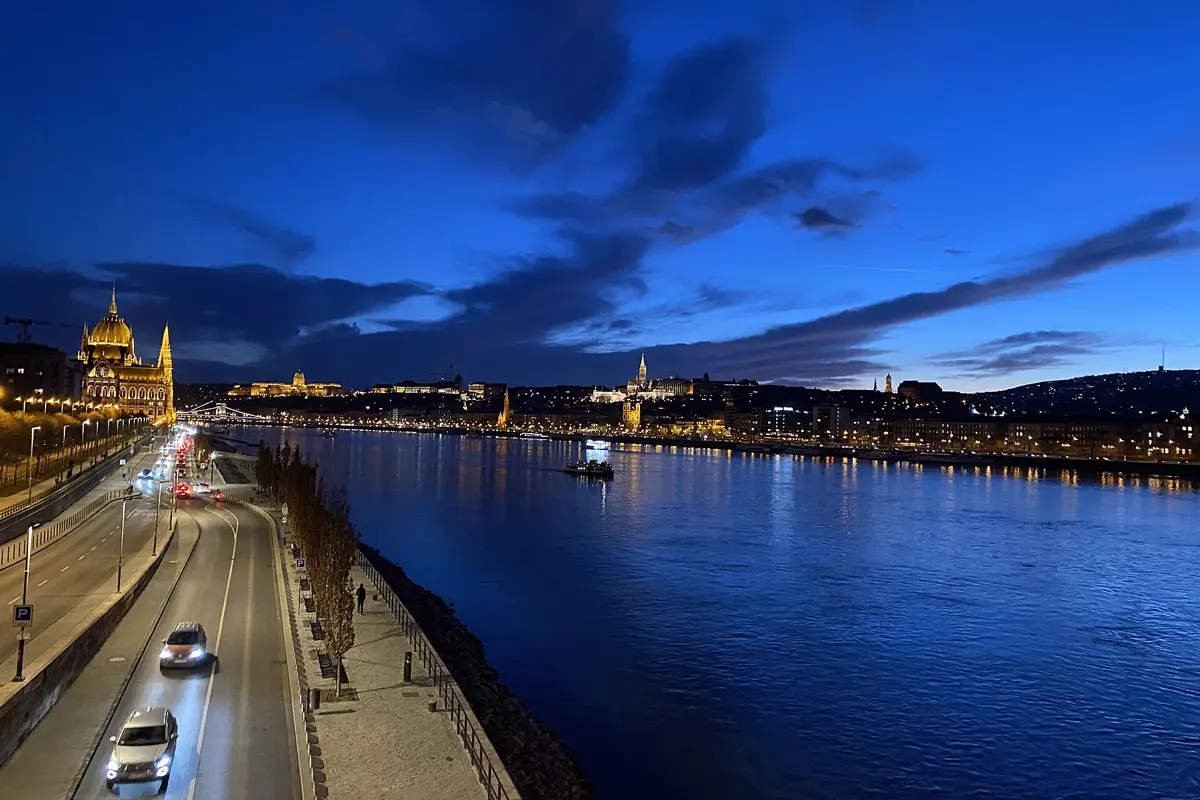
Budapest is two cities in one: hilly Buda with Castle Hill and Fisherman's Bastion, and flat Pest with Parliament, grand boulevards and ruin bars. Each side needs a day, and then there is something other cities do not have: the thermal baths. The short answer: 2 days for Buda and Pest, 3 days are ideal, and from 4 days trips along the Danube are worth it.
How many days in Budapest? The overview
| Days | What you see | Best for |
|---|---|---|
| 1 day | Fisherman's Bastion, Matthias Church, Buda Castle, the Chain Bridge, Parliament from outside, the Basilica | a stopover or Danube cruise |
| 2 days | a day each for Buda and Pest, plus Parliament inside, the Great Synagogue, a ruin bar | a long weekend |
| 3 days | plus the Great Market Hall, Andrássy Avenue, Heroes' Square, the Széchenyi Baths | the ideal length |
| 4 days | plus a trip to Szentendre, or Margaret Island and an evening boat ride | slow travellers, return visitors |
| 5+ days | plus Gödöllő Palace, the House of Terror, the Rudas Baths | anyone who wants Budapest in depth |
A few things matter for planning: the Great Market Hall is closed on Sundays, the Great Synagogue on Saturdays. Parliament can only be visited on a guided tour, best booked in advance.
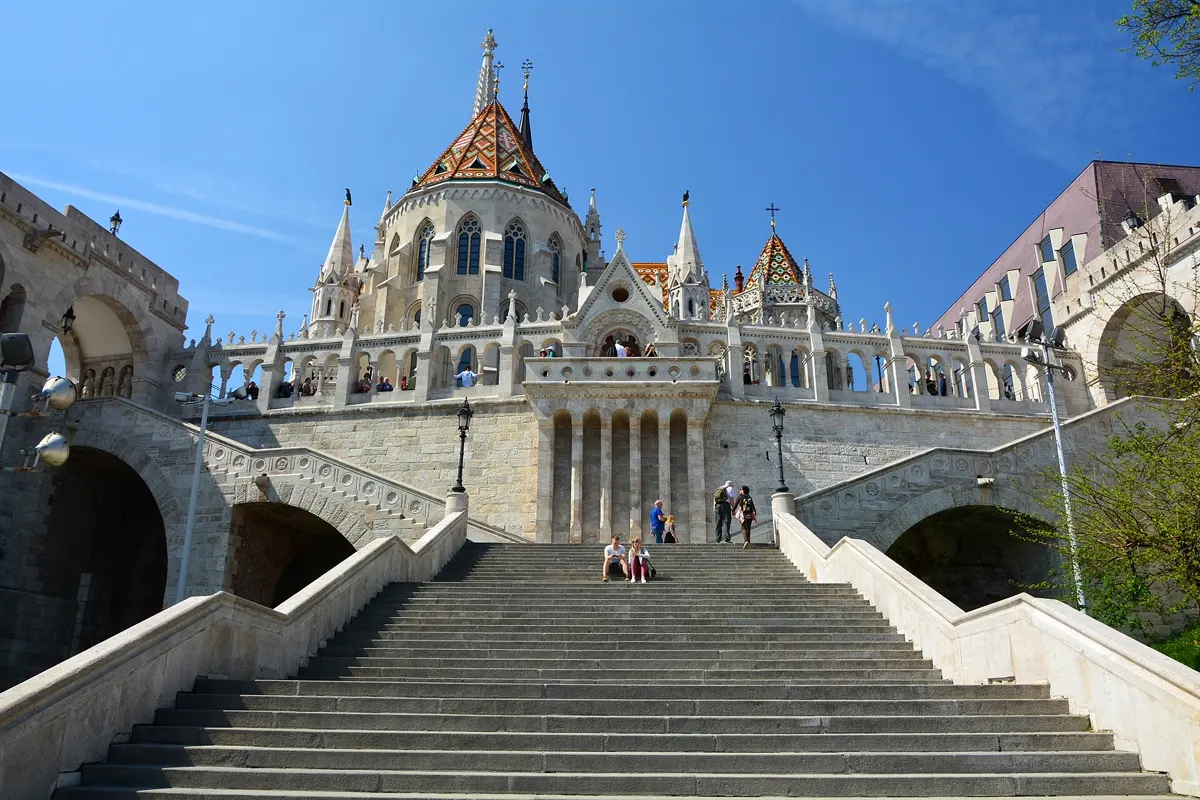
One day in Budapest: Buda and Pest on foot
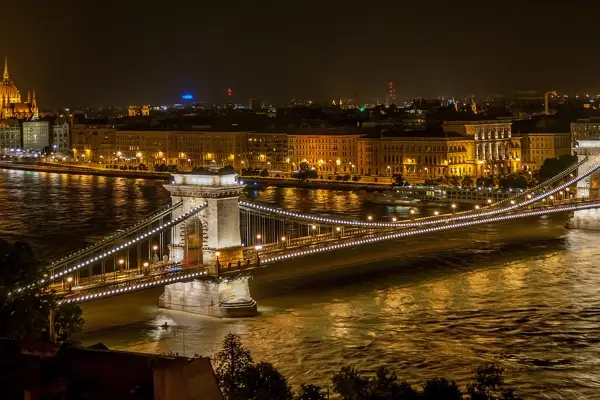
One day is enough for both sides if you start early in Buda. First Fisherman's Bastion, before the groups arrive – from the arcades you can already see Parliament across the river. Next door is Matthias Church with its colourful tiled roof, then Buda Castle. Walk down to the Danube and across the Chain Bridge to Pest. There, Parliament, the Shoes on the Danube Bank memorial and St. Stephen's Basilica are so close together that the afternoon needs no metro. Dinner in Gozsdu Court in the Jewish Quarter.
A thermal bath and the market hall do not fit into this day.
Two days in Budapest: a day each for Buda and Pest
With two days, each side gets its own day. On day one, take your time on Castle Hill, ride the funicular from 1870 down to the Chain Bridge, and climb Gellért Hill for sunset with a view of all the bridges.
Day two belongs to Pest: a guided tour of Parliament in the morning, then the Shoes on the Danube Bank and the Basilica with a panoramic view from the dome. In the afternoon, the Great Synagogue, the largest in Europe, and in the evening Szimpla Kert, the city's first ruin bar. Parliament tours and tickets for the baths* are on Tiqets.
For a Friday-to-Sunday weekend we have a separate plan: Friday evening by the Danube, Saturday Pest with the market hall, Parliament and the Széchenyi Baths, Sunday Castle Hill.
Three days in Budapest: the ideal length
Three days are right for a first visit because they leave room for a bath. Our ready-made plan:
- Day 1 – the Castle District in Buda: Fisherman's Bastion, Matthias Church, Buda Castle with the National Gallery, the funicular, the Chain Bridge, sunset on Gellért Hill.
- Day 2 – Pest: Parliament and the Jewish Quarter: a guided tour of Parliament, the Shoes on the Danube Bank, St. Stephen's Basilica, the Great Synagogue, Szimpla Kert in the evening.
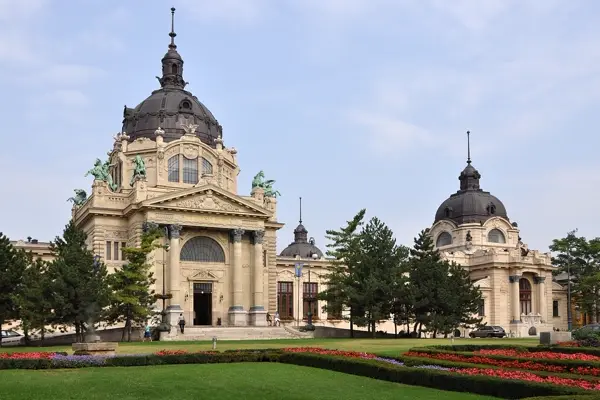
- Day 3 – market hall, Andrássy Avenue and a thermal bath: the Great Market Hall with lángos upstairs, the State Opera on Andrássy Avenue, the M1 – the oldest underground line on the European continent – to Heroes' Square, Vajdahunyad Castle in City Park and, to finish, the Széchenyi Baths with their warm outdoor pools.


Four days or more: Szentendre, Gödöllő, Margaret Island
From the fourth day on, a day trip is worth it. The HÉV H5 suburban train runs from Batthyány tér to Szentendre in about 40 minutes – an artists' town on the Danube with colourful merchants' houses, Serbian churches and the museum of the ceramicist Margit Kovács. The HÉV H8 reaches Gödöllő Palace, where Empress Elisabeth liked to stay, in about 45 minutes. Both lines cross the city boundary, so check when you buy your ticket whether a Budapest ticket covers the whole trip.
In the city itself, a quiet afternoon on Margaret Island and an evening boat ride, when Parliament and the castle are lit up, are worth it – an hour is enough, and Klook has boat rides in Budapest*. Our 5-day plan ends at the Rudas Baths, a Turkish bath from the 16th century with a rooftop pool.
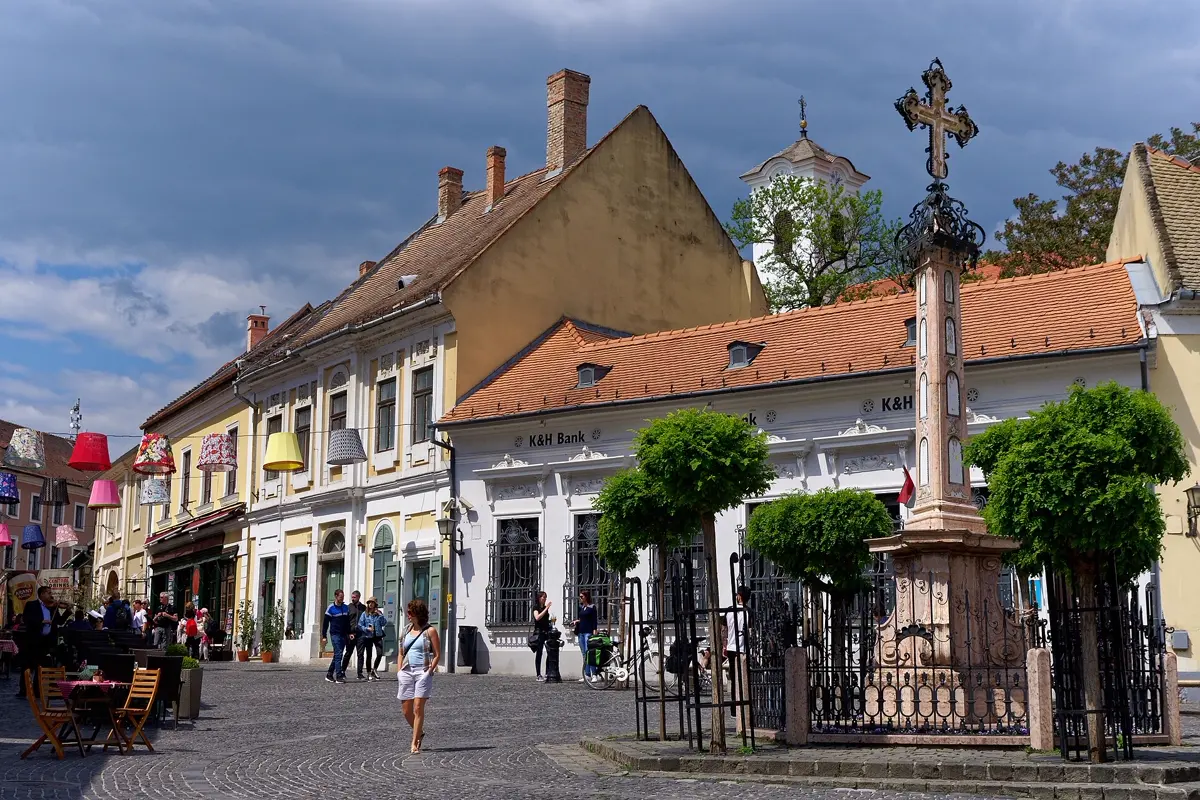
Where to stay in Budapest
Two areas suit a short stay, both on the Pest side:
- Inner City (Belváros): between the Danube, the Basilica and the market hall, close to many sights on foot.
- Jewish Quarter (Erzsébetváros): with ruin bars, restaurants and synagogues. Lively and loud at night – good if you want to go out.
The metro, trams and buses are dense and cheap; tram 2 along the Pest riverbank is a sightseeing tour in itself. The currency is the forint, and cards are accepted almost everywhere. Buses run from the airport into the city (how they work: Budapest airport to city centre); a transfer from the airport to your door* can be booked with Welcome Pickups. Coming from outside the EU, a travel eSIM for Hungary* (Airalo) is usually cheaper than roaming.
Best time to visit Budapest
Budapest is most pleasant in spring from April to June and in early autumn in September and October: warm enough to spend long days outside, without the heat of high summer. July and August are hot – the riverbanks, Margaret Island and the outdoor pools of the baths are at their best then, but the city is also at its busiest. Winter is cold but has its own charm: the warm outdoor pools of the Széchenyi Baths steam most beautifully then, and in Advent there are Christmas markets, for example in front of the Basilica. YesTrip shows you the weather for your actual travel days.
Budapest compared: how many days for other cities?
If you are torn between several cities: this is how many days we recommend in this series for a first visit.
Base map: Natural Earth
Budapest combines well with Vienna – both lie on the Danube and are connected by train. More in our articles on Vienna and Prague; for more ideas, see our Eastern Europe city breaks comparison.
How YesTrip helps you plan
YesTrip has ready-made plans for Budapest: three days as the main plan, plus one day on foot, a weekend, five days with Szentendre and Gödöllő, two days with children and two budget days. Each plan has times, short walks and a map, with the crossings between Buda and Pest already worked in. With one tap you copy it into the app and adjust it. The app shows the weather for your travel days, the packing list suggests matching clothes – swimwear included – and with the offline package you have the map without a connection. YesTrip is free.
 Budapest trip planDay by day, with map and tips
* Ad – Partner link: if you book there, we earn a commission. Your price stays the same.
Free
Plan your trip in 30 seconds.
Tell YesTrip where and when – the app plans day by day with real places on the map, shows the weather, splits costs with your travel companions and guides you to the next stop on the go.
Frequently asked questions
How many days do you need in Budapest?
Two days are enough for Buda and Pest. Three days are ideal, leaving time for the Great Market Hall, Andrássy Avenue and a thermal bath. From four days, trips to Szentendre or Gödöllő are worth it.
Is a weekend enough for Budapest?
Yes. A weekend covers Castle Hill, Parliament, the Basilica and a bath. The Great Market Hall is closed on Sundays, so visit it on Saturday.
Can you see Budapest in one day?
The main sights, yes: Fisherman's Bastion and Buda Castle in the morning, then across the Chain Bridge to Parliament and the Basilica in Pest. There is no time left for a bath or the market hall.
Which thermal bath should I choose in Budapest?
The Széchenyi Baths are the largest and best known, with warm outdoor pools even in winter. Quieter options are the Gellért Baths with their Art Nouveau halls and the smaller Rudas Baths with a rooftop pool.
When is the best time to visit Budapest?
In spring from April to June and in September and October, when it is warm but not hot. High summer is hot and crowded, but ideal for the baths and the riverbanks. Winter is cold, yet the outdoor pools of the thermal baths are especially atmospheric then.
Sources
- UNESCO World Heritage: Budapest, including the Banks of the Danube, the Buda Castle Quarter and Andrássy Avenue – whc.unesco.org
- BKK, Budapest public transport – bkk.hu
Researched with AI support and checked by our editors. Prices, opening hours and weather can change – please check before you go. YesTrip is not a travel agency. Published: .
More articles
 How many days?
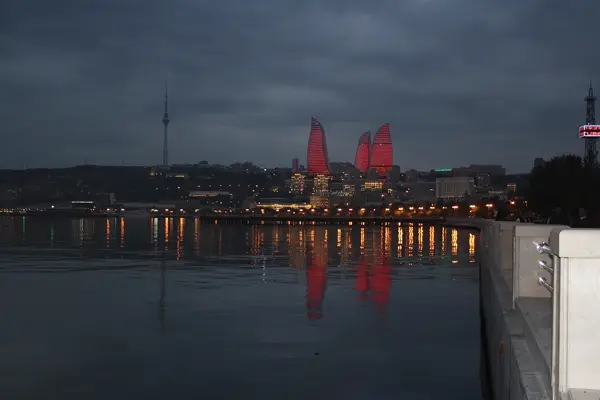
How many days in Baku? 3 with Gobustan
Two days are enough for Baku's old town, the Boulevard and the Heydar Aliyev Center. The third belongs to Gobustan, 64 km away, with more … · 6 min read How many days?
How many days in Funchal? 3, or 5+ for Madeira
Two days are enough for Funchal: the old town, the market, the cable car and the gardens at Monte. Day three goes to the mountains, with … · 6 min read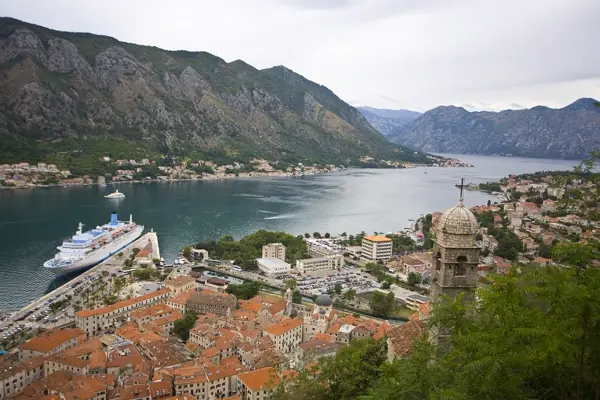 How many days?
How many days in Kotor? 2 with Perast
Two days are enough for Kotor: the old town and about 1,300 steps to the fortress on the first, Perast and the island of Our Lady of the … · 6 min read


