
How many days in Bangkok? Plans for 1–7 days
In short
Two days in Bangkok cover the riverside temples with the Grand Palace, Wat Pho and Wat Arun, Chinatown and the modern centre around Siam. Three days add Ayutthaya (about 1.5 to 2 hours by train), and 4 to 5 days are ideal, with Chatuchak market, a floating market or a cooking class. The most pleasant months are November to February (19 to 71 mm of rain a month).
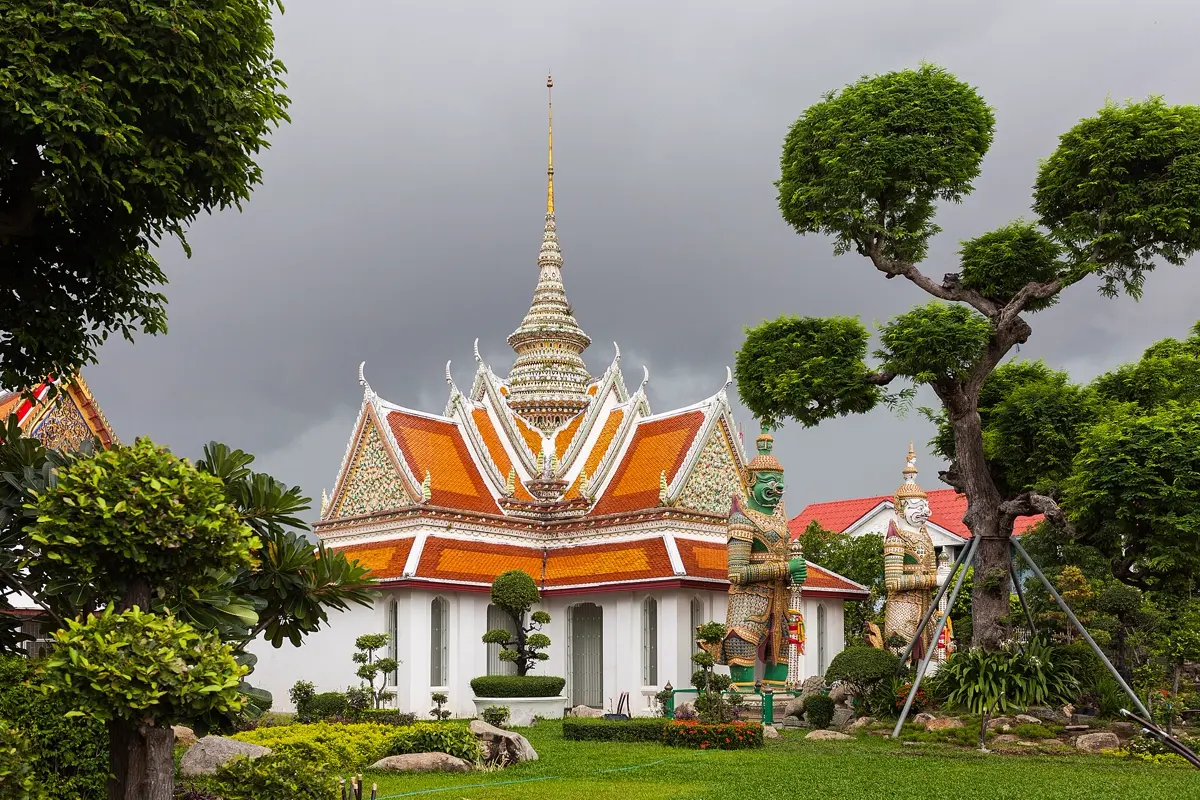
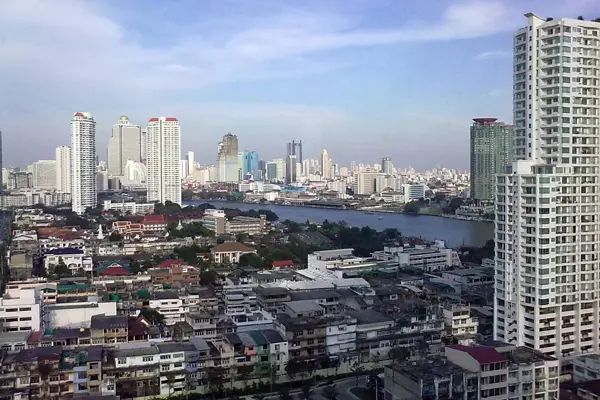
Bangkok is hot, loud and full of contrasts: golden temples by the river, street kitchens on the pavement, and above them the Skytrain running between towers and shopping centres. For many people the city is the start of a trip around Thailand – and that is exactly why many plan too little time for it. The old town on the Chao Phraya with the Grand Palace, Wat Pho and Wat Arun is a long way from the modern centre around Siam and Sukhumvit, and the ruins of Ayutthaya need a day of their own. The short answer: 2 days for the temples and the centre, 3 days with Ayutthaya, 4 to 5 days are ideal, and from 6 days there is time for Kanchanaburi on the River Kwai.
How many days in Bangkok? The overview
| Days | What you see | Best for |
|---|---|---|
| 1 day | Grand Palace, Wat Pho, Wat Arun, Chinatown in the evening | a stopover on the way to Asia or Australia |
| 2 days | plus Jim Thompson House, Siam, Lumphini Park, a view from a skyscraper | the start of a round trip |
| 3 days | plus a day in Ayutthaya, the old capital | all the classics |
| 4–5 days | plus Chatuchak market, a floating market, a cooking class, the Thonburi canals | the ideal length |
| 6+ days | plus Kanchanaburi on the River Kwai, Bang Krachao, more breaks | Bangkok at leisure, with day trips |
Worth knowing for planning: at the Grand Palace and the big temples, shoulders and knees must be covered, and you take your shoes off before entering prayer halls. Anyone outside the palace who tells you it is closed today wants to steer you to a tour or a shop – just walk to the main entrance. And plan around the heat: Bangkok sits at 31 to 34 °C by day all year round. Be outside early in the morning and in the late afternoon, and spend the middle of the day indoors.
One day in Bangkok: the riverside temples
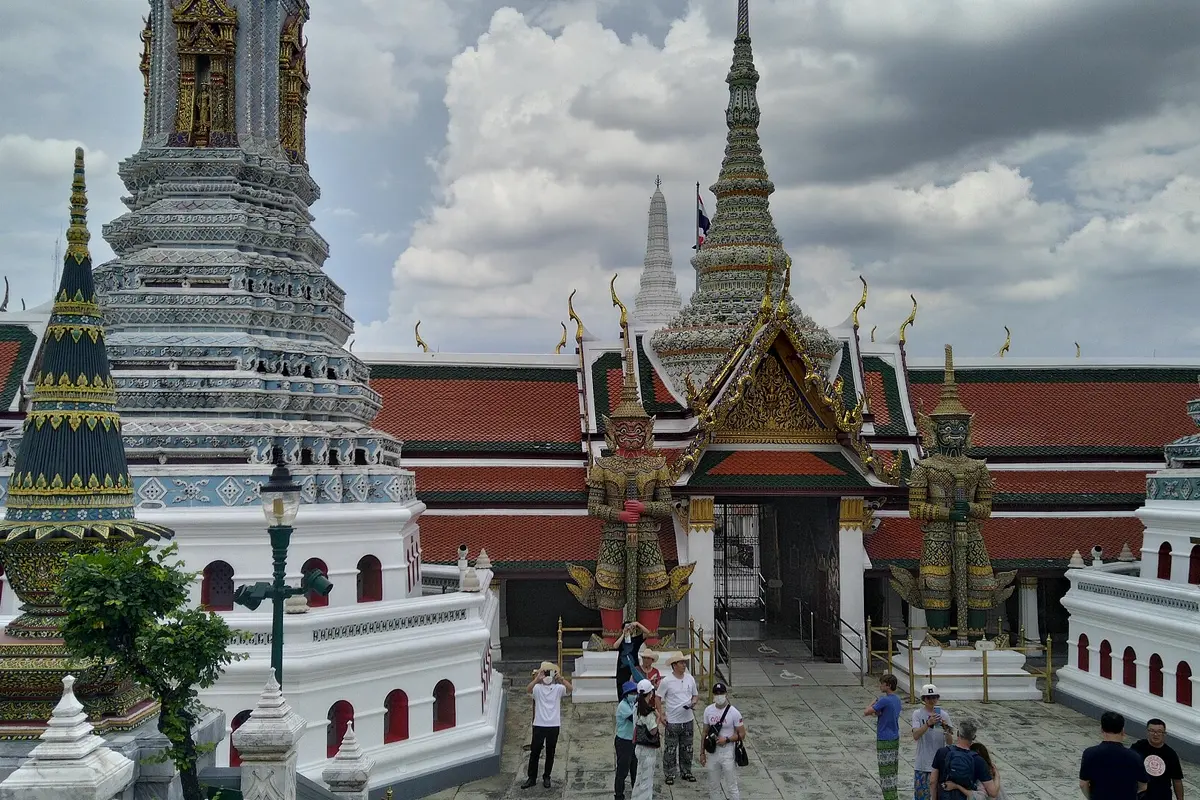
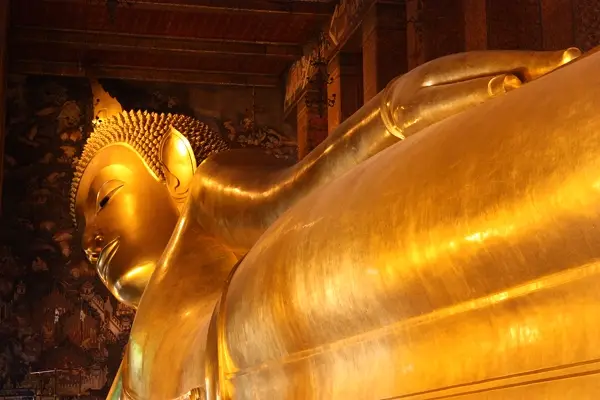
One day is enough for what Bangkok is famous for. Be at the Grand Palace when it opens, with the Temple of the Emerald Buddha, Wat Phra Kaew – early on it is still bearably warm and less crowded. A few minutes' walk away is Wat Pho with its 46-metre reclining Buddha and a well-known massage school in the grounds. From Tha Tien pier the ferry crosses the river in a few minutes to Wat Arun, whose towers are studded with pieces of porcelain.
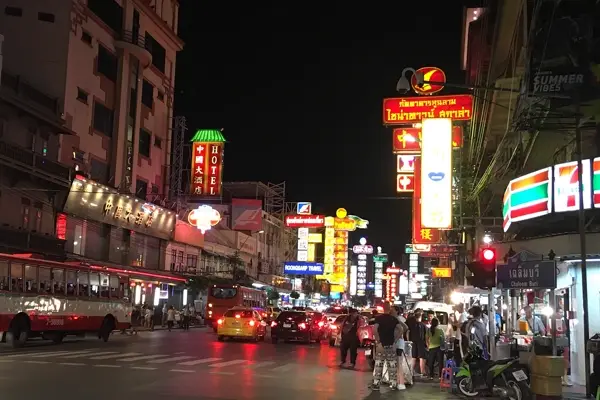
In the afternoon, walk through the Pak Khlong Talat flower market, which is open day and night. In the evening, eat in Yaowarat, Chinatown's main street, at the stalls serving noodles, seafood and desserts. Modern Bangkok will have to wait.
Two days in Bangkok: the old town and the centre
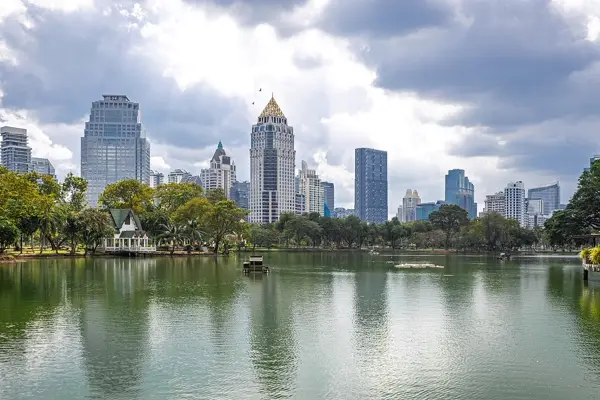
Two days give the old town and modern Bangkok a day each. The second day starts at the Jim Thompson House, traditional Thai wooden houses in a silk merchant's garden, visited with a guide. Lunch is in the food hall below Siam Paragon – air-conditioned and just right for the hottest part of the day. At the Erawan Shrine on its busy junction, worshippers offer flowers, and in Lumphini Park big monitor lizards lie by the water; they are harmless.
At sunset, go up King Power Mahanakhon with its viewing deck and glass floor; the ticket is best booked in advance, for example on Klook, which lists tickets and tours in Bangkok*. Between the stops, take the Skytrain (BTS) or the MRT subway, which avoid the traffic.
Three days in Bangkok: with Ayutthaya
Three days cover the best-known places in and around the city. Our ready-made plan:
- Day 1 – the riverside old town and Chinatown: the Grand Palace and Wat Phra Kaew, Wat Pho, the ferry to Wat Arun, Pak Khlong Talat flower market, Yaowarat in the evening.
- Day 2 – Siam, Lumphini and Silom: Jim Thompson House, Siam Paragon, the Erawan Shrine, Lumphini Park, King Power Mahanakhon at sunset.
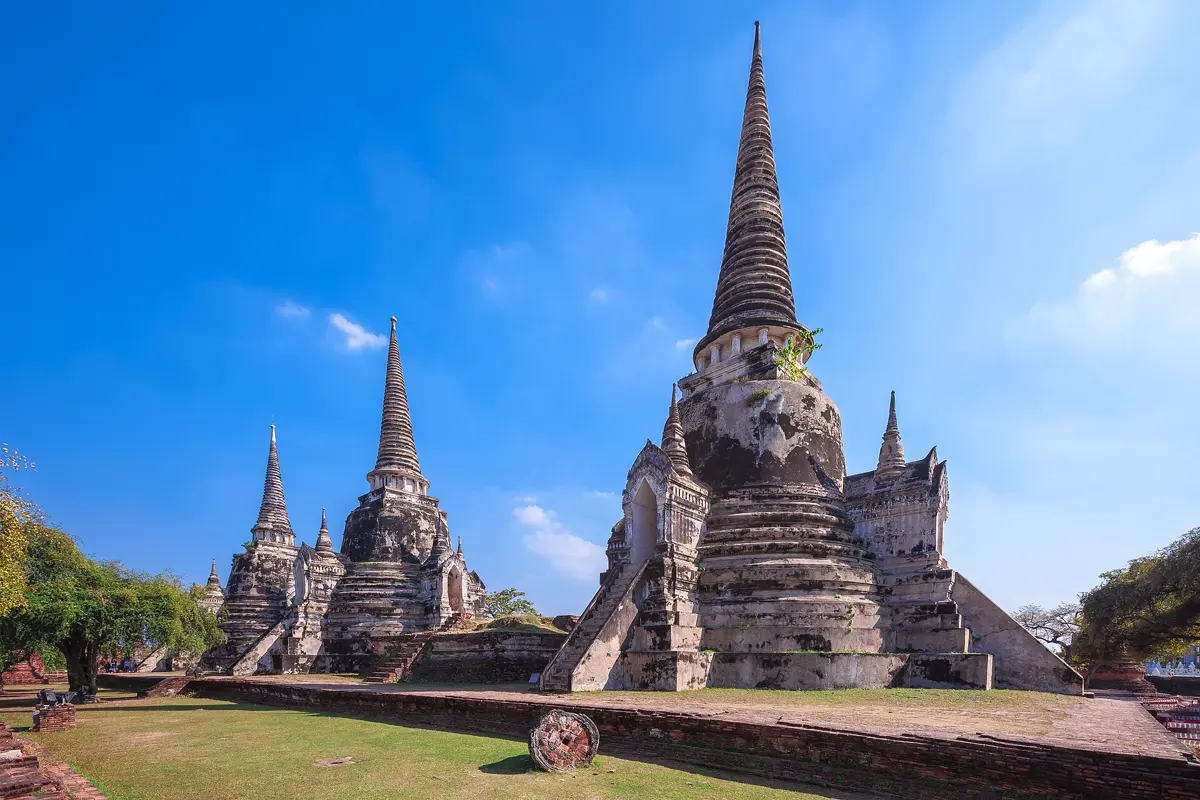
- Day 3 – a day in Ayutthaya: about 1.5 to 2 hours by train to the old capital of the Kingdom of Siam, now a UNESCO World Heritage Site. On site, get around by tuk-tuk or rented bike to Wat Mahathat with the Buddha head in the tree roots, to Wat Ratchaburana, to the three chedis of Wat Phra Si Sanphet and, in the late afternoon, to Wat Chaiwatthanaram by the river.
Check the departure station and train times beforehand; you can look up train and bus connections on 12Go*. For a long-haul trip, though, three days are short: the heat calls for breaks, and after the long flight the first day is rarely a full one.
Four to five days: markets, canals and a cooking class
With four or five days Bangkok becomes more relaxed, and you see more than temples. At the weekend, the Chatuchak Weekend Market in the north of the city is worth it – one of the largest markets in the world, with thousands of stalls for clothes, plants, crafts and food; come early, before the heat. A cooking class with a morning market visit is one of the best Bangkok memories for many travellers.
Half a day belongs to the Thonburi canals on the west bank. A longtail boat takes you past wooden houses on stilts and small temples – this is how Bangkok looked before most of its canals became roads. And in the late afternoon, climb the Golden Mount at Wat Saket for a view over the roofs of the old town.
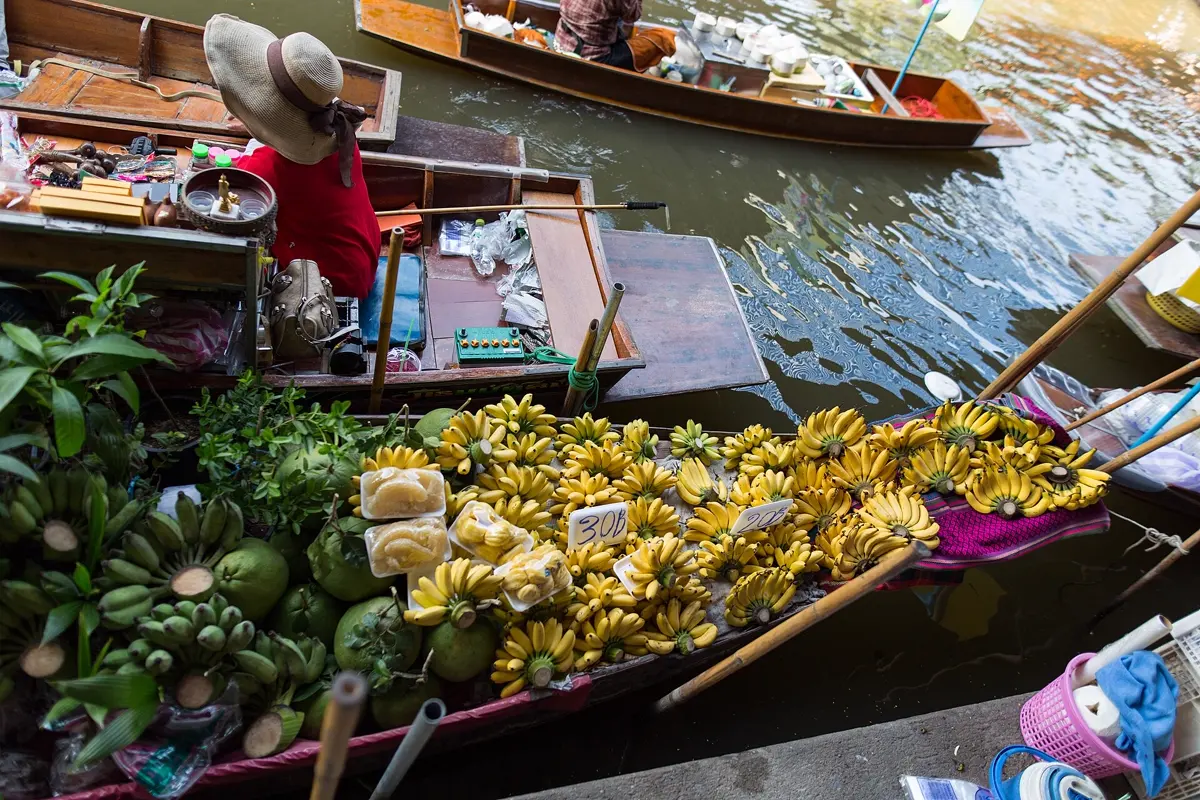
The best-known floating market is in Damnoen Saduak, 98 km south-west of the city, with about 1 hour 20 minutes of pure driving time – allow about a third more. It is very touristy, but liveliest in the morning. Many tours combine it with the Maeklong Railway Market, where a train runs right through the stalls and the traders fold their awnings away at the last moment. Tours with hotel pick-up* are available, for example, on KKday.
Six days or more: Kanchanaburi and Bang Krachao
If you stay a week, head west to Kanchanaburi: 139 km and about 1 hour 43 minutes of pure driving time – allow about a third more. Here stands the Bridge on the River Kwai, part of the Thailand–Burma Railway, built during the Second World War under Japanese occupation by prisoners of war and forced labourers, at the cost of tens of thousands of lives. War cemeteries and museums in the town remember them. Further north-west lies the national park with the Erawan Falls, best visited with a night in Kanchanaburi.
Closer and greener is Bang Krachao, a loop of the river opposite the port district, known as Bangkok's green lung for its gardens and mangroves. On a rented bike you ride narrow paths between palms and canals. And if you need a break after days in the city, simply plan half a day by the hotel pool.
For most travellers, though, Bangkok is not the end of the trip. Chiang Mai in the north is about 1 hour away by plane, the beaches of Phuket about 1.5 hours. How to combine the city, the north and the islands in two weeks is in our two-week Thailand itinerary.
Base map: Natural Earth
Where to stay in Bangkok
Because the city is big and the traffic slow, location shapes your trip:
- Sukhumvit and Siam: on the Skytrain, with lots of hotels, malls and restaurants. Handy because you can get anywhere quickly, and good for evenings in rooftop bars and food halls.
- By the river: hotels on the Chao Phraya with water views, close to the temples and the boats. Quieter than Sukhumvit and ideal if you want to explore the old town on foot and by boat.
The boats on the Chao Phraya link the old town with the centre and are often faster than any taxi. Metered taxis and ride-hailing apps are everywhere, but get stuck in rush-hour traffic. From Suvarnabhumi Airport the Airport Rail Link runs into the centre; a transfer from Suvarnabhumi to your hotel* can be booked with Welcome Pickups. Direct flights from London to Bangkok take about 11.5 hours, and Thailand is 6 hours ahead of the UK in summer and 7 in winter.
For mobile data for maps and ride-hailing apps without roaming charges, get an eSIM from Airalo.
Best time to visit Bangkok
| Month | Day (avg. high) | Night (avg. low) | Rain per month |
|---|---|---|---|
| Jan | 31.1 °C | 21.9 °C | 24 mm |
| Feb | 32.2 °C | 23.1 °C | 30 mm |
| Mar | 33.4 °C | 25.7 °C | 46 mm |
| Apr | 34.3 °C | 26.7 °C | 83 mm |
| May | 33.7 °C | 26.7 °C | 158 mm |
| Jun | 32.7 °C | 26.1 °C | 146 mm |
| Jul | 31.7 °C | 25.6 °C | 195 mm |
| Aug | 31.6 °C | 25.5 °C | 188 mm |
| Sep | 31.1 °C | 25.0 °C | 292 mm |
| Oct | 30.8 °C | 24.3 °C | 240 mm |
| Nov | 31.3 °C | 23.7 °C | 71 mm |
| Dec | 31.0 °C | 22.0 °C | 19 mm |
Averages 2015–2024 from the ERA5 reanalysis (via Open-Meteo), rounded. The values describe a grid cell of about 25 km; between the asphalt and the towers it often feels even hotter.
Bangkok is most pleasant from November to February: only 19 to 71 mm of rain fall a month, and nights cool to 22 to 24 °C. It never gets cold – even in January it is 31 °C by day. March to May is the hottest time, with 34.3 °C by day in April and nights around 27 °C. May to October is the rainy season, wettest in September with 292 mm. The showers are usually heavy but short, often in the afternoon; with a plan that builds in museums, malls and covered markets, Bangkok works well even then. Where in Thailand it is dry and when: best time to visit Thailand.
How YesTrip helps you plan
YesTrip has a ready-made three-day plan for Bangkok: the riverside old town with Chinatown, the modern centre around Siam and Lumphini, and a day in Ayutthaya. Each day has times, the stops are in walking order, boats and trains are noted, and the heat is built in: temples in the morning, air-conditioned places at midday. With one tap you copy the plan into the app and add days for markets, Kanchanaburi or the onward journey. The app shows the weather for your travel days, the packing list thinks of temple clothing, rain protection and the right plug adapter, and with the offline package you have the map without a connection. YesTrip is free.
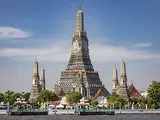 Bangkok trip planDay by day, with map and tips
Which train or bus from Suvarnabhumi or Don Mueang suits your hotel is covered in Bangkok airport to city.
* Ad – Partner link: if you book there, we earn a commission. Your price stays the same.
Free
Plan your trip in 30 seconds.
Tell YesTrip where and when – the app plans day by day with real places on the map, shows the weather, splits costs with your travel companions and guides you to the next stop on the go.
Frequently asked questions
How many days do you need in Bangkok?
Two days are enough for the riverside temples, Chinatown and the modern centre. Three days add a trip to Ayutthaya. Four to five days are ideal, leaving time for Chatuchak market, a floating market, a cooking class and breaks from the heat.
Is one day enough for Bangkok?
For a stopover, yes: the Grand Palace, Wat Pho and Wat Arun fit into a morning and early afternoon, and in the evening you eat in Chinatown. The modern centre and Ayutthaya do not fit in as well.
Is a day trip to Ayutthaya worth it?
Yes, the ruins of the old capital are a UNESCO World Heritage Site and the most important day trip from Bangkok. The train takes about 1.5 to 2 hours. On site, a tuk-tuk or bike is best, because distances are long in the heat.
What should I wear to temples in Bangkok?
Shoulders and knees must be covered, and the Grand Palace checks this strictly. Take your shoes off before entering prayer halls. Light long trousers or a wrap-around scarf are the most comfortable option in the heat.
When is the best time to visit Bangkok?
November to February, with little rain and slightly cooler nights around 22 to 24 °C. March to May are the hottest months, and May to October is the rainy season, wettest in September with 292 mm.
Sources
- Climate data: Open-Meteo Historical Weather API, daily values 2015–2024 – open-meteo.com
- Copernicus ERA5 reanalysis (Hersbach et al. 2020) – cds.climate.copernicus.eu
- Driving times: OSRM routing on OpenStreetMap data – project-osrm.org
- UNESCO World Heritage: Historic City of Ayutthaya – whc.unesco.org
- Tourism Authority of Thailand, official travel portal – www.tourismthailand.org
- Entry requirements for Thailand: UK Foreign Travel Advice – www.gov.uk
Researched with AI support and checked by our editors. Prices, opening hours and weather can change – please check before you go. YesTrip is not a travel agency. Published: .
More articles
 How many days?
How many days in Baku? 3 with Gobustan
Two days are enough for Baku's old town, the Boulevard and the Heydar Aliyev Center. The third belongs to Gobustan, 64 km away, with more … · 6 min read How many days?
How many days in Funchal? 3, or 5+ for Madeira
Two days are enough for Funchal: the old town, the market, the cable car and the gardens at Monte. Day three goes to the mountains, with … · 6 min read How many days?
How many days in Kotor? 2 with Perast
Two days are enough for Kotor: the old town and about 1,300 steps to the fortress on the first, Perast and the island of Our Lady of the … · 6 min read


