
Cyclades island hopping: a 12-day route
In short
The simplest Cyclades route follows the ferry line: Piraeus to Paros about 4 hours, Paros to Naxos about 1 hour, Naxos to Santorini about 2:15 hours, per a 2026 Blue Star notice. With Athens that is 12 days, ending on Santorini, about a 50-minute flight from Athens. Meltemi winds can delay or cancel summer sailings, so keep a day in hand.
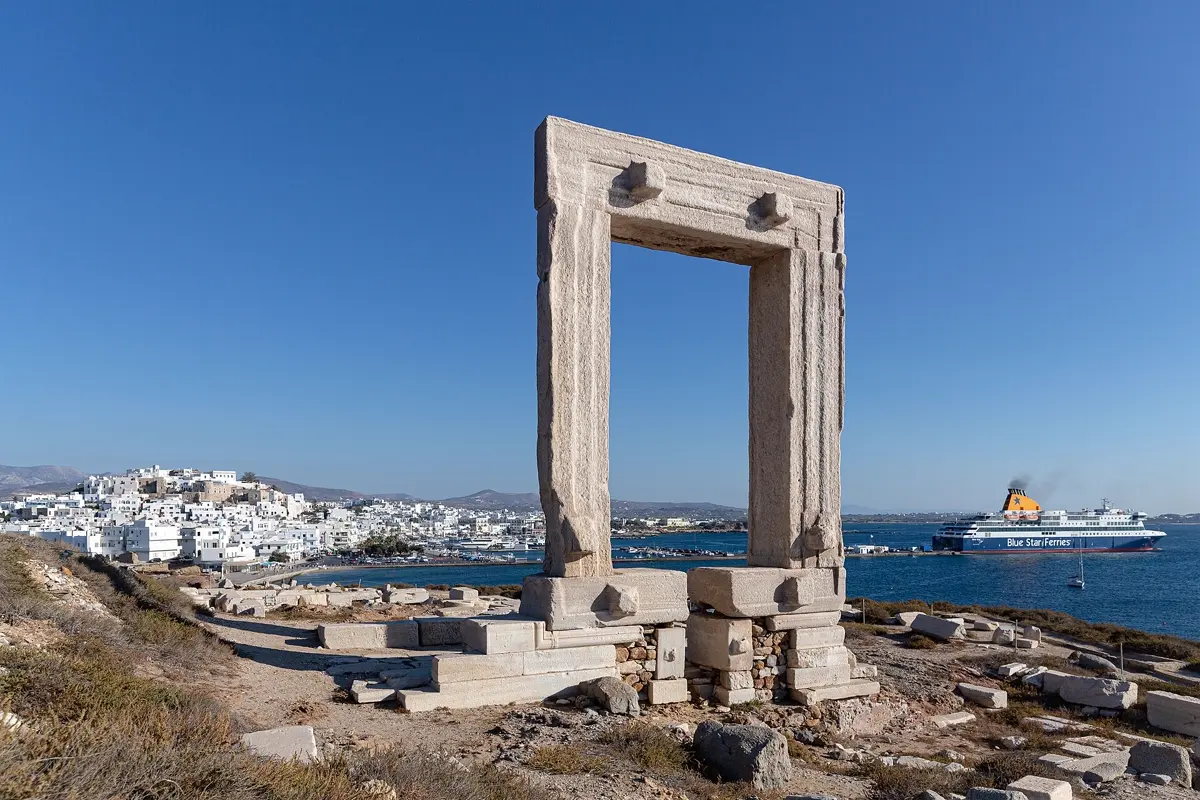
In the Cyclades the timetable decides your route, not your wish list. On the map the islands look like a scatter you could visit in any order. In practice the ferries run on fixed lines. The main one from Piraeus goes via Paros and Naxos to Santorini. Mykonos sits on a different line, and Milos on another again. Try to fit Mykonos, Santorini and Milos into a week and you will spend much of it in ports. So this route stays on the line: three islands, three crossings, 12 days.
The route at a glance
| Day | Leg | Ferry, about |
|---|---|---|
| 1–2 | Athens | – |
| 3 | Piraeus → Paros | 4 h |
| 3–5 | Paros | – |
| 6 | Paros → Naxos | 1 h |
| 6–8 | Naxos | – |
| 9 | Naxos → Santorini | 2:15 h |
| 9–11 | Santorini | – |
| 12 | Santorini → flight to Athens or home | flight about 50 min to Athens |
The ferry times come from an official Blue Star notice for the sailing of Blue Star 1 on 30 July 2026: Piraeus 17:30, Paros 21:30 to 22:15, Naxos 23:15 to 23:45, Santorini 02:00. That is one day's sailing, but it is the only operator source with times for all three sections that we could open. For your dates, always check the operator's current timetable. The same goes for fast ferries from other lines, which we could not verify from an operator.
- Athens
- Piraeus
- Paros
- Naxos
- Santorini
Base map: Natural Earth
Why this order?
Paros first, because it is the first stop on the line and you arrive after about four hours. Santorini last, for three reasons. First, Piraeus to Santorini is the longest single crossing, about eight and a half hours by that same notice, while the Greek National Tourism Organisation puts the flight from Athens at about 50 minutes. Second, Santorini has an airport, so you don't need to sail back to Piraeus at the end. Third, you finish on the island with the biggest view, rather than moving on from the caldera to something smaller.
The reverse works too. If a flight into Santorini suits you, start there and sail back via Naxos and Paros to Piraeus. But then a ferry stands between you and your flight home from Athens, and that is the riskier way round.
The truth about the ferries
This is the part most suggested itineraries leave out.
Wind cancels sailings, even in high summer. Many people expect storms only in winter. But in summer the meltemi blows, a strong northerly wind across the Aegean. In late July 2026 Blue Star posted six consecutive days of changed sailings because of bad weather: a morning sailing from Piraeus to Syros, Tinos and Mykonos was cancelled, and Blue Star 1 left at 17:30 on 30 July, reaching Santorini at two in the morning. Greek media reported a sailing ban due to gusts affecting Santorini in June 2025.
That leaves you with three rules:
- No ferry on the day of your flight home. Leave at least one night between your last crossing and your flight. On this route that takes care of itself, because you fly from Santorini.
- Warn your host about late arrivals. A ferry can dock in the middle of the night.
- Know the flights as a backup. Paros, Naxos, Santorini, Mykonos and Milos all have airports with links to Athens, and the Greek National Tourism Organisation lists flight times of 40 to 50 minutes. That helps if a crossing falls through as your flight home gets close.
Book early for high season. In July and August secure your places early, especially with a vehicle. Better still, leave the car behind. You can rent on each island as you need it, for example through car hire on the Greek islands via Localrent*.
Getting to Piraeus: from the airport it is 49 km, about 45 minutes of pure driving. Athens airport to the city centre covers the way into town. But do plan two nights in Athens first, so a delayed flight doesn't cost you the ferry.
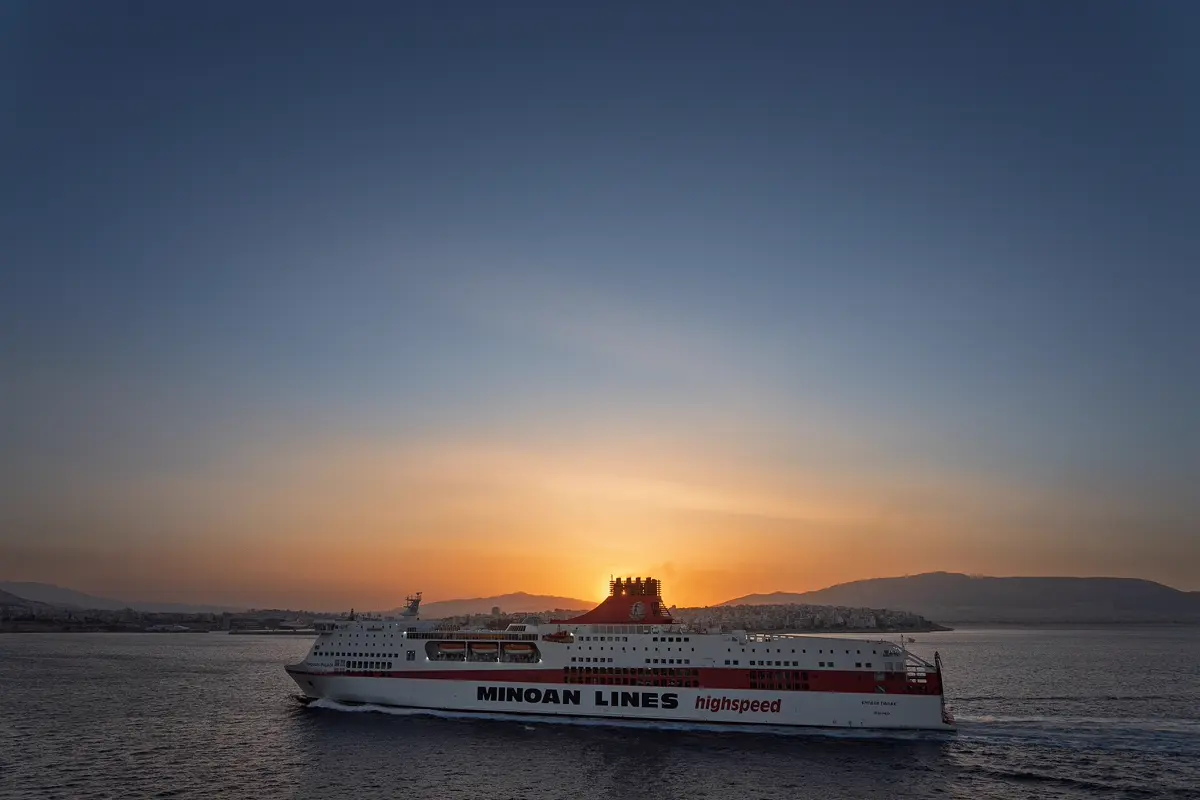
Days 1–2: Athens
Two days cover the Acropolis, the Acropolis Museum and the old town. See how many days in Athens. To add the mainland before or after the islands, try our Greece mainland itinerary.
 Athens trip planDay by day, with map and tips
Days 3–5: Paros
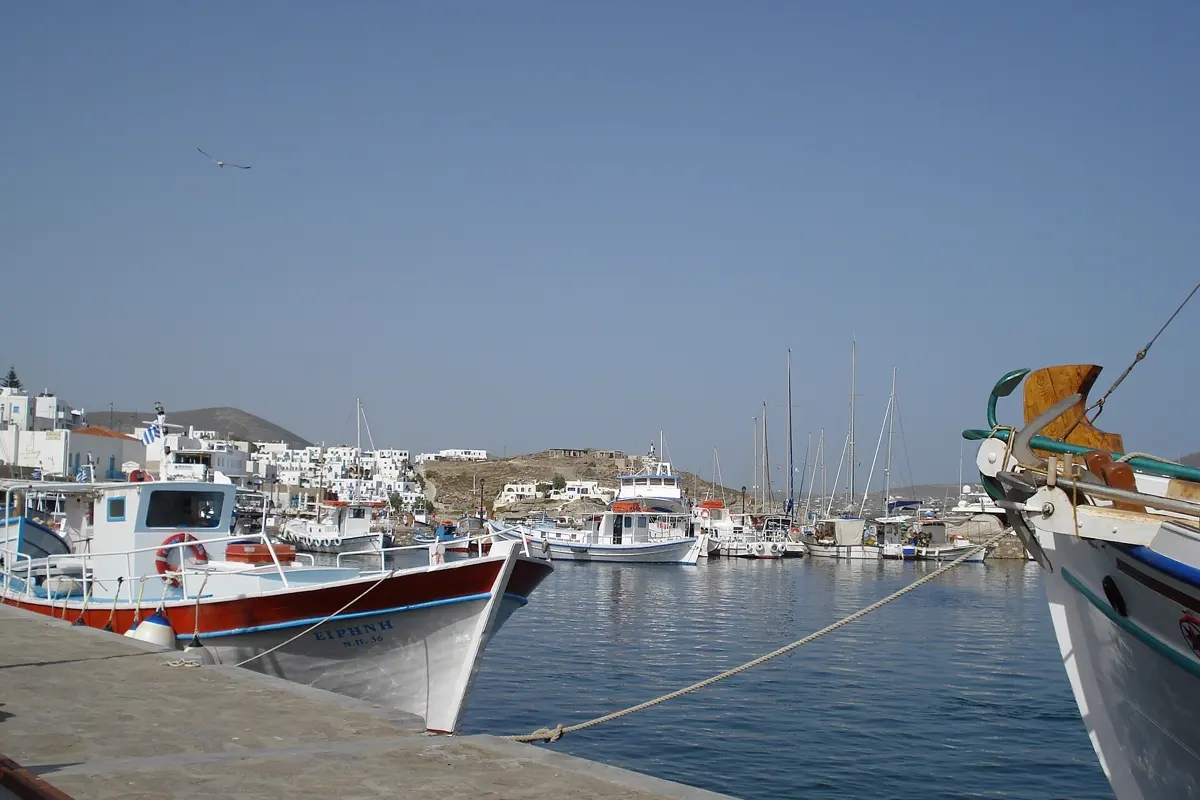
The Greek National Tourism Organisation describes Paros as a mix of beaches, culture and nightlife, which makes it a good start. You land at the port of Parikia, and the villages of Naoussa and Lefkes show classic Cycladic architecture. Naoussa is the place for an evening by the small harbour. Give one day to the middle of the island around Lefkes, and if you windsurf, this is the island for it. The same winds that please sailors and surfers can give you a lively crossing.
Days 6–8: Naxos
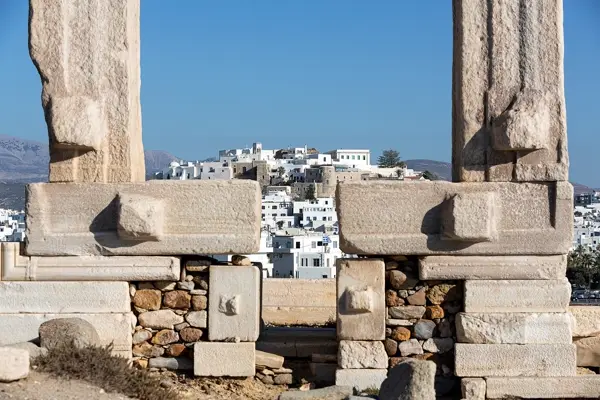
Naxos is the largest and, according to the Greek National Tourism Organisation, the most fertile of the Cyclades. For you that means long sandy beaches, mountain villages inland and room to breathe when Paros fills up. Above the harbour of the Chora stands the Portara, the huge marble doorway of an unfinished temple of Apollo, and right above the town is the Venetian castle. This is the island where hiring a scooter or car for a day makes sense, because the inland villages are too far to walk.
If you can spare time, the Small Cyclades are within reach from here: in April 2026 Blue Star Naxos sailed from Naxos via Iraklia and Schinoussa to Koufonissi in just over two hours. The departure times often don't suit a day trip, so check the timetable and plan to stay over.
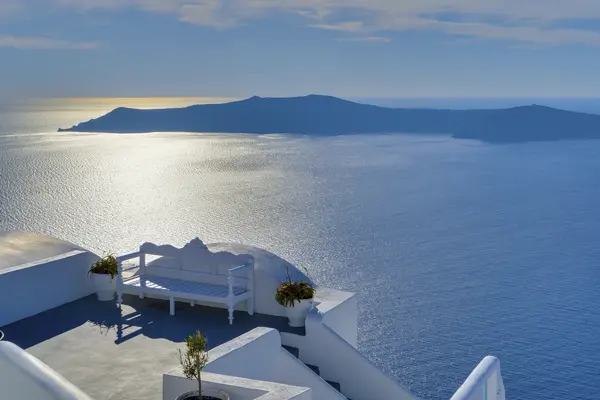
Days 9–11: Santorini
Santorini owes its fame to an active volcano and to the caldera formed by a series of huge eruptions. Besides Thera, the group includes Thirasia, Aspronisi, Palea Kameni and Nea Kameni. Ferries dock at the port below the cliff, and everything else is uphill from there, so arrange your transfer in advance.
Three days are plenty: one for Fira and the path along the rim, one for Oia in the evening or, better, early in the morning, and one for a boat trip to the volcanic islands. You can compare boat tours and tickets on Santorini* in advance, which helps most in summer.
Mykonos or Milos instead of one of the three?
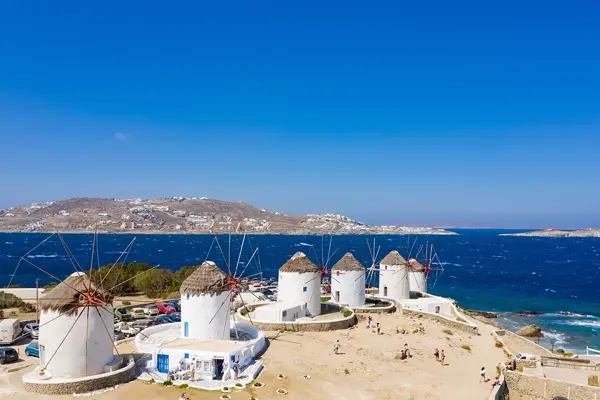
Mykonos: Blue Star serves it on a separate line via Syros and Tinos, so it fits best at the start (Piraeus to Mykonos) before you cross to Paros. For that crossing, check current timetables with the operator. Beyond the windmills, the real reason to go is Delos, the tiny island where Greek mythology says Apollo was born, now a UNESCO World Heritage Site. Excursion boats go over from Mykonos.
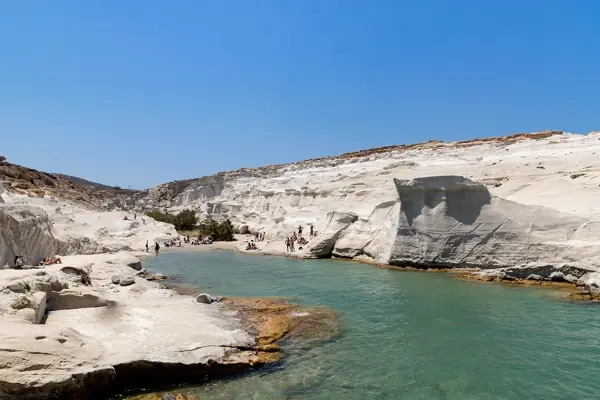
Milos: the Greek National Tourism Organisation counts over 70 beaches, including the white rocks of Sarakiniko and Kleftiko. But Milos lies west of the main line. Flights from Athens take about 40 minutes. For ferries to Santorini or Paros, check the operator, as links depend heavily on the season. If you really want Milos, swap it for Paros and add a spare day.
Where to stay
- Paros: Parikia if you want to be close to the port and carry little; Naoussa for the evenings.
- Naxos: the Chora, walkable from the port, with a beach nearby.
- Santorini: Fira for connections and restaurants; Oia only if you accept its evening crowds.
Best time for the Cyclades
May, June and September are the best compromise between warm weather and full ferries. July and August are the busiest, and the meltemi is at its most reliable. See the best time to visit Greece for more.
| Month | Day (avg high) | Night (avg low) | Precipitation |
|---|---|---|---|
| May | 23.8 °C | 16.9 °C | 14 mm |
| June | 27.8 °C | 21.0 °C | 7 mm |
| July | 29.6 °C | 23.5 °C | 2 mm |
| August | 29.4 °C | 23.7 °C | 3 mm |
| September | 27.0 °C | 21.4 °C | 8 mm |
| October | 22.8 °C | 18.0 °C | 18 mm |
Climate on Naxos: 2015–2024 averages from the ERA5 reanalysis (Open-Meteo), rounded. Rain hardly matters in summer. Wind does, but it isn't in this table.
Good to know before you go
- Entry and money: Greece is in the EU and the Schengen Area, and the currency is the euro. If your plan doesn't cover Greece, see our eSIM comparison for Greece.
- Flight: a direct flight from London to Athens takes about 4 hours. Check the flight search for your dates to see whether direct flights leave from Santorini.
- Luggage: you carry it on and off every boat and away from every port. Packing light pays off more here than on almost any other trip.
How YesTrip helps with this trip
Add the four stops to a trip in YesTrip. The app shows everything on the map, suggests day plans with AI and shows the weather for your travel days. You book ferries with the operator, forward or paste the confirmation e-mail, and have the plan and tickets on your phone, offline too. The offline map helps inland on Naxos, and groups can share the plan and the expenses in the app. Athens has a ready-made city plan.
* Ad – Partner link: if you book there, we earn a commission. Your price stays the same.
Free
Plan your trip in 30 seconds.
Tell YesTrip where and when – the app plans day by day with real places on the map, shows the weather, splits costs with your travel companions and guides you to the next stop on the go.
Frequently asked questions
What is the best order for Paros, Naxos and Santorini?
Paros, then Naxos, then Santorini. That follows the ferry line from Piraeus with crossings of about 4, 1 and 2:15 hours, and you fly directly from Santorini at the end rather than needing a ferry to Piraeus on the last day.
How long is the ferry from Piraeus to Santorini?
On Blue Star 1 it was about eight and a half hours with stops on Paros and Naxos, according to an operator notice from July 2026. Fast ferries from other lines can be shorter, and each operator shows its current times. The flight from Athens takes about 50 minutes.
Do Cyclades ferries get cancelled in summer?
Yes. The meltemi can delay or cancel sailings even in July and August. Blue Star, for example, posted weather-related changes from 28 July to 2 August 2026. So never plan a ferry for the day of your flight home.
How many days do you need for Cyclades island hopping?
Twelve days work well for three islands plus Athens, which gives you three nights per island. With fewer than two nights per island you spend more time at the port than on the beach.
Can you combine Mykonos and Santorini?
Yes, but they are not on the same main line. Blue Star reaches Mykonos via Syros and Tinos, and Santorini via Paros and Naxos. Check the connection for your dates with the operator, or expect a detour via another island.
Sources
- Ferry times and weather changes, July/August 2026: Blue Star Ferries – www.bluestarferries.com
- Blue Star Naxos to the Small Cyclades, April 2026: Blue Star Ferries – www.bluestarferries.com
- Sailing ban due to gusts, June 2025: Protothema – en.protothema.gr
- Paros: Greek National Tourism Organisation – www.visitgreece.gr
- Naxos: Greek National Tourism Organisation – www.visitgreece.gr
- Santorini: Greek National Tourism Organisation – www.visitgreece.gr
- Milos: Greek National Tourism Organisation – www.visitgreece.gr
- Mykonos: Greek National Tourism Organisation – www.visitgreece.gr
- Delos: UNESCO World Heritage – whc.unesco.org
- Climate: Open-Meteo Historical Weather API (ERA5), averages 2015–2024 – open-meteo.com
Researched with AI support and checked by our editors. Prices, opening hours and weather can change – please check before you go. YesTrip is not a travel agency. Published: .
More articles
 Road trips & itineraries
Amalfi Coast itinerary: 5 days, no car needed
This 5-day route runs from Pompeii through Sorrento, Positano, Amalfi and Ravello to Salerno, with no car. Travelmar lists the boat from … · 9 min read Road trips & itineraries
Australia East Coast itinerary: 3 weeks by car
This Australia East Coast itinerary takes 21 days from Sydney via Byron Bay, Noosa, K'gari and the Whitsundays to Cairns and Port Douglas, … · 7 min read Road trips & itineraries
Bali itinerary: 2 weeks, 5 bases, no scooter
This 14-day loop covers about 410 km and almost 7 hours of pure driving through Ubud, Sidemen, Amed, Munduk and Uluwatu, by car with a … · 8 min read


