
Vietnam · 3 days · 17 stops
3 days in Ho Chi Minh City – a ready-made itinerary
Ho Chi Minh City, still called Saigon by many, is Vietnam's largest city: fast, warm and full of scooters. Day one covers the colonial buildings and museums in the centre, day two pagodas, the Chinese-influenced district of Chợ Lớn and a view from a tower, and day three the Củ Chi tunnels and an evening by the Saigon River. The stops are in walking order, with longer taxi rides noted.
In short
- Length
- 3 days, 17 stops
- Highlights
- Notre-Dame Cathedral, Jade Emperor Pagoda, Củ Chi tunnels, Central Post Office, Independence Palace
- Where to stay
- Centre (former District 1), Phạm Ngũ Lão, Around Tân Định
- Getting around
- The centre around the cathedral, Bến Thành Market and Nguyễn Huệ Boulevard is best explored on foot.
- Best time to go
- The most pleasant time is the dry season from roughly December to April, with plenty of sun, though it gets very hot towards the end.
Free, sign in with an email code. In the app you only pick your start date and adjust the plan.
Plan created with AI support – please check opening hours, prices and routes before you go. YesTrip editorial team · Updated: .
Top things to do in Ho Chi Minh City
14 places you should not miss in Ho Chi Minh City – each one is in the plan below with a time and the way there.
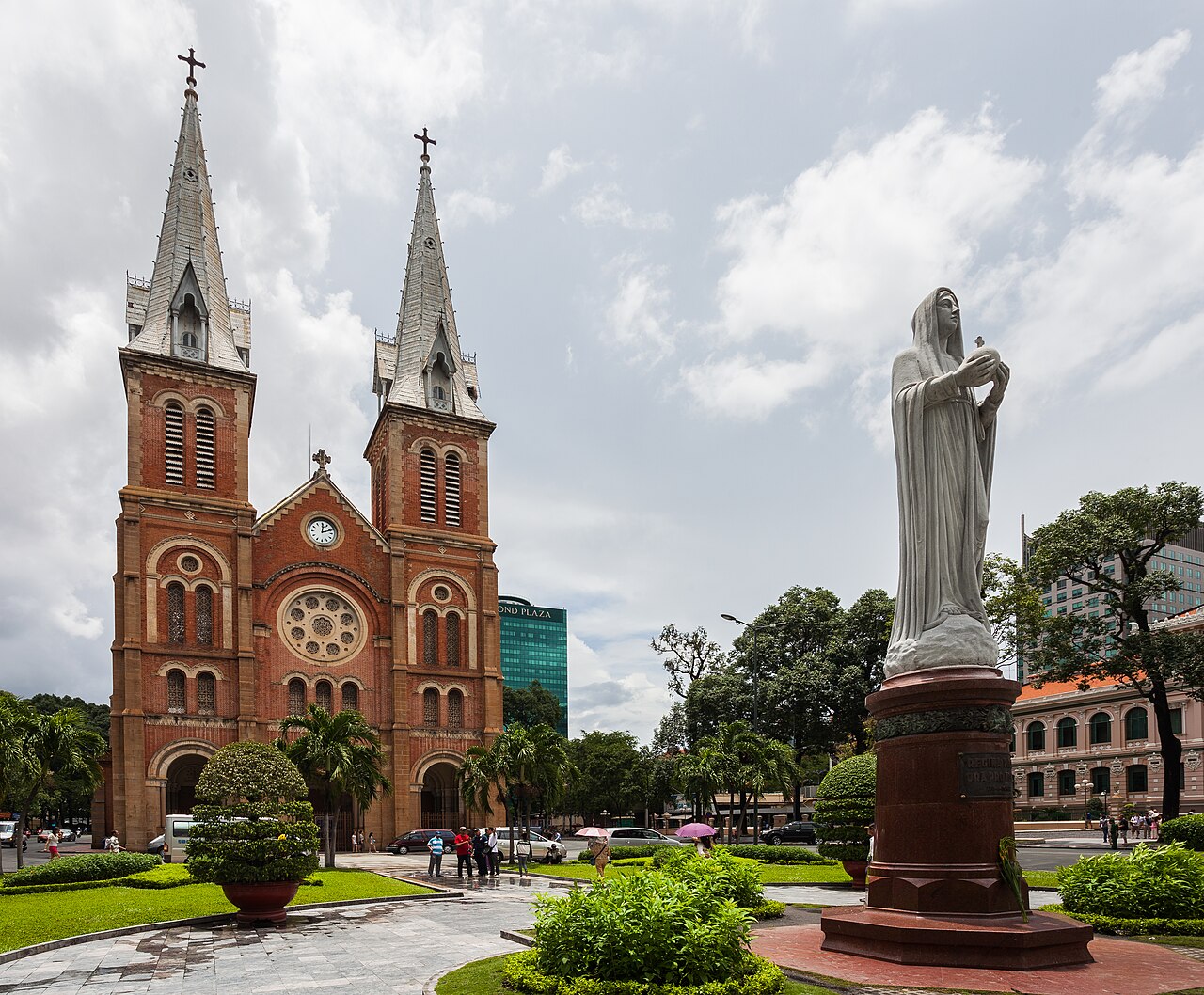
- Notre-Dame CathedralThe French built the cathedral in the late 19th century from red bricks shipped over from France. Its two towers define the centre.Day 1
- Central Post OfficeRight opposite: a colonial-era post office with a tall vaulted hall. Painted historic maps of Saigon and the surrounding region hang on the walls.Day 1
- Independence PalaceSeat of the president of South Vietnam, built in the 1960s. On 30 April 1975 a tank broke through the gate, ending the war. Rooms and bunker are preserved.Day 1
- War Remnants MuseumA museum about the Indochina and Vietnam wars, with photographs, weapons and aircraft. Many images are hard to look at, such as those on the effects of Agent Orange.Day 1
- Nguyễn Huệ BoulevardOne of the city's oldest streets, now a wide pedestrian promenade. The colonial-era City Hall stands at its end, with the Opera House around the corner.Day 1
- Jade Emperor PagodaA Taoist pagoda from the early 20th century, full of incense and carved figures. Many worshippers come to pray in the morning.Day 2
- Tân Định ChurchA Catholic church from the late 19th century, painted entirely pink on the outside. A popular photo from the street.Day 2
- Thiên Hậu TempleThe Cantonese community's temple to the sea goddess Thiên Hậu. Large incense coils that burn for days hang from the ceiling.Day 2
- Museum of Fine ArtsAn art museum in a grand colonial-era villa. It shows Vietnamese art from old ceramics to lacquer painting.Day 2
- Bitexco Financial TowerCompleted in 2010, the tower is modelled on a lotus bud and has an observation deck near the top. At sunset you see the city and the Saigon River.Day 2
- Củ Chi tunnelsA vast tunnel network used in wartime as hiding place and supply route. Widened for visitors, but still tight and dark. Outside the city, about 1.5–2 hrs by road, usually as a tour.Day 3
- Museum of Ho Chi Minh CityHoused in the former Gia Long Palace from the late 19th century. The museum tells the city's story, and the building itself, with its staircase and garden, is worth the visit.Day 3
- Mariamman TempleA Hindu temple to the goddess Mariamman, built in the late 19th century by Tamil traders. Its colourful gate tower rises between the shops.Day 3
- Bạch Đằng QuayA riverside park on the Saigon River where many people stroll in the evening. Boats leave from here, and the new Thủ Thiêm district is growing on the far bank.Day 3
Day 1
Colonial buildings and history in the centre

Notre-Dame Cathedral
The French built the cathedral in the late 19th century from red bricks shipped over from France. Its two towers define the centre.
On the map (OpenStreetMap): Notre-Dame Cathedralright next door
Central Post Office
Right opposite: a colonial-era post office with a tall vaulted hall. Painted historic maps of Saigon and the surrounding region hang on the walls.
On the map (OpenStreetMap): Central Post OfficeAbout 10 min on foot through the park.
Independence Palace
Seat of the president of South Vietnam, built in the 1960s. On 30 April 1975 a tank broke through the gate, ending the war. Rooms and bunker are preserved.
On the map (OpenStreetMap): Independence PalaceAbout 10 min on foot.
War Remnants Museum
A museum about the Indochina and Vietnam wars, with photographs, weapons and aircraft. Many images are hard to look at, such as those on the effects of Agent Orange.
On the map (OpenStreetMap): War Remnants MuseumAbout 10 min by taxi or about 20 min on foot.
Bến Thành Market
The market hall with its clock tower is one of the oldest surviving buildings in the city. Inside, food stalls serve bánh xèo, noodle soups and fresh juices.
On the map (OpenStreetMap): Bến Thành MarketTake a break in the afternoon, then walk about 10 min in the evening.
Nguyễn Huệ Boulevard
One of the city's oldest streets, now a wide pedestrian promenade. The colonial-era City Hall stands at its end, with the Opera House around the corner.
On the map (OpenStreetMap): Nguyễn Huệ Boulevard
Day 2
Pagodas, Chợ Lớn and a view

Jade Emperor Pagoda
A Taoist pagoda from the early 20th century, full of incense and carved figures. Many worshippers come to pray in the morning.
On the map (OpenStreetMap): Jade Emperor PagodaAbout 10 min by taxi.
Tân Định Church
A Catholic church from the late 19th century, painted entirely pink on the outside. A popular photo from the street.
On the map (OpenStreetMap): Tân Định ChurchAbout 30 min by taxi to Chợ Lớn.
Thiên Hậu Temple
The Cantonese community's temple to the sea goddess Thiên Hậu. Large incense coils that burn for days hang from the ceiling.
On the map (OpenStreetMap): Thiên Hậu TempleAbout 20 min on foot or a short taxi ride.
Bình Tây Market
The largest market in Chợ Lớn, built around 1930 around a central courtyard. It mostly serves traders, and the food stalls sell noodles and rice dishes.
On the map (OpenStreetMap): Bình Tây MarketAbout 25 min by taxi back to the centre.
Museum of Fine Arts
An art museum in a grand colonial-era villa. It shows Vietnamese art from old ceramics to lacquer painting.
On the map (OpenStreetMap): Museum of Fine ArtsAbout 10 min on foot.
Bitexco Financial Tower
Completed in 2010, the tower is modelled on a lotus bud and has an observation deck near the top. At sunset you see the city and the Saigon River.
On the map (OpenStreetMap): Bitexco Financial Tower
Day 3
Củ Chi tunnels and an evening by the river

Củ Chi tunnels
A vast tunnel network used in wartime as hiding place and supply route. Widened for visitors, but still tight and dark. Outside the city, about 1.5–2 hrs by road, usually as a tour.
On the map (OpenStreetMap): Củ Chi tunnelsBack to the centre with the tour, usually by early afternoon.
Museum of Ho Chi Minh City
Housed in the former Gia Long Palace from the late 19th century. The museum tells the city's story, and the building itself, with its staircase and garden, is worth the visit.
On the map (OpenStreetMap): Museum of Ho Chi Minh CityAbout 10 min on foot.
Mariamman Temple
A Hindu temple to the goddess Mariamman, built in the late 19th century by Tamil traders. Its colourful gate tower rises between the shops.
On the map (OpenStreetMap): Mariamman TempleAbout 20 min on foot to the river or a short taxi ride.
Bạch Đằng Quay
A riverside park on the Saigon River where many people stroll in the evening. Boats leave from here, and the new Thủ Thiêm district is growing on the far bank.
On the map (OpenStreetMap): Bạch Đằng QuayAbout 10 min by taxi.
Bùi Viện Street
The nightlife street of the backpacker district, packed and loud in the evening. Small eateries and street stalls all around are good for a quick dinner, such as bánh mì.
On the map (OpenStreetMap): Bùi Viện Street
Good to know
Best time to go
The most pleasant time is the dry season from roughly December to April, with plenty of sun, though it gets very hot towards the end. The rainy season runs from roughly May to November: rain usually comes as a heavy afternoon shower, and then it dries up again. It is warm all year round – unlike the north around Hanoi.
Getting around
The centre around the cathedral, Bến Thành Market and Nguyễn Huệ Boulevard is best explored on foot. For longer trips, taxis and ride-hailing apps are cheap, including rides on the back of a scooter. Since late 2024 the first metro line has run east from Bến Thành Market. To cross the street, walk slowly and steadily and the scooters will flow around you. Buses and taxis run from Tân Sơn Nhất Airport into the centre.
Where to stay
Centre (former District 1)
Around the cathedral and Nguyễn Huệ Boulevard, with large hotels, cafés and most sights within walking distance. Lively but well organised.
Phạm Ngũ Lão
The backpacker district around Bùi Viện Street, with many small hotels and places to eat. Cheap and central, but noisy at night.
Around Tân Định
North of the centre in the former District 3, with tree-lined streets, old villas and neighbourhood cafés. Quieter and more everyday; the centre is a short taxi ride away.
Ad Where to stay in Ho Chi Minh City? Compare prices: Ho Chi Minh City
Ad Flights to Ho Chi Minh City: compare live prices →
More on Ho Chi Minh City in our blog: How many days in Ho Chi Minh City? 1–6 days
Your plan
Start with this plan.
Copy it into YesTrip, pick your dates and make it yours: move stops, drop them or let the AI add more. On the road the app shows you the next stop and how to get there.
Ho Chi Minh City: frequently asked questions
What are the must-see sights in Ho Chi Minh City?
The must-see sights in Ho Chi Minh City are Notre-Dame Cathedral, Central Post Office, Independence Palace, War Remnants Museum, Nguyễn Huệ Boulevard and Jade Emperor Pagoda. This plan links 14 of them into short walks over 3 days – with times, a map and tips.
Are 3 days enough for Ho Chi Minh City?
For the centre, Chợ Lớn and the Củ Chi tunnels, yes. With one more day you can add a trip to the Mekong Delta, with boats, canals and orchards, usually as a tour.
Saigon or Ho Chi Minh City?
The official name has been Ho Chi Minh City since 1976. In everyday speech many people still say Saigon, especially for the centre.
What should I wear in temples and churches?
Cover shoulders and knees. In some temples you take your shoes off before the prayer hall.
What should I sort out before the trip?
Check entry requirements with your government's travel advice before you go. Drink plenty, avoid the midday heat and pack light rain gear for the rainy season.
Plan created with AI support – please check opening hours, prices and routes before you go. Coordinates checked with Wikipedia and OpenStreetMap (Photon). Photo: Diego Delso, CC BY-SA 3.0, via Wikimedia Commons. More in Sources & licences. YesTrip is a trip planner, not a travel agency – nothing is booked.
More trip plans
 Vietnam · 3 days
Hanoi
Photo: The original uploader was Chuoibk at English Wikipedia ., CC BY-SA 3.0, via Wikimedia Commons
 Thailand · 3 days
Bangkok
Photo: Mastertongapollo, CC BY-SA 4.0, via Wikimedia Commons
 Malaysia · 3 days
Kuala Lumpur
Photo: Chainwit., CC BY-SA 4.0, via Wikimedia Commons


