
Best day trips from Madrid by train
In short
The best day trips from Madrid are Toledo (about 35 minutes by high-speed train), Segovia (about 30 minutes by high-speed train plus a short bus ride), Alcalá de Henares (about 40 minutes by suburban train), Aranjuez (about 45 minutes), El Escorial (about 1 hour by suburban train) and the walled city of Ávila (about 1 hour 30 minutes by train).
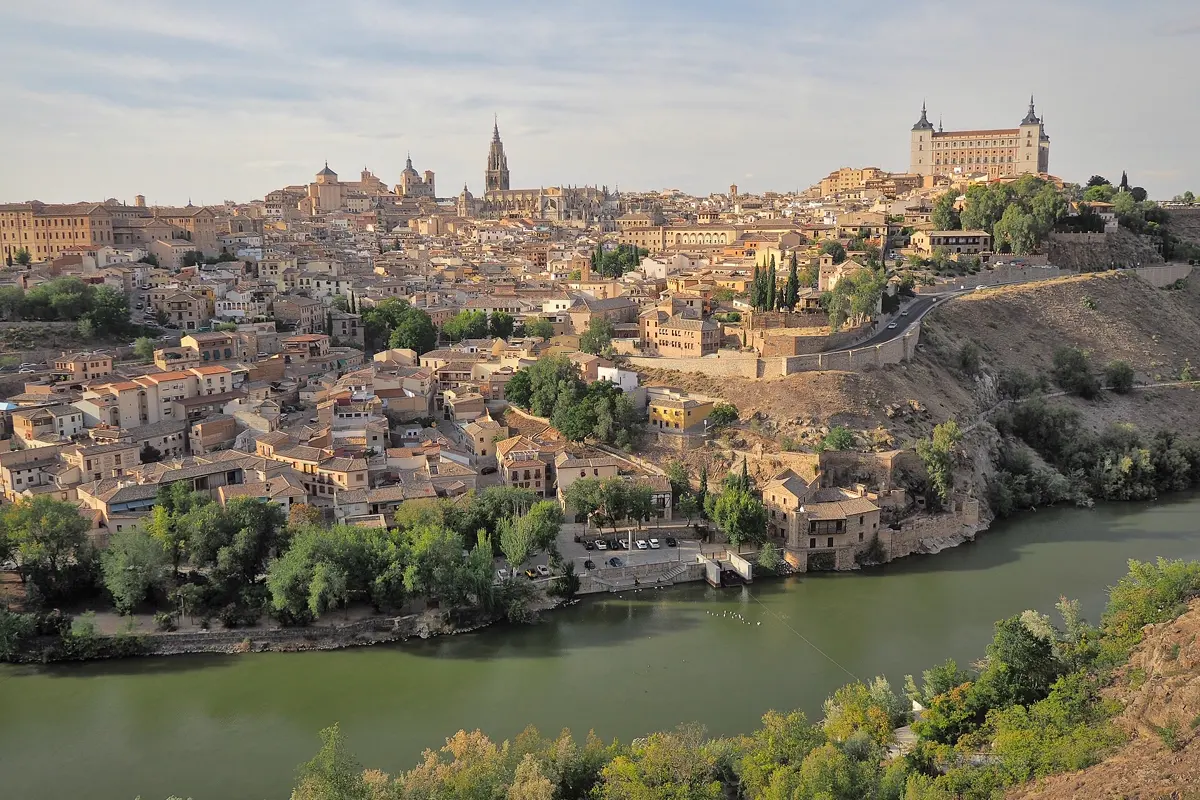
Madrid is surrounded by some of Spain's greatest historic towns, and high-speed and suburban trains make them easy to reach: the city of three cultures on its rock above the Tagus, a Roman aqueduct in the middle of a town, the vast monastery-palace of Philip II, a city entirely enclosed by medieval walls, and two royal and university towns on the plain. The short answer: Toledo is the best single day trip, Segovia the most photogenic, El Escorial the most impressive building, Ávila the best for walls, and Alcalá de Henares and Aranjuez are relaxed half days. Six of them are UNESCO World Heritage Sites.
Day trips from Madrid at a glance
| Day trip | Travel time one way (approx. min) | Getting there | Time needed |
|---|---|---|---|
| Segovia | 30 | high-speed train from Chamartín, then bus | full day |
| Toledo | 35 | high-speed train from Atocha | full day |
| Alcalá de Henares | 40 | Cercanías suburban train | half day |
| Aranjuez | 45 | Cercanías suburban train | half day |
| El Escorial | 60 | Cercanías suburban train or bus | half to full day |
| Ávila | 90 | regional train | full day |
Times are typical connections from the Madrid station named in the table. High-speed trains to Toledo and Segovia are often full at weekends, so book them a few days ahead; suburban Cercanías trains need no reservation.
Toledo: the city of three cultures
How to get there: Avant high-speed trains run from Madrid Atocha to Toledo in about 35 minutes. The neo-Mudéjar station lies below the old town; a city bus or a walk of about 20 minutes takes you up, and a set of escalators helps with the last climb. Buses from Madrid's Plaza Elíptica take about an hour.
What to see: Toledo stands on a rock in a loop of the river Tagus, and its old town is a UNESCO World Heritage Site. For centuries Christians, Jews and Muslims lived here side by side: the Gothic Cathedral, one of the largest in Spain; the Synagogue of El Tránsito with the Sephardic Museum and the Synagogue of Santa María la Blanca with its white horseshoe arches; and small mosques such as Cristo de la Luz. In the church of Santo Tomé hangs El Greco's Burial of the Count of Orgaz; the Alcázar on the highest point houses the Army Museum. For the classic view, cross the river to the Mirador del Valle.
How long: a full day.
Best for: history, art, anyone who wants to see medieval Spain in one place. Many tours combine Toledo with Segovia in one long day; Toledo and Segovia tours* can be compared on Viator.
Segovia: aqueduct and Alcázar
How to get there: high-speed trains run from Madrid Chamartín to Segovia-Guiomar in about 30 minutes. The station lies outside the town; a city bus takes about 15 to 20 minutes to the aqueduct. Coaches from Madrid's Moncloa interchange take about 1 hour 15 minutes and stop closer to the centre.
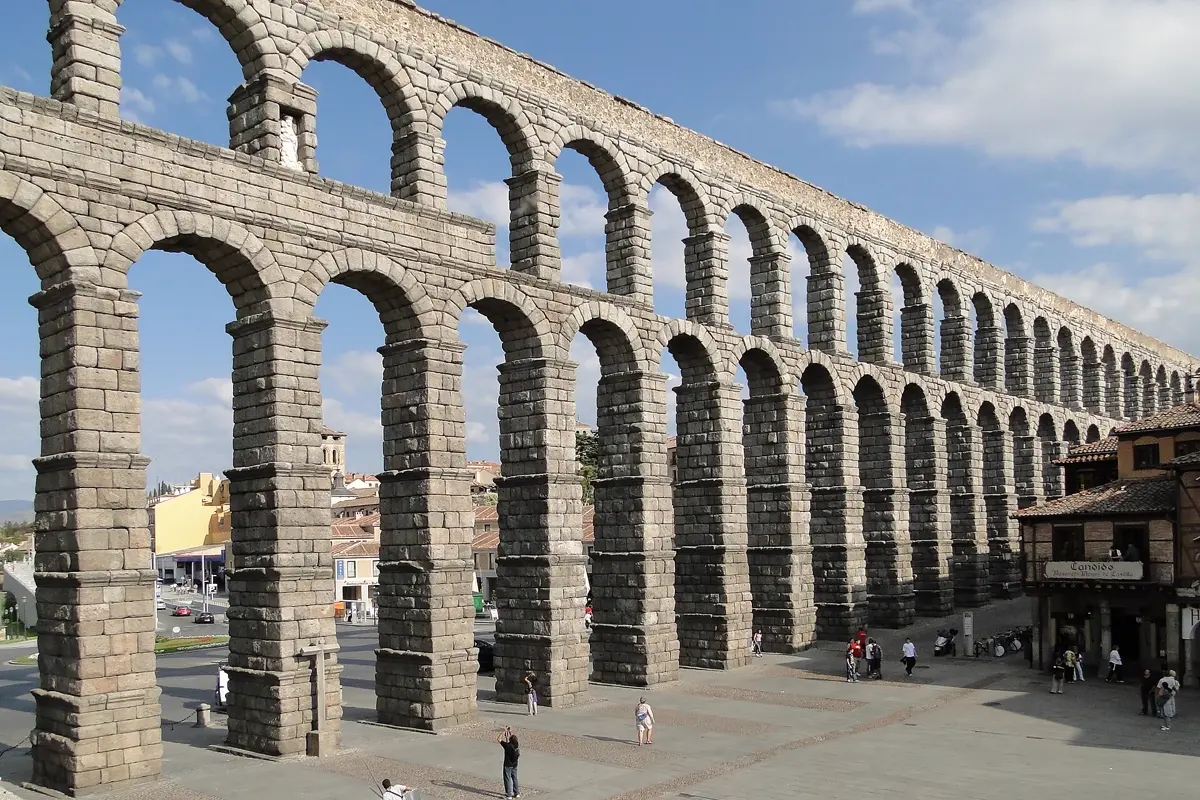
What to see: the Roman aqueduct, almost 2,000 years old, whose granite arches stand without mortar in the middle of the town; the late-Gothic Cathedral, one of the last Gothic cathedrals built in Spain; and the Alcázar, a royal castle on a rock at the tip of the old town, with towers and slate spires. Segovia is known for cochinillo, roast suckling pig. Old town and aqueduct are a UNESCO World Heritage Site.
How long: a full day.
Best for: photographers, Roman history, food.
El Escorial: Philip II's monastery
How to get there: Cercanías suburban trains on line C3 run from Atocha and Sol to El Escorial in about an hour; from the station, it is a walk of about 20 minutes uphill. Buses from the Moncloa interchange take a little under an hour and stop in the centre of San Lorenzo de El Escorial.
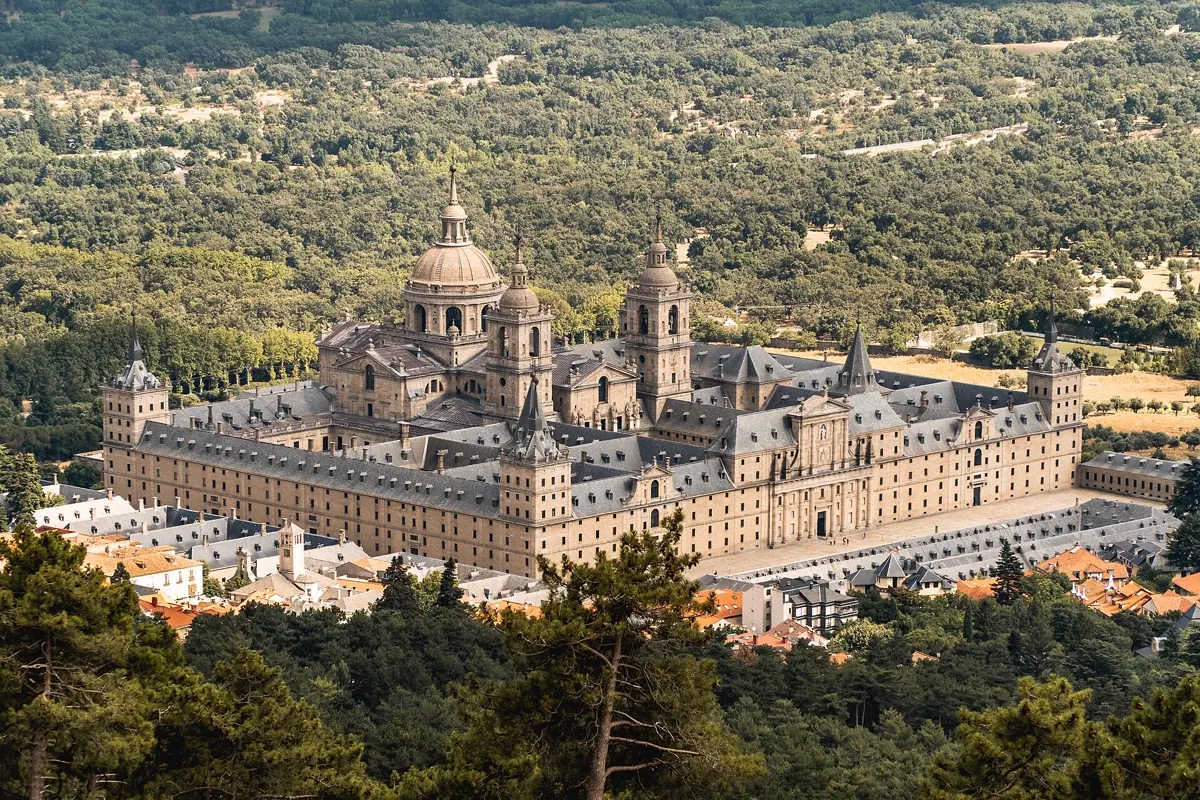
What to see: the Royal Monastery of San Lorenzo de El Escorial, built for King Philip II in the 16th century: monastery, palace, basilica and royal pantheon in one huge granite building. Inside are the Pantheon of the Kings, where most Spanish monarchs since Charles V are buried, the library with its painted vaults and the royal apartments. It is managed by Patrimonio Nacional and is a UNESCO World Heritage Site.
How long: half a day for the monastery, a full day with a walk in the town and the gardens.
Best for: architecture, royal history, a cooler day in the mountains in summer. Tickets for El Escorial* are also on Tiqets.
Ávila: a city inside its walls
How to get there: regional trains run from Madrid Chamartín or Príncipe Pío to Ávila in about 1 hour 30 minutes, depending on the train. From the station, the walls are about 15 minutes on foot.
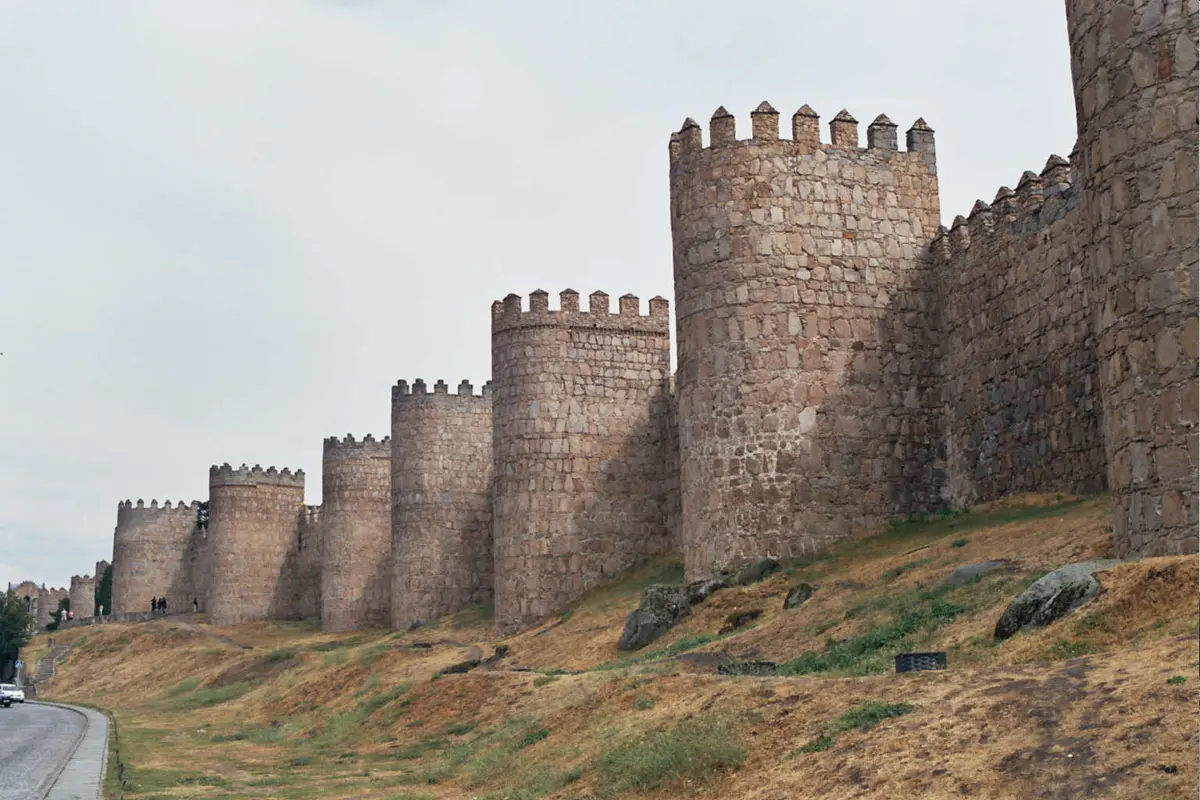
What to see: the walls of Ávila, among the best-preserved medieval city walls in Europe, about 2.5 km long with more than 80 towers; you can walk long stretches on top. Inside: the Cathedral, whose apse is built into the walls, and the places connected with Saint Teresa of Ávila, the 16th-century mystic. For the best view of the walls, walk to the Cuatro Postes viewpoint across the river. The old town is a UNESCO World Heritage Site.
How long: a full day.
Best for: walls and castles, a quieter town than Toledo or Segovia.
Alcalá de Henares and Aranjuez: two easy half days
Alcalá de Henares, about 40 minutes by Cercanías from Atocha, is the birthplace of Miguel de Cervantes and the seat of one of the oldest universities in Spain. See the Plateresque façade of the Colegio de San Ildefonso, the arcaded Calle Mayor and the Cervantes Birthplace Museum. University and historic centre are a UNESCO World Heritage Site.
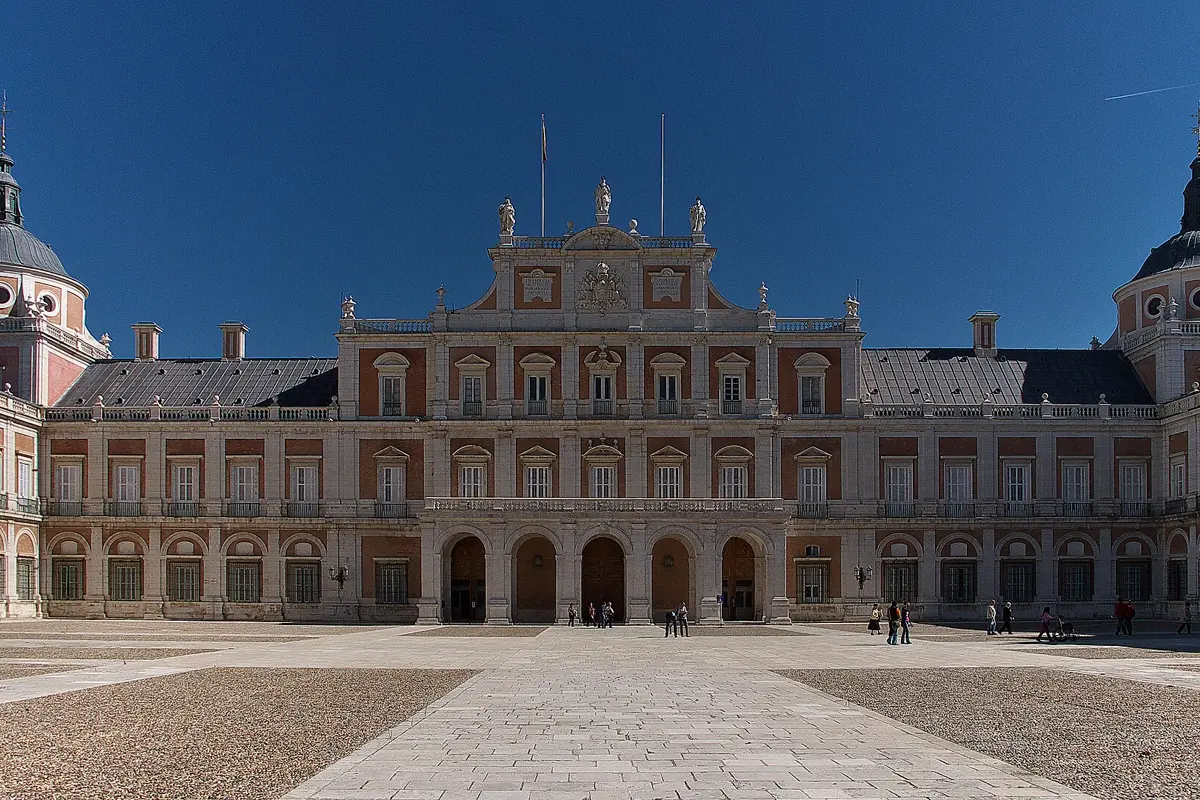
Aranjuez, about 45 minutes by Cercanías line C3 from Atocha, was the spring residence of the Spanish kings. The Royal Palace stands among large gardens by the Tagus, and the cultural landscape of Aranjuez is a UNESCO World Heritage Site. The town is known for its strawberries and asparagus.
Each takes half a day; both are good for a slow afternoon after busy days in the museums.
Train or guided tour?
For every trip in this article, the train works well. For Toledo and Segovia, book the high-speed train a few days in advance, especially at weekends; train connections* can be compared on Omio. For El Escorial, Alcalá and Aranjuez, the suburban Cercanías trains are simple and need no reservation. A guided tour mainly helps if you want Toledo and Segovia, or Ávila and Segovia, in a single day, which is hard to combine by public transport.
How many day trips fit into a Madrid trip?
With three days, stay in Madrid: the Prado, the Reina Sofía, the Royal Palace, El Retiro and the old town fill them. From four days, one trip fits – usually Toledo. With five days or more, add Segovia or El Escorial. Our article how many days in Madrid explains the split.
How YesTrip helps you plan
YesTrip has a ready-made plan for Madrid. With one tap you copy it into the app, add a day for Toledo or Segovia and put in your hotel. The app shows the weather for your travel days – useful in summer, when the plateau is hot, and in winter, when Segovia and Ávila can be cold – and with the offline package you have the map without a connection. YesTrip is free.
 Madrid trip planDay by day, with map and tips
* Ad – Partner link: if you book there, we earn a commission. Your price stays the same.
Free
Plan your trip in 30 seconds.
Tell YesTrip where and when – the app plans day by day with real places on the map, shows the weather, splits costs with your travel companions and guides you to the next stop on the go.
Frequently asked questions
What is the best day trip from Madrid?
For most visitors, Toledo: the high-speed train takes about 35 minutes, and the cathedral, the synagogues and El Greco's paintings fill a day. Segovia, with its Roman aqueduct, is the close second.
Can you visit Toledo and Segovia in one day?
By public transport it is hard, because the two cities are on different lines. A guided tour can combine them in one long day; with your own pace, give each its own day.
How do you get from Madrid to Segovia?
Take a high-speed train from Chamartín to Segovia-Guiomar, about 30 minutes, then a city bus to the aqueduct, about 15 to 20 minutes. Coaches from Moncloa take about 1 hour 15 minutes.
How do you get from Madrid to El Escorial?
Take the Cercanías line C3 from Atocha or Sol, about an hour, then walk about 20 minutes uphill, or take a bus from the Moncloa interchange, a little under an hour.
Is Ávila worth a day trip from Madrid?
Yes, if you like medieval towns: the train takes about 1 hour 30 minutes, and you can walk on the city walls, which have more than 80 towers.
Sources
- Renfe: high-speed, regional and Cercanías trains – www.renfe.com
- Madrid tourist office (esMadrid) – www.esmadrid.com
- Patrimonio Nacional: Royal Monastery of El Escorial and Royal Palace of Aranjuez – www.patrimonionacional.es
- Segovia tourist office – www.turismodesegovia.com
- Ávila tourist office – www.avilaturismo.com
- UNESCO World Heritage: Historic City of Toledo – whc.unesco.org
Researched with AI support and checked by our editors. Prices, opening hours and weather can change – please check before you go. YesTrip is not a travel agency. Published: .
More articles
 Day trips
 from Athens: Delphi, Hydra, Sounion
From Piraeus, Aegina is 40 minutes by fast ferry and Hydra from 1 hour 30. Cape Sounion is 1 hour 16 of pure driving, Mycenae 1 hour 45 and … · 6 min read Day trips
 from Dublin: Howth to Glendalough
From Dublin, Howth is under 30 minutes by DART and Glendalough about 1 hour 20 on St Kevin's Bus. Powerscourt is 38 minutes and Newgrange 42 … · 6 min read Day trips
 from Krakow: Wieliczka, Zakopane
From Krakow, the Wieliczka Salt Mine is about 25 minutes by train, the Auschwitz-Birkenau Memorial about 65 minutes of pure driving or by … · 6 min read


